
New documentary explores amazing story of how a small Limerick club entered Guinness Book of Records with longest GAA match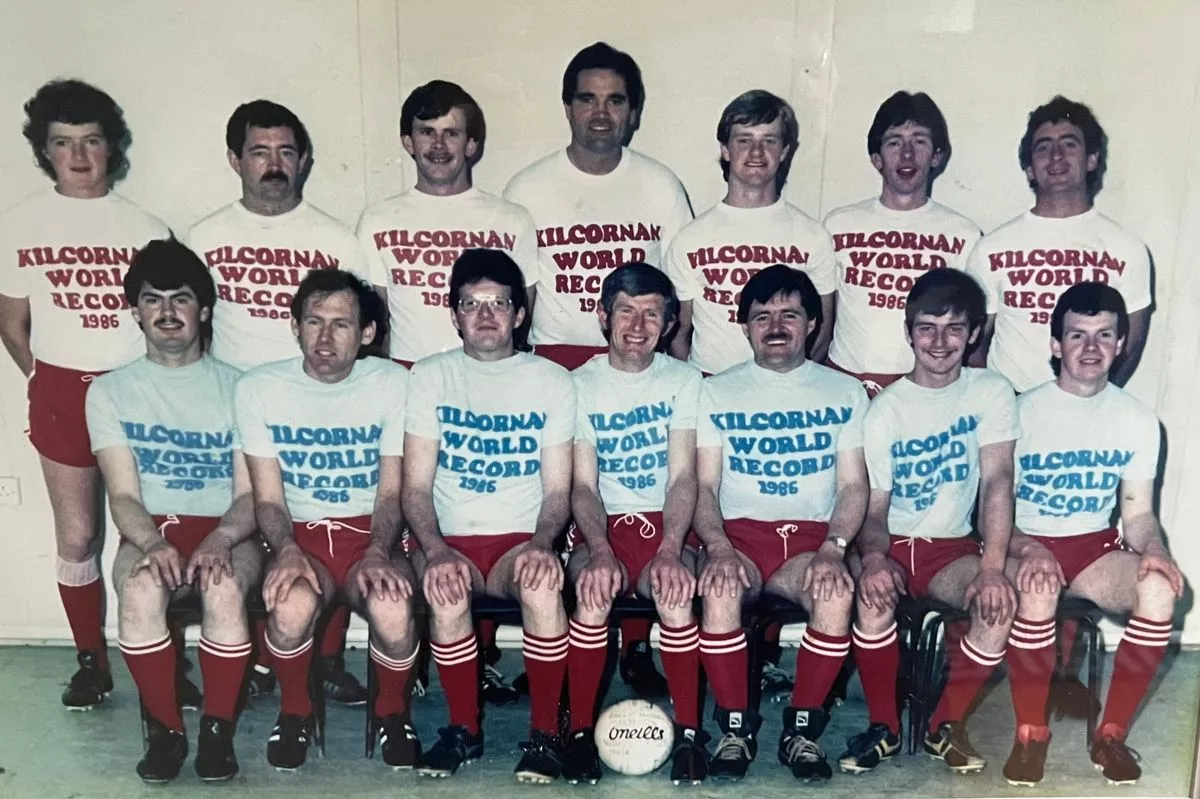
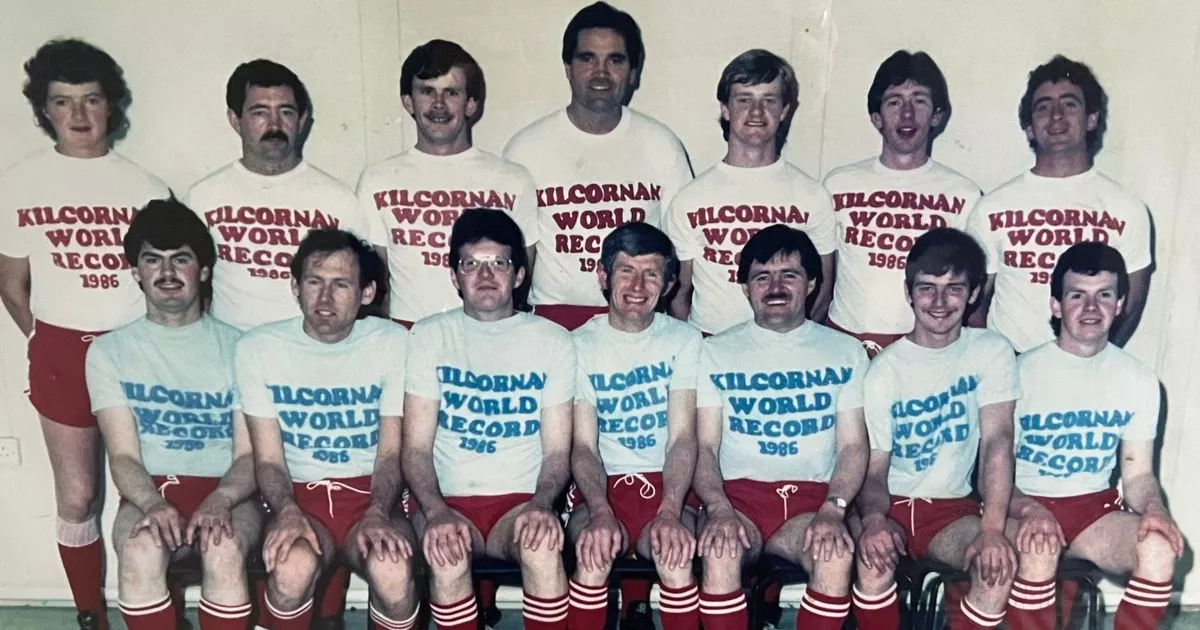
The Kilcornan players who took part in the world record attempt in 1986 for the longest GAA match(Image: Terry Madigan/Kilcornan GAA)
KILCORNAN’S players were in dire straits.
They’d been playing football for 30 hours as part of a Guinness Book of Records attempt for the longest GAA match of all time. The target was 60 hours and the players were tiring. With 30 hours to go there was only one thing for it…
“The Walk of Life was the one (song) that just perked them up when they were feeling down and absolutely miserable,” says Bridget Griffin.
“You’d wonder, are they going to keep going? And then The Walk of Life would come on and you’d see them all… it seemed to give them energy to keep going for another while.”
Bridget was on the authentication committee for Kilcornan GAA’s 1986 world record attempt, which is the subject of a new documentary called The Longest Game produced by Shauna McGreevy and Nicoline Greer for RTÉ’s Doc on One.
It’s the story of ambition, endurance and hallucinations as a small county Limerick parish come together for 60 hours of nonstop GAA.
There are kitchens working through the nights, Dire Straits on repeat and even an appearance by 1980s children’s TV star Forty Coats.
Slightly bonkers? You better believe it and all the brainchild of Kilcornan man Terry Madigan.
“Terry’s a proud Limerick man who likes a challenge and doesn’t give up,” says documentary maker McGreevy. “He’s real community man and absolutely loves Kilcornan and he wanted to do something special.
“It was a different time. In fairness the doctor had a few concerns about the whole thing with the mental health of the players, but generally there were no barriers. The only thing that was going to stop them was if they couldn’t actually make it to the end.”
Terry’s plan was to find 14 players for a seven-a-side match beginning on a Friday morning and finishing on a Sunday evening. Three days and two nights of nonstop Gaelic football.
“The more I looked at other records, they’re all extreme. That’s why they’re records. So I thought, we have to do it for a long time,” says Terry in the documentary. “The 60 hours was something that we decided that we would do to make it unbeatable, if possible.”
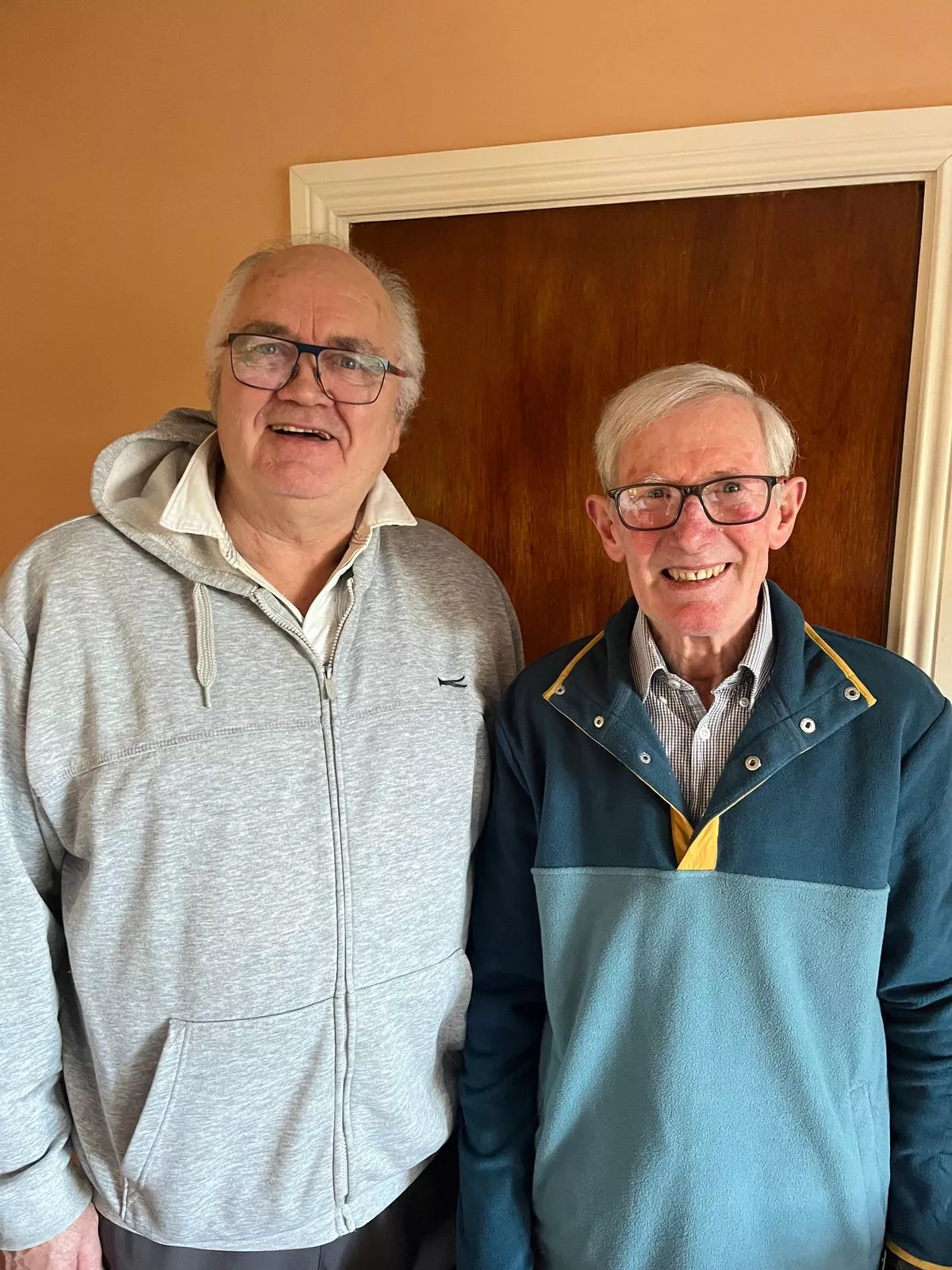
Terry Madigan and Aubrey Burke, team captains for the Kilcornan GAA marathon(Image: Terry Madigan/Kilcornan GAA/RTE)
It was a mammoth task and there were a number of rules set out by the Guinness Book of Records.
The players could take a five minute break every hour, but the same 14 players had to be the pitch for the duration of the game with no substitutes allowed. Official GAA rules had to be applied and the game had to be continuously monitored with every score recorded. And most crucially, they were allowed to lose only one player over the entire weekend. If more than one player couldn’t continue, the record attempt would have to be abandoned.
It began on Friday, May 23, 1986 at 6am.
“It was just breaking for day when we got over there, but it was fine, ideal for football at five, six o’clock in the morning,” says Terry in the doc. “The atmosphere was electric, the amount of people have turned up at half five.”
They were playing on a full-sized GAA pitch and the action was at full tilt until the local doctor told the players to calm it all down a bit. There was a hell of a long way to go.
Dolores Dunne was there to support her husband John and the other players.
“We didn’t know what we were going to be witnessing, but we were going to be there,” says Dolores. “There was joy and everybody wanted to be a part of it. It was like a carnival atmosphere.”
As the players played through Friday afternoon, the supporters were entertained by the Newcastle West Pipe Band, the Rathkeale Brass Band and Forty Coats from RTÉ. There was face painting, fancy dress and a golf putting competition.
But as the entertainment died down in the evening, the reality of what lay ahead began to dawn on Aubrey Burke, who was the oldest member of the team.
“When we got into the first night, I said, ‘I think this is not plain sailing’. Probably because the crowd was small,” says Aubrey in the doc. “There wasn’t many people there and it looked lonesome. The buzz was gone out of the whole thing.”
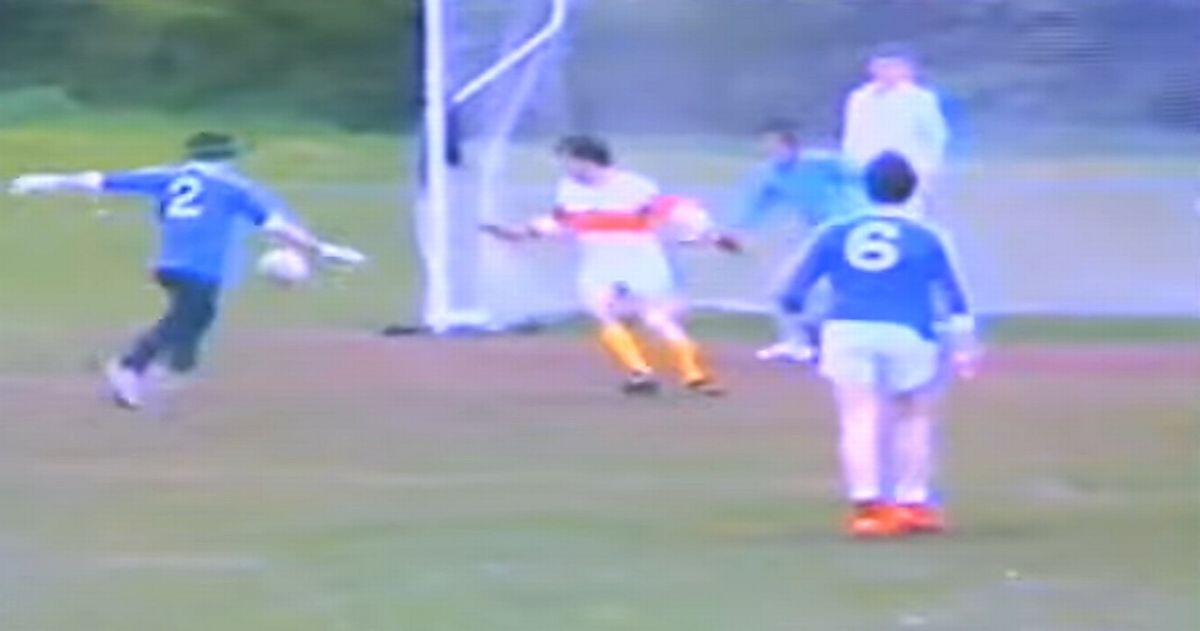
Action from the 60-hour match in 1986(Image: John Nash)
Terry’s wife Eileen could see the players were struggling on the pitch.
“It was about three or four o’clock on the Saturday morning. I said, ‘There’s something not right,’” says Eileen. “I could see that they were down in the dumps. There was no banter and it was as if they were ready to drop. They just needed some encouragement.
“I just came into the girls and I said, ‘We need to be out there with them.’ We ran around the field, all around the edge, calling their names, geeing them up. Next thing, they took off again.”
They made it through the first night and with a few blasts of Dire Straits the game continued all through Saturday afternoon.
But the players were beginning to show the strain. They were sunburned, blistered and getting cramp. Some were even starting to hallucinate.
One player began shouting at teammates to get off an imaginary bed of roses. Someone else was jumping over imaginary rocks and boulders on the field after taking a kick. Another chased a crow around, believing it to be the ball.
Dolores Dunne: “It was strange watching how they changed. Watching the mind breaking down was very, very hard.”
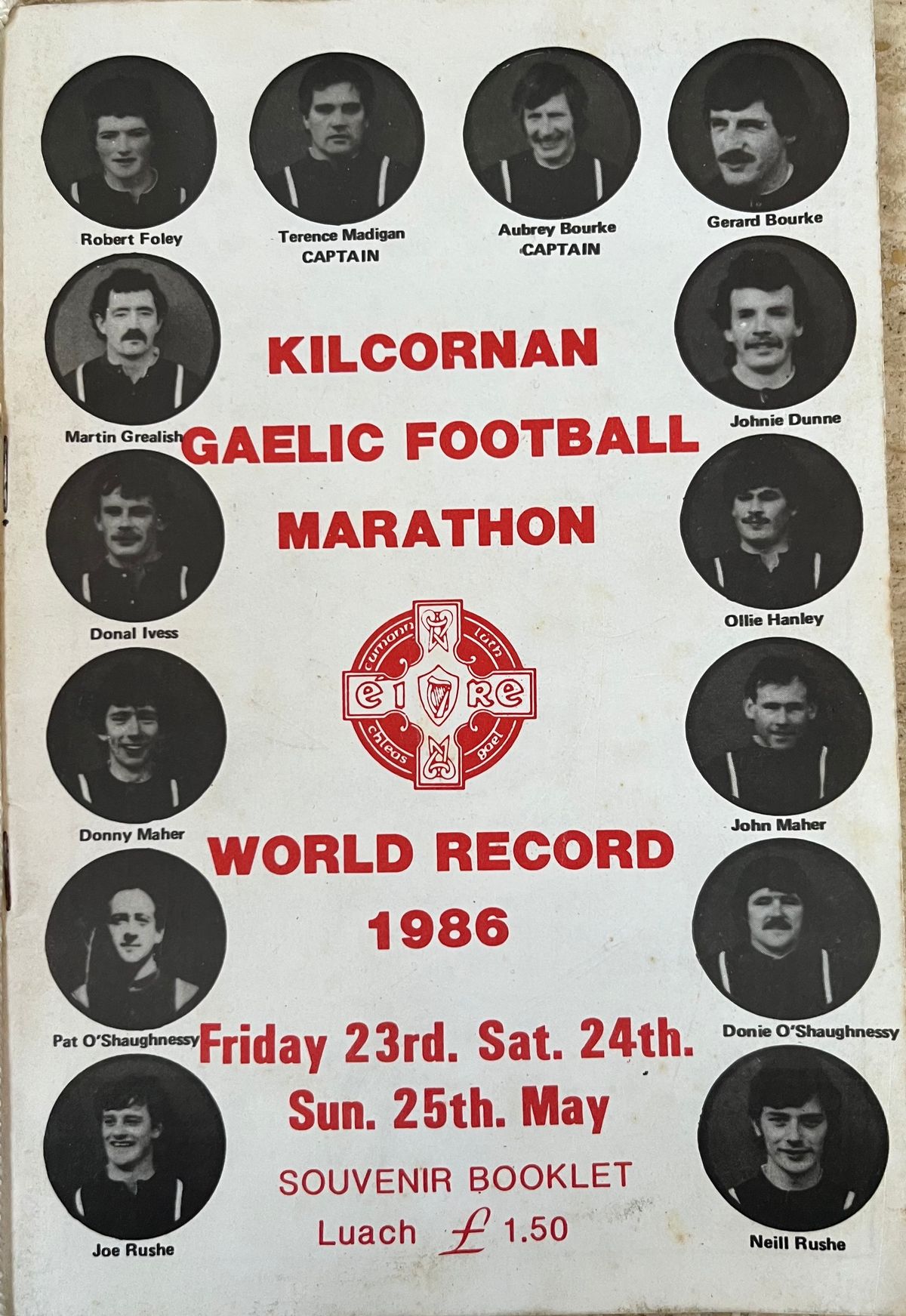
Souvenir programme for Kilcornan world record attempt(Image: Terry Madigan/Kilcornan GAA)
They made it to nightfall on the Saturday. Then the rain came. Heavy rain. At 3am on the second night, it finally became a bit too much for one player and he left the game.
If they lost another player the record attempt would be over. But organiser Terry Madigan still had faith as the match continued through the second night.
“If we could get to sunrise on Sunday morning, we had it,” says Terry.
They kept going.
On Sunday morning, with the whole parish cheering them on, club officials asked the local priest if he’d say mass on the side of the pitch. It was a hard ‘no’ and mass was postponed, but on the field there was a resurrection.
And as the clock wound down to the final hour of the marathon match, Kilcornan’s club ground was packed.
“You could hear the crowd getting excited, because they were all watching their own watches,” says Terry. “I was soloing up the field and the referee Pat Lane blew the final whistle.”
Cue wild celebrations.
Kilcornan had secured a place in the Guinness Book of Records for playing a Gaelic football match lasting 60 hours. Final score: 635-227 to 528-227.
“The stories that I love to tell are ones like this,” says documentary maker McGreevy. “I don’t think they would be told otherwise. They are quintessentially Irish, the characters resonate with people because someone always knows someone else like that.
“And also, if someone feels passionate about what they have done, it comes across and is always infectious.
“Terry wanted this story wanted to be told and I’m just glad it’s getting out there.”
* The Longest Game, produced by Shauna McGreevy and Nicoline Greer for Doc on One is on RTÉ Radio 1, January 10 at 1pm.