
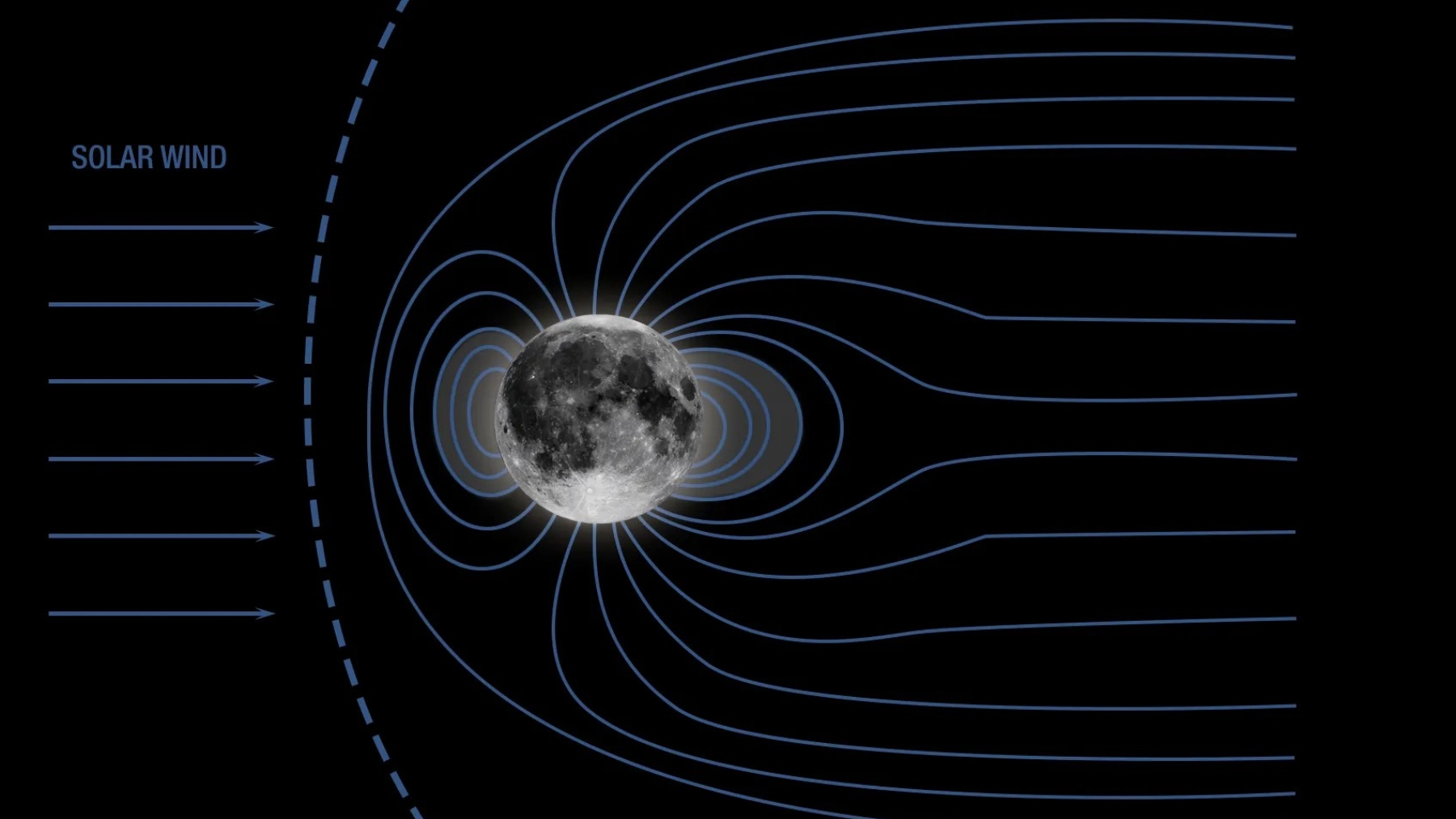
NASA has forever altered our understanding of the universe, and the iconic space agency is only getting started. For as long as mankind has been capable of deep thought, we have stared into the night sky in awe and wonder as to what secrets the universe may have stored away, just waiting for us to unravel. Science fiction has inspired some of the greatest inventions in history, but a new magnetic anomaly has puzzled even the greatest minds at NASA and other space institutions. Now, a new mission will discover what exactly that anomaly might be.
Space exploration is the final frontier for our exceedingly young species
Since the Big Bang first occurred, approximately 14 billion years ago, the universe has been sending out magnetic anomalies that have puzzled some of the greatest minds in history. Films like Interstellar have explored the possibility of extended space exploration efforts that may result in a new planet being discovered. The moon has been a mystery that we have only begun to explore with the Apollo missions.
When NASA decided to send a mission to the moon in the late 1960s, the then US President JFK, noted that the universe was within our limited reach. Since then, several missions to the moon have been a resounding success, and we now have a much deeper understanding of our moon. However, a recent discovery of a strange magnetic anomaly has NASA planning a new moon mission.
The moon has been vital in protecting life right here on our home planet
NASA has been developing its plans to head back to the moon for the first time in nearly 50 years, and the scientific community could not be more excited. The moon is vital to life here on Earth. It affects our ocean tides and protects us from dangerous asteroids and other space objects that, without the moon, would be on a direct impact trajectory to the Earth.
Intuitive Machines’ IM-3 mission is set to reveal the source of the new and puzzling magnetic anomaly
NASA is set to return to the moon this year as part of Intuitive Machines’ IM-3 mission. Reiner Gamma is a strange magnetic anomaly that defies our understanding of known geology. The IM-3 mission is set to revolutionize our experimental technology by diving deep into the vastness of space with a direct path to the moon. NASA has been developing the mission and has stated it expects the IM-3 mission to land on the moon this year.
NASA’s first mission to the IM-3 site will carry a payload of autonomous robots, radiation sensors, and a lunar plant experiment that will be conducted by the crew on board the mission, or possibly by the autonomous robots on board the craft. With NASA discovering new exoplanets that may support life as we know it, the future of space exploration has never looked this promising, and the scientific community is salivating at the new possibilities.
The new moon mission forms part of NASA’s Artemis campaign
The plan, according to NASA, is for the Commercial Lunar Payload Services to conduct several essential experiments on the moon, paving the path to a clearer understanding of our immediate galaxy. NASA has forever altered our understanding of the known universe and has recently discovered a growing structure forming a “collection of stars”. With the astonishing progress in advancing the necessary technology for sustained space exploration reaching new heights in recent years, the future of the human race depends on our ability to safely study the moon and any other space objects that have become a whole lot closer, in theory at least.