
NASA’s next device for exploring planets beyond our solar system is scheduled for launch on 11th January. The launch window opens at 1319 GMT and lasts for 57 minutes.
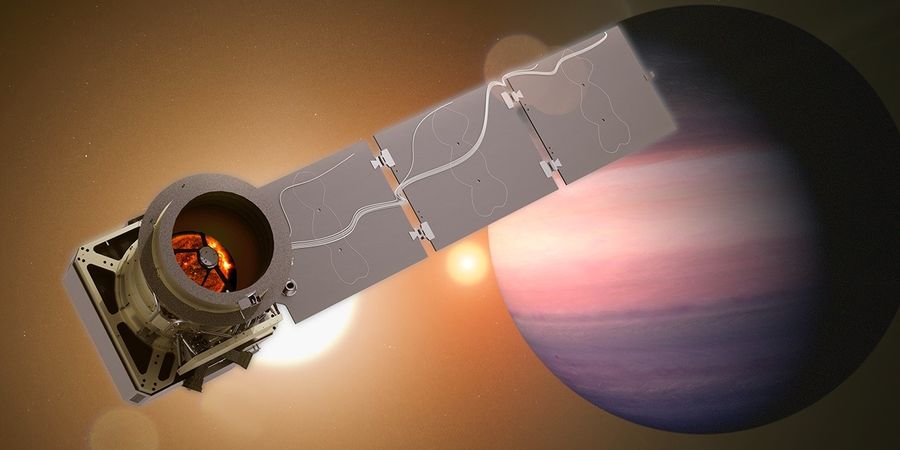
The satellite is the Pandora explorer. Pandora is the first satellite designed specifically to study starlight occulted by a planet. As a planet passes in front of a star, the light will be affected by the planet’s atmosphere. These changes can tell us about the chemical makeup of the atmosphere.
Pandora and the Astrophysics Pioneers
Pandora is the first in a line of new satellites called the Astrophysics Pioneers. NASA says that the programme is focused on economical ways to advance astrophysics while also training up-and-coming astrophysicists. Pandora sports a 45cm-wide telescope with an infrared sensor at the focal point. This sensor is a backup unit built for the James Webb Space Telescope.
In the press release from NASA, Daniel Apai, an astronomy and planetary science professor at the University of Arizona in Tucson, where the mission’s operations center resides, stated that “The Pandora mission is a bold new chapter in exoplanet exploration. It is the first space telescope built specifically to study, in detail, starlight filtered through exoplanet atmospheres. Pandora’s data will help scientists interpret observations from past and current missions like NASA’s Kepler and Webb space telescopes. And it will guide future projects in their search for habitable worlds.”
Pandora’s primary mission is slated to last for one year, during which it will make 10 extended observations each of 20 stars with exoplanets. NASA notes that each observation will last approximately 24 hours. NASA expects the repeated observations to make up for changes in starlight due to processes on the stars themselves.
 Published by James Hydzik
James Hydzik is a technology geek focused on the junction of engineering, writing, and coffee. He joined Orbital Today in 2020 to help make sense of the Johnson government’s decision to buy OneWeb. Since then, he has taken on interviewing and editor-in-chief roles. James learned the ropes of editing and writing with Financial Times magazines, The World Bank, PwC, and Ericsson. Thus far, interviewing New Space movers has put the biggest smile on his workaday face. The son of an Electrical Engineer, James understands the value of putting complex topics into clear language for those with a lay person’s understanding of the subject. James is a European transplant from the United States, and as ex-KA3LLL, he now holds European amateur radio licenses. His next radio project is a portable 10GHz EME (moonbounce) station, as it combines his childhood interests in antennas and space.