
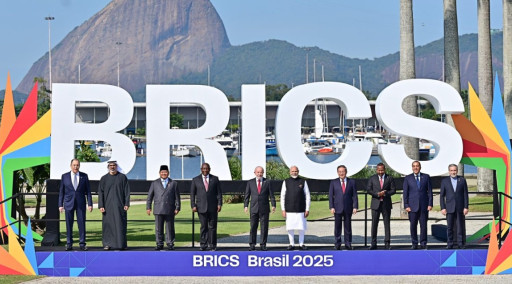
Nine countries in Southeast Asia have reached a joint understanding to accept the use of the future BRICS currency, eventhough the payment instrument has not yet been officially launched on the global market.
The move strengthens confidence within the expanded BRICS bloc – now consisting of 10 member states – that the planned common currency could gain wide international acceptance.
The initiative aligns with BRICS’ broader commitment to reduce dependence on the US dollar and accelerate the process of de-dollarization in cross-border trade and financial transactions. Many developing economies have become increasingly concerned about the geopolitical risks and policy uncertainties associated with the dominance of the US dollar.
According to Watcher Guru, the nine ASEAN countries that have expressed readiness to accept the BRICS currency are Brunei Darussalam, Cambodia, Laos, Malaysia, Myanmar, the Philippines, Singapore, Thailand, and Vietnam. These countries have opened the door to using the BRICS currency in trade and economic cooperation once it is formally introduced.
China and Russia, the key drivers of the BRICS initiative, continue to encourage partner countries to reduce their reliance on the US dollar. Their efforts are reinforced by growing dissatisfaction among developing nations over U.S. foreign policy and economic sanctions, which are often seen as having far-reaching impacts beyond their intended targets.
Indonesia, which is both an ASEAN member and now a full BRICS member, is also expected to adopt the BRICS currency for economic cooperation within the bloc. With Indonesia and the nine ASEAN countries included, nearly 19 nations could potentially use the BRICS currency in international trade.
This number could expand further, as BRICS currently has 13 partner countries that may also follow the de-dollarization trend. The development reflects a broader shift in global confidence away from the US dollar toward alternative payment systems. The eventual launch of the BRICS currency is widely seen as having the potential to reshape the global financial landscape and strengthen the ongoing shift of economic influence from the West toward the East.