
Cork’s Tyndall National Institute has wrapped up a multi-year project with the European Space Agency (ESA).
The Cork-based institute has been assisting in the development of the world’s first space-based ‘gravitational wave’ observatory.
The organisation, based out of University College Cork (UCC), contributed critical expertise to the ESA’s laser interferometer space antenna (Lisa) mission, which is scheduled for launch in 2035.
Lisa will be the first observatory of its kind to detect gravitational waves from space, revealing new insights into the most powerful events in the universe, such as pairs of black holes coming together and merging.
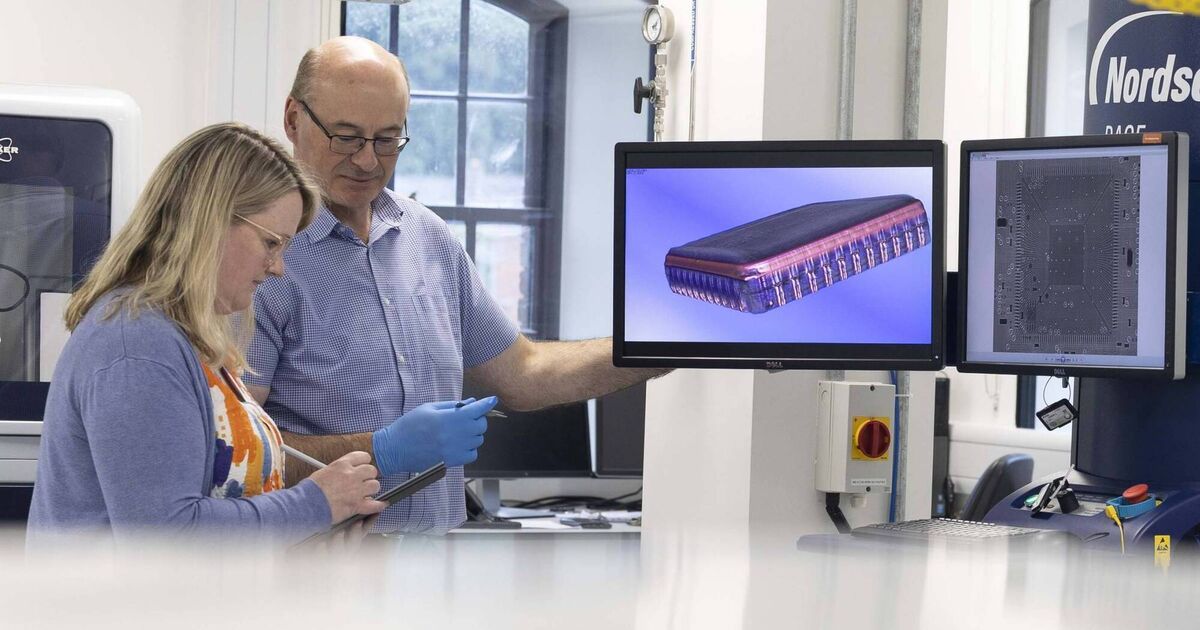
The Tyndall Institute’s role focused on evaluating the reliability of commercial photonic components, small but vital parts that will help power Lisa’s ultra-precise laser system.
These lasers will span millions of kilometres between three spacecraft flying in formation, measuring minuscule changes in distance caused by gravitational waves.
The Cork-based centre conducted long-term reliability testing and detailed construction analysis on a wide range of active and passive photonic devices, including laser diodes, photodiodes, UV LEDs, modulators, switches, isolators, and more.
Each component was assessed against the ESA’s demanding space standards, with risk levels identified for their potential use in the Lisa laser system.
OUTCOME
According to the Tyndall Institute, the outcome is a comprehensive dataset that will help the ESA make informed decisions about which components to use, ensuring the mission’s laser system performs as intended when deployed.
Principal engineer at Tyndall, Finbarr Waldron said this project “showcases the depth of Tyndall’s expertise in photonics and reliability engineering”.
“Space is a very unforgiving environment, and many commercial photonic components are built using materials that may not be suitable for use in space,” Mr Waldron said.
“Our task was to rigorously test and analyse these components to determine whether or not they could withstand the extreme conditions of launch and long-term operation in space.”
The Tyndall Institute is a leading European deep-tech research centre, that specialises in integrated information and communications technology (ICT) materials, devices, circuits, and systems. It is Ireland’s largest research and technology organisation (RTO), specialising in both electronics and photonics.