
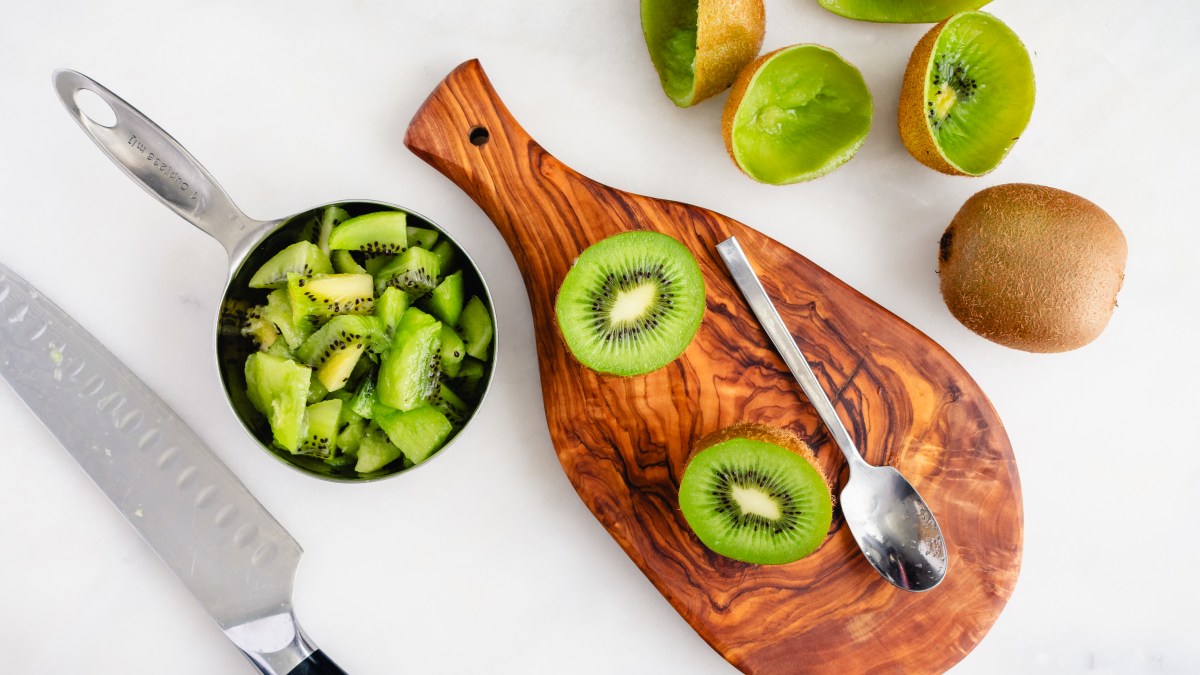
If you’re after a more youthful complexion, scientists at the University of Otago recently reported that a simple dietary tweak could help. Their advice? Eat two vitamin C-rich kiwi fruit every day to boost skin renewal and collagen production.
Results of their study in the Journal of Investigative Dermatology showed that vitamin C circulating in the bloodstream after the kiwi fruit are consumed reaches every layer of the skin including the outer epidermal layer, boosting collagen production and skin renewal for thicker, healthier skin. “We are the first to demonstrate that vitamin C in the blood circulation penetrates all layers of the skin and is associated with improved skin function,” says Professor Margreet Vissers of Otago’s Department of Pathology and Molecular Medicine.
We need a regular supply of vitamin C in the diet because the body can’t make its own. In addition to its skin health benefits, the vitamin plays an important role in supporting the immune system, helping the body to absorb iron from foods such as leafy green vegetables and red meat, maintaining healthy blood vessels and helping wounds to heal. And kiwi fruit make up for their small size by delivering over 60mg of the antioxidant vitamin per fruit, more than the 40mg that the NHS says UK adults need daily to stay healthy.
• The 27 healthiest food swaps to make in your supermarket
“A lot of people think of citrus fruits as being highest in vitamin C,” says Dr Linia Patel, a spokeswoman for the British Dietetic Association (BDA). “Yet a kiwi fruit provides nearly twice as much vitamin C per 100g as an orange.” And while a five-pack of oranges costs about £1.60 at Tesco, a six-pack of kiwi fruit costs just £1.19. Kiwi fruit can also improve everything from our digestion to our sleep, with most studies showing that eating two a day is enough to make a difference.
Why two? Kiwi fruit vary in size but two are sufficient to ensure a fairly standard minimum dose of key nutrients, including vitamin C, for research purposes. “Two medium fruits weighing in at a total of 150-200g will provide more than double the daily recommendation of vitamin C for adults,” says Alex Ruani, nutrition researcher at University College London. Here’s how they benefit us.
Kiwi fruit help you sleep better — for longer
For a paper in Nutrients journal, researchers from Northumbria University’s Sleep Research Centre, the University of Limerick and the Sports Ireland Institute in Dublin described how kiwi fruit contain serotonin, used by the body to form melatonin, which is a hormone crucial for sleep regulation, and antioxidants that work to reduce stress levels and help you to drop off. For one study, the scientists asked elite athletes to eat two kiwi fruit an hour before bed and then tracked their sleep patterns for a month. Results showed the fruit contributed to better quality and less interrupted sleep. A previous study from Taiwan reported that the same strategy helped midlifers with self-reported sleep disturbances to get to sleep more quickly and then sleep for longer.
• Why hyperbaric oxygen chambers are my new addiction
Daily consumption can boost mood
Professor Tamlin Conner and her colleagues at the University of Otago reported in the British Journal of Nutrition that daily consumption of two kiwi fruit produced a spike in mood and vitality in as little as four days. This is believed to be down to their vitamin C, which is known to improve mood, whereas a deficiency in the vitamin is associated with higher rates of depression. “It’s great for people to know that small changes in their diet, like adding kiwi fruit, could make a difference in how they feel every day,” Conner said.
Eating 1-3 kiwi fruit a day reduces bloating
The 2-3g of fibre in each fruit helps to maintain gut and digestive health. “There’s a useful balance of both soluble fibre, a prebiotic fuel for your gut bugs which softens stool, and insoluble fibre, which adds bulk and supports bowel regularity,” Patel says. “There have been a number of clinical trials and papers showing that eating 1-3 kiwi fruit per day supports digestive health and reduces constipation and bloating.”
Last year a review of 75 studies by Dr Eirini Dimidi, a reader in nutritional sciences at King’s College London, showed that relief from chronic constipation may come from foods including kiwi fruit. As a result of the findings, the BDA recently updated its guidelines in the Journal of Human Nutrition and Dietetics to recommend 2-3 kiwis a day as an effective approach for people with constipation and IBS.
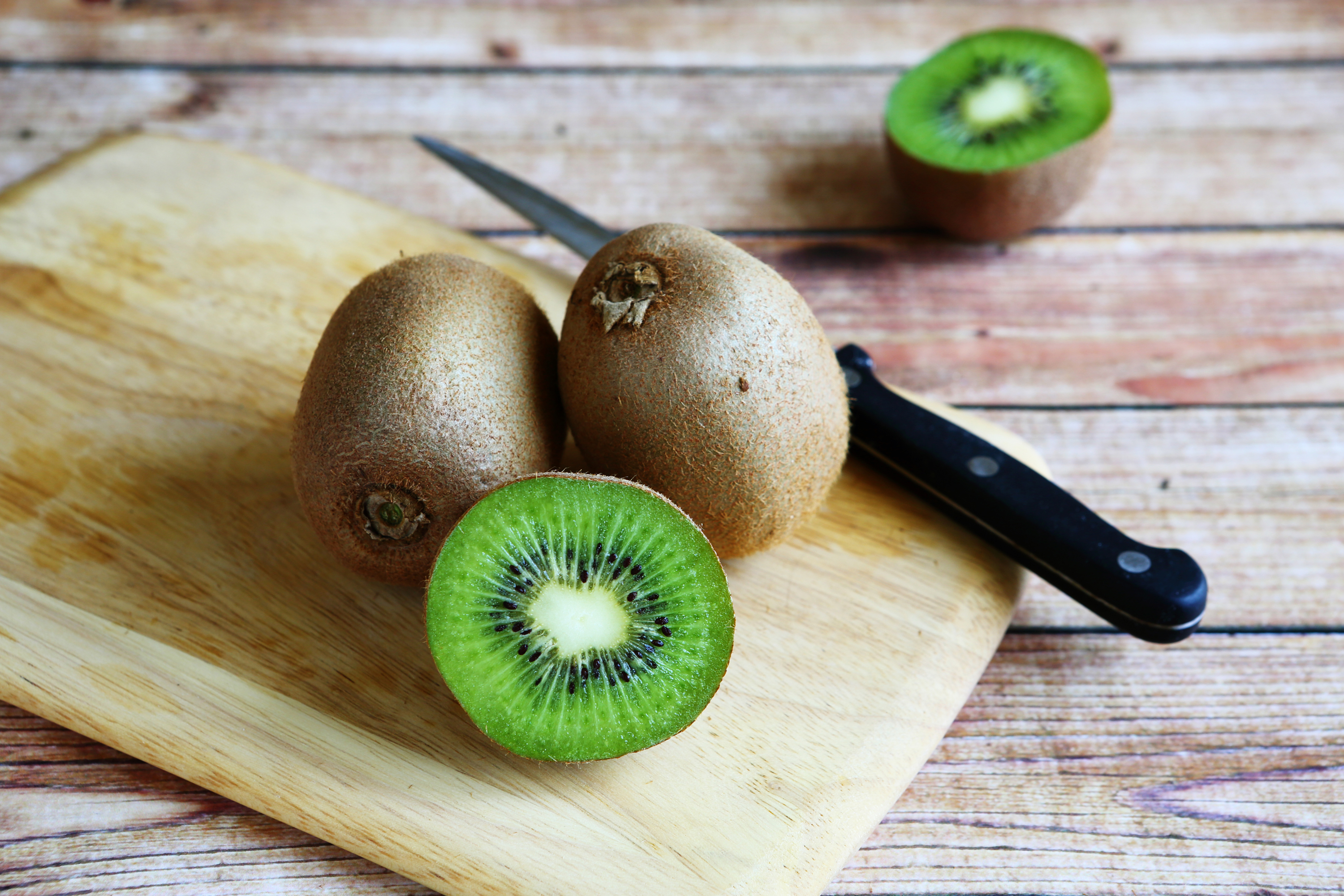 Enzymes in kiwi fruit can aid digestion
The presence of a natural enzyme called actinidin in kiwi fruit (also found in mango and pineapple) aids healthy digestion. “Actinidin has been shown to help break down plant and animal proteins during the digestion process,” Ruani says. “Since our ability to digest protein tends to decline as we get older, anything that helps with the breakdown of protein earlier in digestion is helpful.” Fermentable fibres and plant polyphenols in the fruit also help good gut bacteria to flourish.
They can help to lower blood pressure
As a valuable source of soluble fibre, the type that binds to “bad” LDL cholesterol and other fats in the blood, kiwi fruit help with the removal of unhealthy blood fats from the body. One team of Norwegian scientists found that eating two kiwi fruit a day reduced levels of plasma triglycerides, fat circulating in the bloodstream that raises the risk of heart disease, by about 13 per cent. And a group of healthy adults who ate two of the fruit daily for seven weeks had significantly lower blood pressure, reducing one of the risk factors for heart disease, according to a study in Nutrients.
• I was the queen of wellness. Now, I just want a drink
Be aware — allergy to kiwi fruit is common
According to Anaphylaxis UK, allergy to kiwi fruit has become more common since the 1980s when kiwis were widely introduced to the UK diet. “Some people experience a reaction to the enzyme actinidin in the fruit and it can result in a tingling feeling that irritates the mouth and lips,” Patel says. “In others the body’s immune system confuses the proteins in kiwi fruit and some other fruits such as avocados and bananas, with similar proteins found in latex, a reaction called latex fruit syndrome.” Seek medical advice if the allergic response is severe.
Can you eat the skin?
Eating the skin of a kiwi fruit will provide added fibre, but the BDA recommends peeling first. “Although the skin of regular kiwi fruit adds fibre, it is abrasive and the new BDA guidelines suggest it increases the risk of mouth irritation and abdominal discomfort for some people,” Ruani says.
An exception is the golden kiwi fruit, sold in Sainsbury’s and M&S among other supermarkets and grown to be consumed with the skin on. “This variety tends to be less acidic and lower in the enzyme actinidin so is gentler on the mouth and stomach for some people,” Ruani says. “Nutritional comparisons published in the European Journal of Nutrition showed that vitamin C concentrations are higher in the golden variety and they also contain up to 4g of fibre compared to 2-3g in the regular fruit.”