
During a break in traffic on Mount Merrion Avenue in Dublin on Saturday afternoon, an Iranian man passed a Garda car parked in front of the Iranian embassy before grabbing hold of the railings with both hands.
He shouted towards the building before being quickly directed by a garda to return to the other side of the road, where about 100 people chanted for the expulsion of Iranian diplomats.
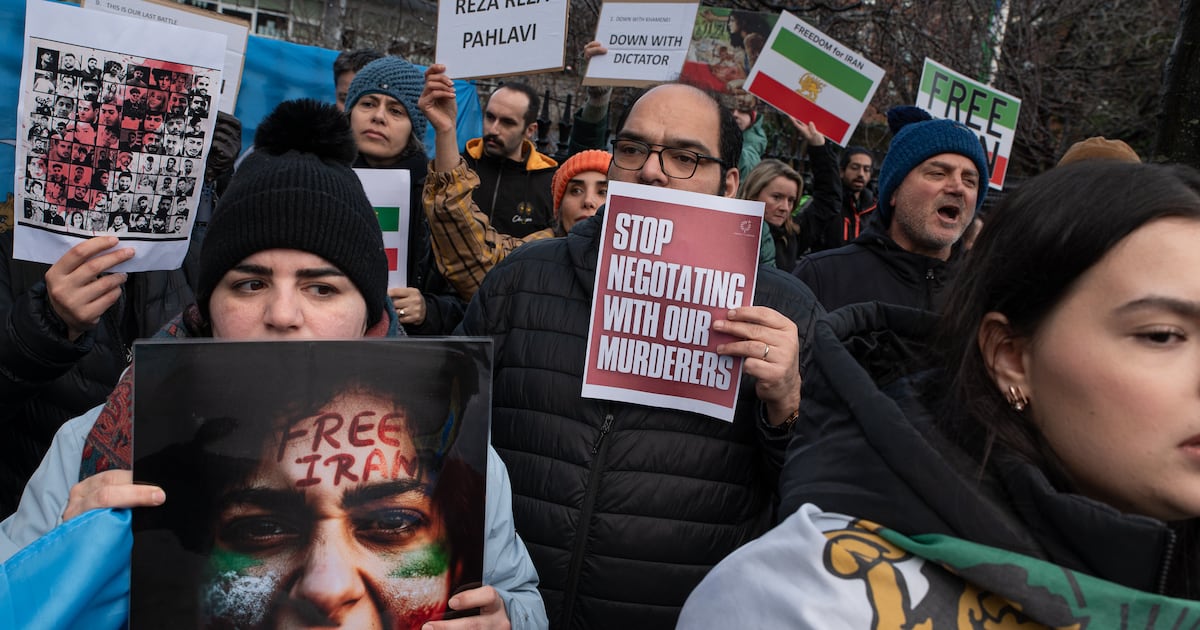
Some demonstrators wore face coverings and sunglasses, explaining that they feared for the lives of their family members and friends “held hostage” in Iran should they be seen protesting or speaking out.
Placards made from sheets of paper and torn cardboard read, “They are killing in silence”.
Since anti-government protests began in Iran in late December, the US-based Human Rights Activists News Agency says it has confirmed 3,090 deaths, with 3,882 further cases still under review.
Others held photos of Reza Pahlavi, the exiled son of the last shah of Iran, who recently called on Iranians to continue their mass protests until the regime falls.
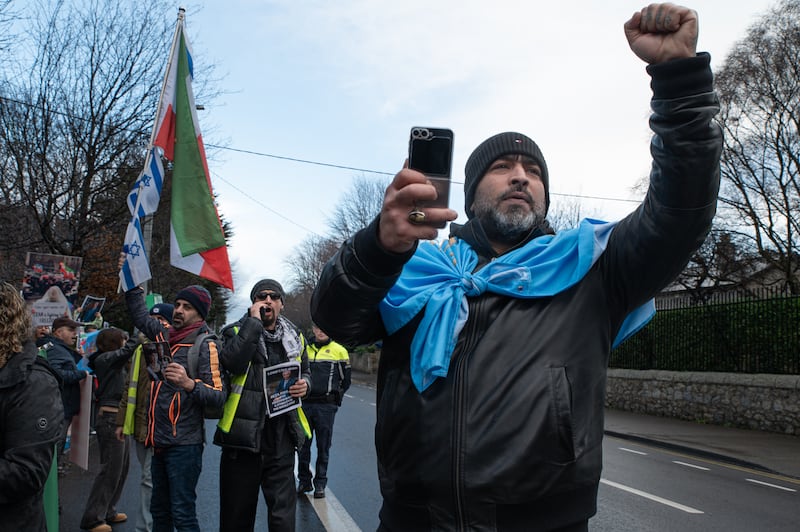 Protesters gather outside the Iranian Embassy in Blackrock. Photograph: Natalia Campos
[ Iranian leader acknowledges ‘thousands’ killedOpens in new window ]
Another protester held an image of Pahlavi next to US president Donald Trump, along with the words, “Two leaders, one movement”. He used the placard to shield his face as someone photographed him.
“They are afraid our families, relatives and loved ones will be killed,” said Niloofar, a woman in her 30s originally from the Iranian city of Shiraz.
Removing her face covering briefly, Niloofar, who lives and works in Dublin, said her parents and siblings remain in Shiraz, which is in the southwest of the country.
She spoke to her family members “just once for one minute” after spending nine days believing they may have been killed following an internet blackout. The internet outage was imposed on January 8th.
Protesters gather outside the Iranian Embassy in Dublin, 17 January 2026, demonstrating in response to current political events in Iran. Video: Natalia Campos
During that quick phone call, they said they were “fine” and not to worry, though she believes they “couldn’t say anything” over fears their phone might be “tapped”.
“They monitor everything,” she said.
Recalling how she felt during those nine days, when she feared the worst for her family in Iran, Niloofar said: “I was like a crazy person. I’ve never seen myself like that before – it was terrifying.”
[ Iranians in Ireland fear for safety of loved onesOpens in new window ]
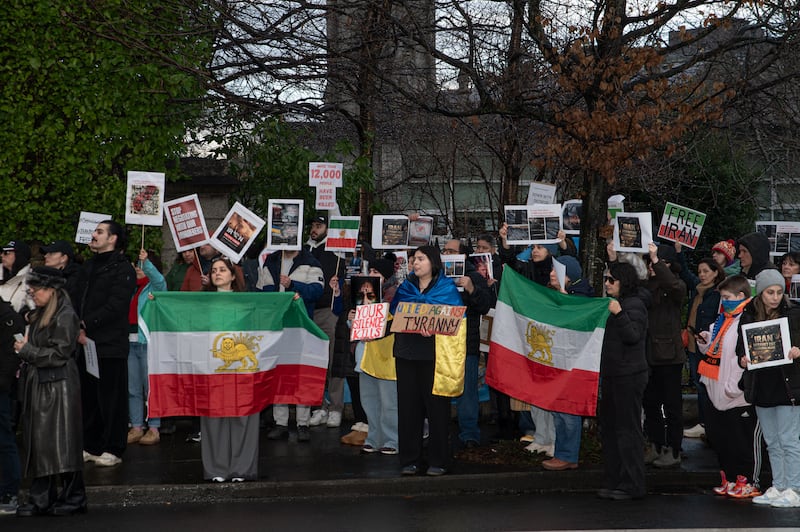 Demonstrators gathered outside the Iranian Embassy in Blackrock, Dublin, calling for the expulsion of Iranian diplomats. Photograph: Natalia Campos
Breaking into tears, she added: “I don’t understand this silence from all the world.”
Pahlavi is “the one we truly trust”, she explained. She is hopeful that US president Donald Trump, who recently called on Iranians to keep protesting, will intervene.
“Donald Trump promised he would do something for us. We still have hope in his words. We can’t do anything with bare hands in Iran. The outside should come and help us,” she said. Niloofar described Trump as “our last hope”.
Also in the crowd was Roza, one of the protest organisers, who has lived in Dublin for more than a decade.
Protesters gather outside the Iranian Embassy in Dublin, 17 January 2026, demonstrating in response to current political events in Iran. Video: Natalia Campos
The 34-year-old is originally from Tehran. She has messages from three of her friends, who last wrote to her on January 8th.
In the messages, they told her they were intending to protest that night in Tehran. They asked Roza to pray for them.
“It’s like a nightmare, I can’t sleep properly,” she said, not knowing her friends’ current circumstances.
Paria, a woman in her 40s from Tehran, briefly paused to stop herself from crying before she spoke.
Her entire family lives in Tehran and she spent several days believing they were dead.
“I was going mental until my dad called me,” she said. As she spoke, the crowd behind her chanted, “Down with Khamenei”, in a reference to Iran’s supreme leader.
“Everyone I know, they don’t want this regime,” said Paria, describing loved ones and friends living “double lives”.
“When you go out of the home, you act like the government wants [you to act],” she added, before recalling an early memory of her father warning her not to tell others that they played chess together.
“We learned to survive but kept our faith.”