
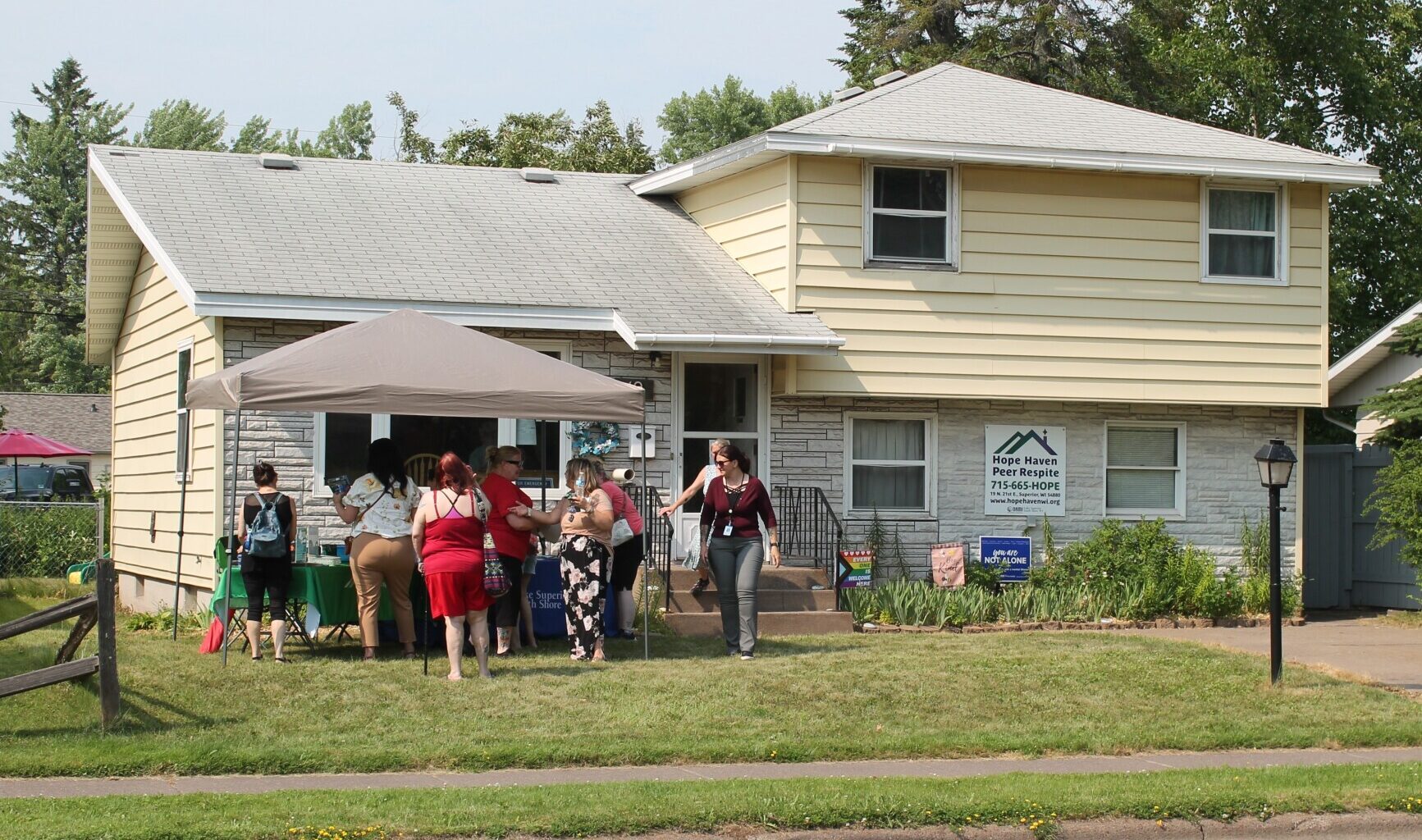
SUPERIOR — Hope Haven Peer Respite in Superior helped more than 100 people in person and answered nearly 1,800 hotline calls in 2025, according to an operations report presented to the Douglas County Health and Human Services Board on Jan. 8.
A peer respite provides free support for people with mental health or substance use concerns. The voluntary, short-term programs are staffed by people who have experienced similar challenges. Hope Haven, the
seventh peer respite center in Wisconsin,
opened July 14. It covers Douglas, Ashland and Bayfield counties.
Executive Director Chrissy Barnard said there was an even greater need than she anticipated.
“We actually see people’s lives change right in front of us, and I feel that’s really important because people are struggling, they truly are, and sometimes we’re the only place that has no barriers, because you can come here just as you are,” said Barnard, who is also the executive director for the National Alliance on Mental Illness (NAMI) Lake Superior South Shore, which runs Hope Haven.
The peer respite takes in people who are unhoused or uninsured — and even those who are under the influence so long as they’re not out of control.

Chrissy Barnard, director of Hope Haven Peer Run Respite.
Maria Lockwood / Duluth Media Group file photo
“We could do even more if we had more funding, especially because we’re finding out that our unhoused folks are really the ones who are struggling the most with their mental health and substance use, and no one else is really able to help with all the needs that they have,” Barnard said.
Staff hours at the nonprofit were reduced by 125 hours monthly in October and another 160 hours monthly in January due to funding issues.
Barnard said that the peer respite applied for a $50,000 grant but was only awarded $10,000. Due to that reduction in funding, she said, the nonprofit lost out on a $100,000 matching grant from Douglas County.
“Instead of being just $40,000 short, we are now $140,000 short on funding,” Barnard said.
Until additional dollars come in, Hope Haven is no longer offering overnight stays and has limited its drop-in hours to between 9 a.m. and 7 p.m. daily to keep costs down. Previously, the respite house was open 9 a.m. to 9 p.m. weekdays and people could stay overnight on the weekends.
A help hotline — 715-665-4673 — is now answered from 9 a.m. to 7 p.m. instead of 24 hours a day.
A total of 87 guests stopped by Hope Haven during drop-in hours last year. Of those, 21 had an identified substance use issue. August was the busiest month, with staff welcoming more than twice as many guests as any other month except for September.
Hope Haven offered 82 overnight stays to 27 people, with an average length of stay of 2.3 days. more than 75% of overnight guests were from Douglas County. When asked what their top needs were, overnight guests identified self care, connection with others and resources, according to the report.
Resources provided included education on coping skills and self care, harm reduction supplies such as naloxone and condoms, legal resources, basic first aid, showers, hygiene products, meals, clothing and laundry access.
Hope Haven staff answered 1,760 hotline calls in 2025.
“We actually received 1,908 calls but could not answer them all due to being on the line with another caller,” Barnard said.
People called the hotline for many reasons, including feeling anxious, depressed or suicidal, or seeking validation, peer support or resources. Some regulars call multiple times a day, Barnard said.
The nonprofit has applied for grant funding from local organizations. It is also waiting for the state to post applications for its peer-run respite grant, a five-year state grant which could provide $470,000 per year to Hope Haven. But the soonest that grant could start is in July, Barnard said.
In other news, NAMI Lake Superior South Shore has launched a monthly tribal peer support group at the Red Cliff Nooji Center in Bayfield County. Upcoming fundraisers for the nonprofit include the annual
Wearing Joy Upcycle Fashion Show
on Feb. 27.

Valentines created for Wisconsin veterans by community members line a table in the University of Superior-Wisconsin Yellowjacket Union Saturday, Jan. 17. The National Alliance on Mental Illness Lake Superior South
Contributed / Chrissy Barnard
On Saturday, Jan. 17, NAMI Lake Superior South Shore brought together community members to create Valentine’s Day cards for Wisconsin veterans. The group made 100 cards.
Another card-making session is set for 5:30-7:30 p.m. Thursday, Jan. 22, at the University of Wisconsin-Superior Jim Dan Hill Library. The nonprofit’s goal is to make 500 cards for veterans in nursing homes and hospitals and for Gold Star families.