
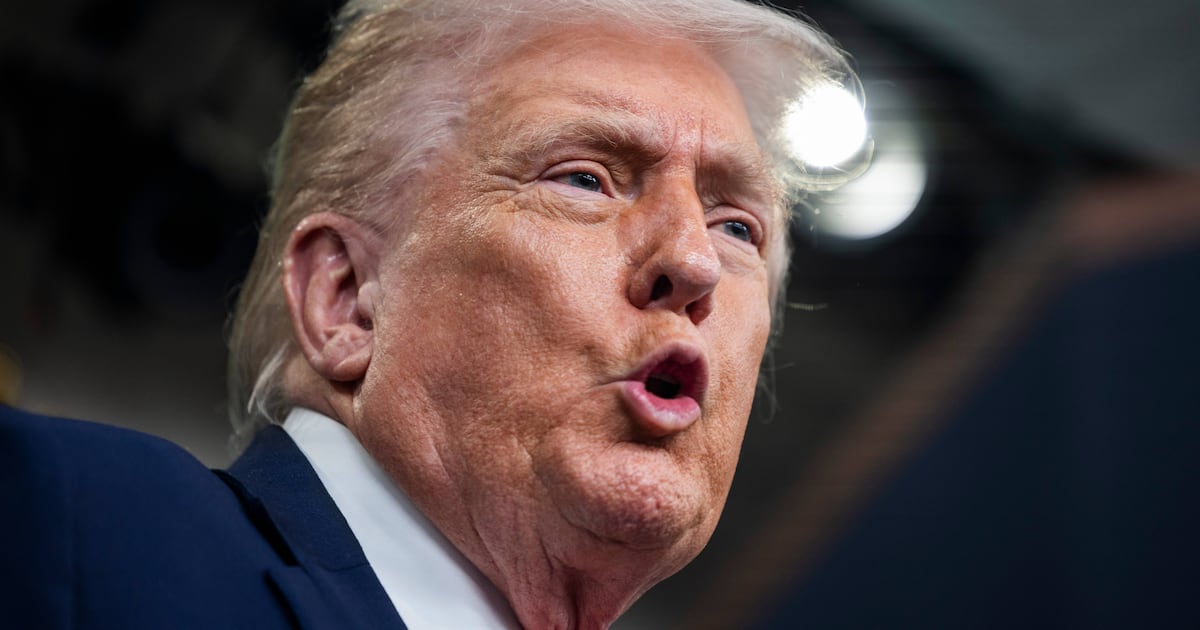
Asian stocks extended their losing streak on Wednesday, undone by heightened tensions over US threats to acquire Greenland ahead of president Donald Trump’s Davos speech, while Japanese bonds bounced sharply to regain some composure from a meltdown.
Fears of offshore selling of US assets – the so-called “Sell America” trade that emerged after last year’s “Liberation Day” tariff announcements in April – gripped markets as Wall Street tumbled over 2 per cent overnight and the US dollar suffered its biggest fall in over a month.
That sent investors fleeing to the safety of gold, which surged 2.1 per cent to a new record of $4,865 an ounce.
“The ‘sell America’ trade was the driving force behind major market moves overnight, as investors looked to reduce exposure to the US, seen by many as an unreliable partner pursuing self-defeating policies,” said Mantas Vanagas, a senior economist at Westpac.
Trump, however, doubled down on his rhetoric over Greenland, saying there was “no going back” on his goal to control the island, refusing to rule out taking it by force. His threat of tariffs on Europe has also rekindled fears of a global trade war.
The European Union will convene an emergency summit in Brussels on Thursday to discuss the matter, with the long-standing US-EU alliance clearly at risk.
All eyes are now on the World Economic Forum in Davos where Trump is due to deliver a keenly awaited speech later in the global day, which could calm or inflame tensions with Europe.
The MSCI’s broadest index of Asia-Pacific shares outside Japan fell 0.5 per cent. Japan’s Nikkei skidded 0.5 per cent, down for the fifth straight day. Chinese shares outperformed the region, with the blue-chip index gaining 0.5 per cent.
Wall Street futures were up slightly after the overnight jolt. Both Nasdaq futures and S&P 500 futures inched up 0.3 per cent.
Both Euro Stoxx 50 futures and Dax futures slipped 0.1 per cent, suggesting a muted open for European bourses.
The global bond market was still reeling from a brutal selloff, having been caught up in a perfect storm of worries over exposure to US assets and a surge in Japanese government borrowing costs.
Fears over increased government spending under Japanese prime minister Sanae Takaichi sent bond yields there skyrocketing to record highs, drawing criticism from the opposition.
On Wednesday, Japan government bonds rallied as buyers returned with prices at suppressed levels. The 40-year Japanese government bond yields fell 11 basis points to 4.1 per cent, having surged 26 basis points a day earlier.
US Treasury yields also retreated. The benchmark 10-year yield slipped two basis points to 4.2767 per cent, after jumping seven basis points overnight to a five-month high of 4.313 per cent amid a souring in sentiment on US assets.
Danish pension fund AkademikerPension said on Tuesday it would sell off its holding of US Treasuries, worth some $100 million, by the end of this month, blaming weak US government finances.
In the currency markets, the US dollar held steady at 98.57 against its major peers, having dropped 0.5 per cent overnight – the biggest daily fall since early December.
The yen was steady at 158.13 per dollar, but lost out on a number of crosses, with the Swiss franc hitting a record high of 200.19 yen.
The Bank of Japan meets on Friday and though no rate hike is expected this time, policymakers could flag a tightening as soon as April.
Oil prices fell as pressure from geopolitical tensions and an expected build-up in US crude inventories outweighed a temporary halt in output at two large fields in Kazakhstan. West Texas Intermediate crude oil prices for March fell 0.9 per cent to $59.82 a barrel. – Reuters