
While most snakes retreat deep underground to avoid subzero temperatures, some populations of Thamnophis sirtalis parietalis face a risk their biology is barely equipped to handle: accidental freezing. Yet, under very specific conditions, a few manage to survive, even when ice forms inside their bodies.
This remarkable tolerance is limited, dangerous, and heavily dependent on both environment and evolutionary inheritance. As climate change disrupts winter patterns across North America, researchers are racing to understand how these reptiles endure freezing, and what happens when their natural defenses fall short.
How a Snake Lives Through Ice
When temperatures drop below zero, ice can begin forming in the extracellular spaces of a garter snake’s body. In rare cases, they survive, thanks to two defensive responses. First, the body enters metabolic depression, shutting down circulation and oxygen transport to preserve energy. Second, a group of small molecules known as cryoprotectants begins to accumulate, protecting tissues from damage.
A study in Canadian Journal of Zoology reported that red-sided garter snakes can survive short exposures to −2.5 °C (27.5 °F), with up to 40% of their body water frozen. In trials, No-legged reptiles fully recovered after three hours of freezing. But survival rates fell to 50% after ten hours, and none recovered after 24 to 48 hours.
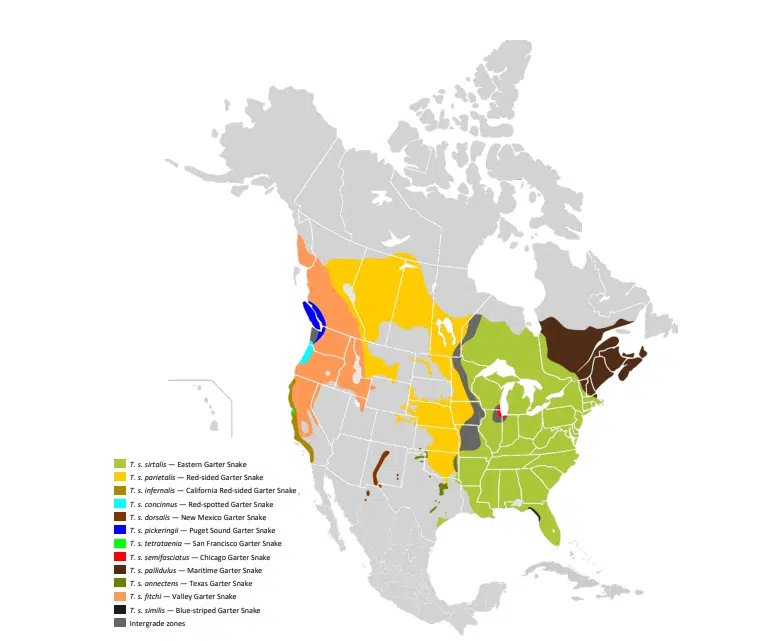 Distribution of garter snake subspecies across North America. Credit: Species at Risk program in the Northwest Territories (NWT)
Unlike some amphibians that flood their bodies with glucose during freezing, garter snakes show only modest chemical responses. Increases in taurine and glucose are limited and concentrated in specific tissues, not system-wide. This narrow physiological margin makes their survival possible, but barely.
Where they live makes a big difference. In places like Manitoba, they spend the winter in deep, well-insulated dens that help protect them from freezing. But near the edges of their range, where the weather is more unpredictable, surviving the cold becomes much riskier.
Fragile Biology, Narrow Window
The red-sided garter snake’s tolerance for freezing is not a general survival mechanism. It works only at mild subzero temperatures, only for short periods, and only in certain individuals. According to Forbes, scientists emphasize that reptiles generally lack the robust freeze-defense strategies found in amphibians like the wood frog.
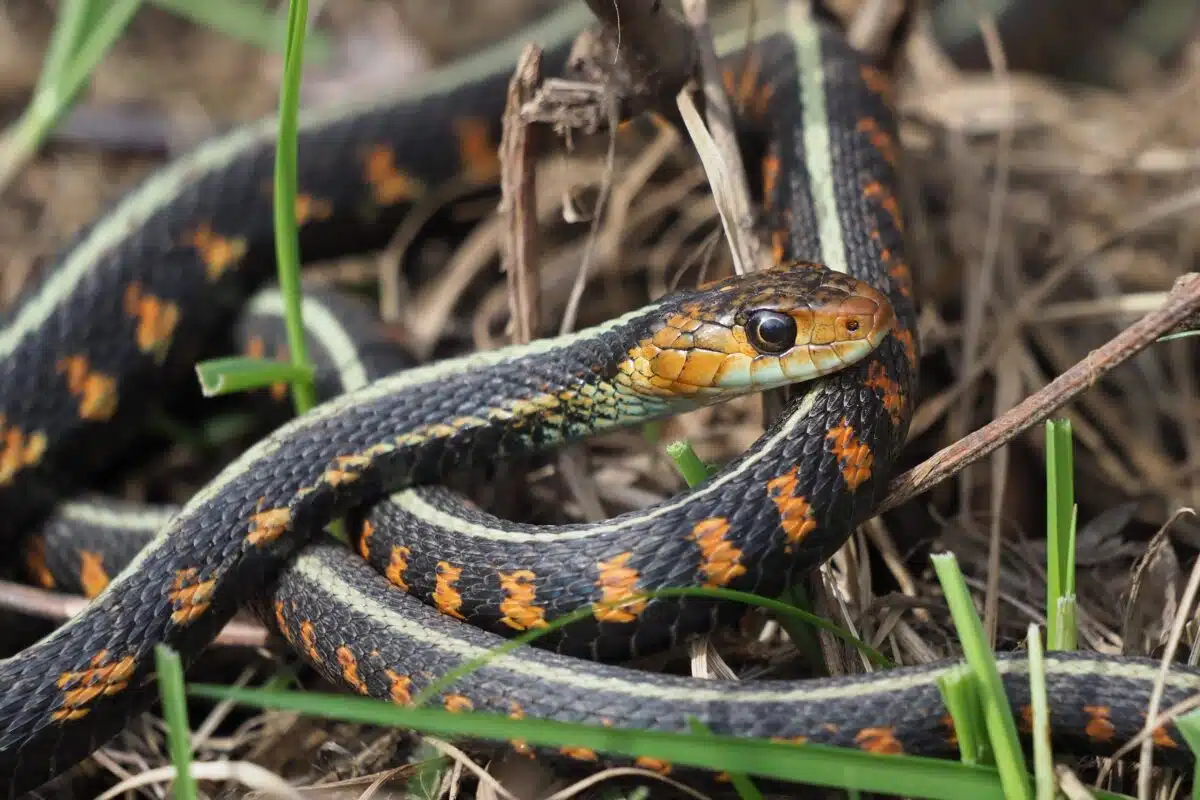 Red-sided garter snake (Thamnophis sirtalis parietalis) in its natural habitat. Credit: Shutterstock
In fact, the garter snake’s freeze tolerance is better understood as a last resort, not an adaptation for enduring deep winter. Unlike frogs, snakes have less flexible hydration systems and fewer cryoprotectant reserves. This results in a steep drop-off in survivability once conditions exceed their limits.
Animals Built for Winter, But Winter Is Changing
Unpredictable winters are testing the limits of this adaptation. While warmer average temperatures might reduce freeze risk, they also bring unstable conditions: more freeze-thaw cycles, unexpected floods, and mismatches between temperature cues and brumation behavior.
A 2023 assessment of northern garter snake populations linked thin snowpack and pre-freeze flooding to elevated winter mortality. In these cases, sheltering snakes are caught off guard, unable to reach safety before temperatures drop.
Scientists are now focused on mapping which hibernacula provide the best protection and whether those sites can be preserved. Meanwhile, at a molecular level, researchers aim to identify which genes and regulatory systems control the snake’s freeze response. As Forbes noted, combining long-term monitoring with tools like metabolomics and transcriptomics may reveal how this delicate balance evolved, and whether it can hold up under modern stress.