

MPs in London have voted to delete a controversial immunity clause from the current Troubles legacy legislation in Northern Ireland.
After a three hour debate, a so-called “remedial order” amending the Troubles Act was voted through.
Three hundred and seventy three MPs supported the move.
It was opposed by 106.
The remedial order has also to be passed by the House of Lords before it takes effect.
As well as deleting the controversial immunity clause from existing legislation, the vote clears the way for several hundred civil cases linked to the Troubles to be relisted.
They had been guillotined under the former Tory government’s legacy arrangements.
The vote in the UK parliament forms part of the current Labour government’s pledge to repeal and replace the legacy law which had been roundly condemned by all sides in Northern Ireland and the Irish Government.
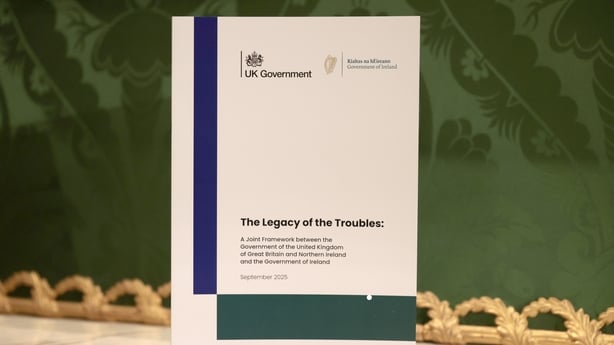
A framework agreement on the Troubles legacy was announced by the British and Irish governments last September
It offered conditional immunity from prosecution for those who co-operated with a truth recovery body.
The courts in Northern Ireland found that the immunity provision and the shutting down of civil actions was a breach of the UK’s commitments under the European Convention on Human Rights.
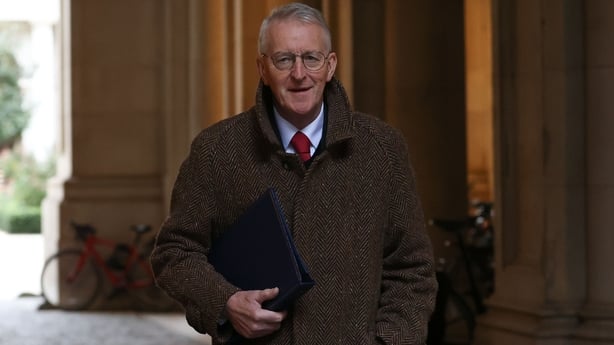
Northern Ireland Secretary Hilary Benn said the move is essential to rebuild trust
The Labour government is separately bringing forward a new legacy bill which will replace the one it inherited from the Tories.
It follows an agreement with the Irish Government last autumn on fresh legacy arrangements for Northern Ireland.
It will reform and rename the existing legacy body and provide greater oversight and independence.
The Irish authorities have said they will also legislate to facilitate cross border legacy investigations in due course.
In the meantime an Irish interstate case against the UK authorities before the European Court of Human Rights over the existing legacy provisions remains live.
It is expected to be withdrawn when the Government assesses that the agreement it reached last year has been faithfully reflected in the replacement UK act.