

“What is the biggest risk to your business in 2026?” This is the question I asked CrossFit affiliates owners yesterday in an Instagram story. Over the past few weeks, I have had several conversations discussing the concerns of affiliate owners.
All of those discussions were with people who had talked with owners. I had not heard these directly from someone who owned a CrossFit gym. So I asked the question.
Here is what I found out…
Rising Costs
What is the first thing you think of when you read ‘rising costs’? Was it the increase in affiliate fees?
While several owners did mention “high affiliate fees” or “increase of affiliate fee”, most of the discussion was the macroeconomic impacts of running a business today.
Multiple affiliate owners said their biggest risk was the rising costs of everything around them. Increases in rent was the most referenced rising cost, closely followed by taxes – namely property taxes (or business rates in the UK).
One owner from Canada spoke about rising rents, “My affiliate is in Canada and everyone is being priced out of their buildings.” Another said, “Increasing costs, especially rent.”
Others said that things like utilities, insurance, payroll, merch and inventory are putting pressure on business owners.
Note: CrossFit raised its affiliate fee on January 1, 2024 to $4,500 USD. There have not been any announced plans of raising the affiliate fee again by the current owners in 2026.
Others referenced the economy in general. Whether it was concerns of a recession or members’ disposable income dropping, owners expressed concerns about things happening in the world, that by an large, that cannot be controlled.
Potential Sale / New Ownership
It has been almost a year since Don Faul, CrossFit CEO, announced that Berkshire Partners, the majority owner of CrossFit, LLC, was actively looking to sell the company. Over the past ten months, several potential buyers have reportedly been close to acquiring the company.
All of those, to our knowledge, are no longer in the running to acquire CrossFit.
However, owners expressed concerns about what the direction of CrossFit could be if (or when) CrossFit is ultimately sold. “If CrossFit falls into the wrong hands,” one affiliate owner responded.
Those concerns likely stem from the business plan that Wade Diebner was circulating last month to attract investors. That plan included several items that were not well received by the community – raising affiliate fees to $10,000; pushing an in-home CrossFit app; promoting a multi-level marketing program for supplements.
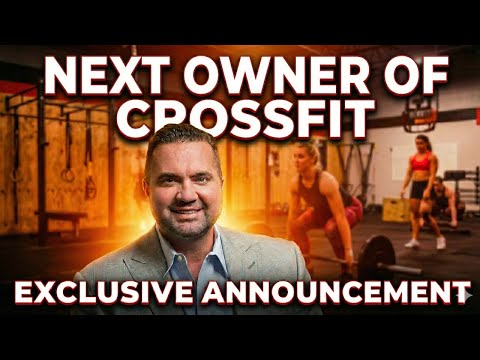
One affiliate owner expressed concern that all of the drama surrounding the potential sale would affect members’ perception of CrossFit. The owner wrote, “Fear that members will become aware of the perceived instability at HQ and let that influence their opinions of the methodology.”
Lack of Communication from HQ
Others referenced the lack of communication from CrossFit HQ. One comment referenced the communication surrounding the sale, “Unknown and lack of communication from HQ on the potential sale.”
When Don Faul shared that CrossFit, LLC, was up for sale, he said, “These processes take time and we won’t be able to share details until its completion.”
Faul was correct in saying that. These deals require confidentiality and details cannot be shared until things are competed, in most cases. The problem arises when buyers speak to media or things are leaked and get out to the public. CrossFit is likely not wrong to stay silent, but it does create concerns within the community, especially those who own a CrossFit gym.
If lack of communication was not mentioned, it was focused around HQ’s overall messaging, or lack thereof. “CrossFit not doubling down on media,” one owner responded.
Another spoke about CrossFit competitors (F45, AlphaFit, Orange Theory, etc) and HQ’s lack of repsonse. “CrossFit lite everywhere around us. Repackaged methodology. No help from HQ.”
And from one owner who said they would be de-affiliating this year, “Now HYROX arrived. It has fewer problems and more people are doing it. It leaves much to be desired to be affiliated with a brand [CrossFit] that has lowered its level of competition and everything else.”
That same affiliate owner complained about the amount of fees incurred (affiliate fee, Open fees, Quarterfinal fees, judge fees, L1/2/3 fees) and getting nothing in return for being an affiliate.
“Sport Focus”
Ever since 2018 when Greg Glassman dismantled the media team and put all of his effort into milk jugs and the affiliate side there has been a debate on how CrossFit HQ should promote CrossFit. Some have argued that CrossFit should use the CrossFit Games as a funnel to attract new members while others have said CrossFit should promote what’s happening within the four walls of the affiliates.
“HQ only focusing on the competitive side of the sport/competitive athletes”, one owner replied.
A different owner had a slightly different take, “Games athletes not hyping the CrossFit brand or worse, being negative towards the brand, and/or NOT being a part of the community (like working out inside an affiliate).”
GLP-1’s
This was not something I expected. Two owners mentioned GLP-1’s, the weight-loss drugs like Ozempic, Wegovy, Mounjaro, etc). No additional context was given, but my guess is that their concern is that people will turn to GLP-1’s to lose weight instead of stepping inside a CrossFit gym.

Conclusion
As expected, there was a wide array of responses from affiliate owners. Things like the economy and general inflation are things owners cannot directly control for. The same is likely true for rising rents or property taxes. I know that owners have brought these types of concerns to CrossFit, LLC. The question is…how can CrossFit assist owners navigate these challenges? Or can they?
It is also no surprise that the pending sale has brought a dark cloud over CrossFit this past year. Uncertainty, rumors and the ongoing process does hamper growth and a clear direction, especially when a potential new owner could flip how the business is run.
And finally, messaging from HQ. All of the concerns brings up the question, “What should CrossFit HQ’s role be in messaging?”
How should CrossFit balance promoting the CrossFit Games versus the methodology? Should CrossFit HQ be more vocal when it comes to competitors? What should HQ do to provide value to affiliate owners? All are questions worth asking.
But at the end of the day, most affiliate owners must spend a majority of their time solving problems they can fix within the four walls of their gym. That was best summed up by one response to their biggest fear, “My own poor decisions.”
While HQ affects all CrossFit gyms, every gym is unique in its needs and how it should respond to different situations. The best advice would be to focus on the members, find ways to grow membership and have plans in place to combat things you cannot control.
Don’t miss a thing!
Get the best of The Barbell Spin sent directly to you inbox, five days a week.
Boom!
You’re all set…