
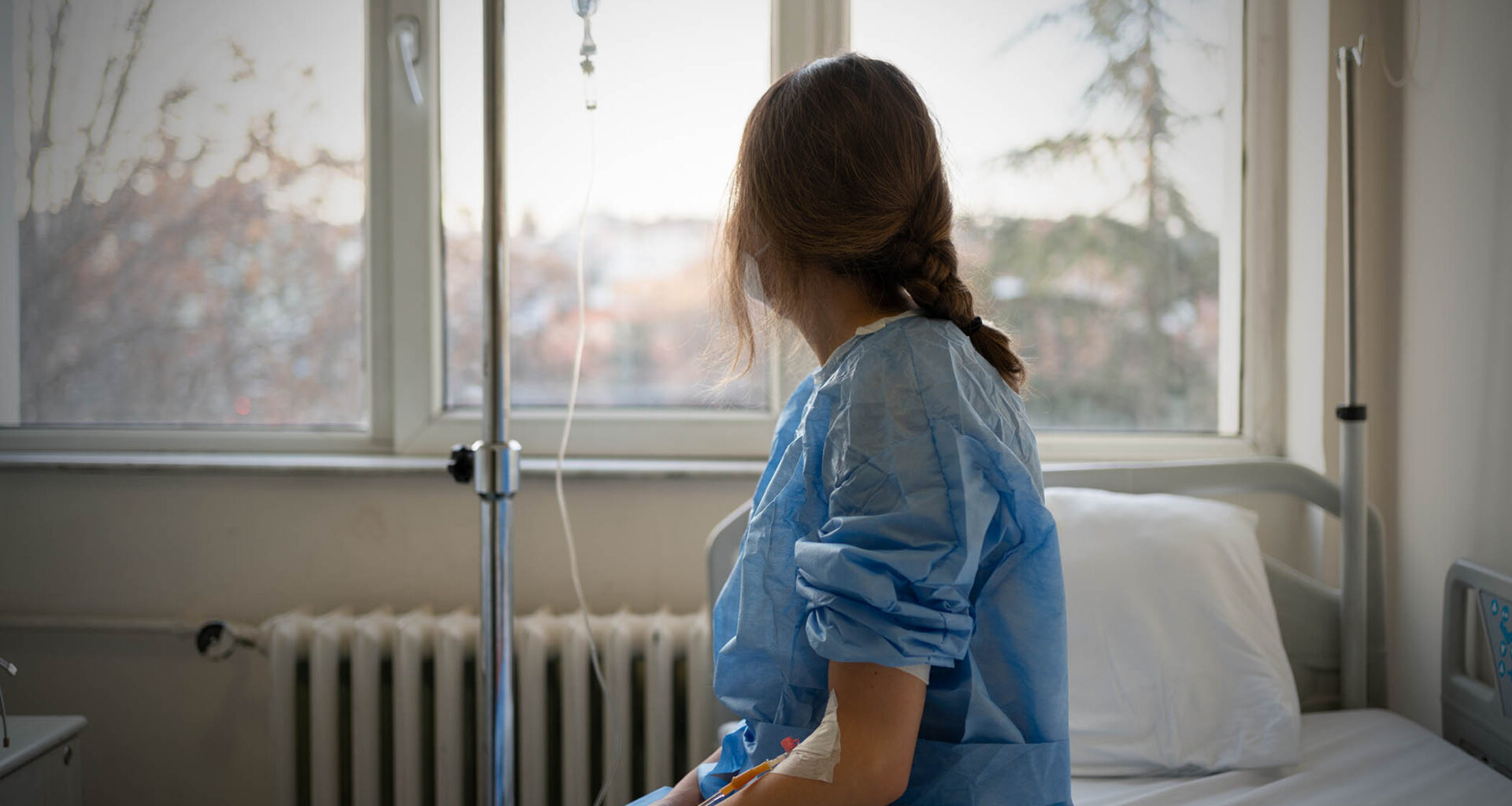
Mental healthcare is a kinder business than it was. The last of the traditional Victoria-era asylums shut in the 1990s, ending an era of padded cells and lifelong imprisonment. Better drugs mean that these days those with even severe mental illnesses can manage to live pretty normal lives. But in the past few decades there has also been an alarming rise in patients being detained against their will. Why?
Sectioning – detaining someone under a particular section of the Mental Health Act 1983 – is done only when a patient is extremely ill, usually in a state of psychosis, and is thought to be a danger to themselves or others. The decision requires two doctors and one other mental health professional, such as a nurse or social worker: patients are held in a psychiatric unit and treated without their consent. It used to be fairly rare: in 1984, detentions stood at 12,130 patients a year; in 2024-25, according to NHS England, that figure was at an astonishing 52,731.
One theory is that there has been an increase in the number of mental health problems: doctors are better at identifying them, social problems such as loneliness have got worse and stigma has reduced, meaning more come forward for a diagnosis. That seems to be true when it comes to depression and anxiety. But it less clear when it comes to the sorts of illnesses that most commonly lead to sectioning, such as schizophrenia and bipolar disorder, whose rates remain roughly steady in each generation.
Others posit that it is all to do with overstretched mental health units. “We have reduced our beds by about 84% in the last 40 years” says Dr Lade Smith, president of the Royal College of Psychiatrists. “One in six consultant places are vacant, as are one in five nursing positions. And 15% of mental health hospitals are in a critical state of dilapidation.” Out-of-date and crumbling buildings put further pressure on staff, who must then watch for escape routes and ligature points. There are just 17,999 mental health beds in England, meaning the NHS increasingly relies on the private sector, which accounts for almost 30% of its capacity. But this is not a perfect solution. Private hospitals, run by chains such as the Priory Group, Cygnet and Elysium, have been criticised dozens of times in the past decade at inquests into deaths of patients in their care.
This pressure can all lead to tricky decision-making. Where once people could turn up at a mental health unit and admit themselves voluntarily, these days sectioning is the main route in. As a last resort, some clinicians are reportedly detaining patients who wouldn’t otherwise qualify in order to get them proper care. According to the Care Quality Commission, being sectioned is increasingly seen as “a ticket to getting a bed”.
Too few beds also means patients are frequently discharged too early, raising the risk that they’ll be sectioned again. Others are refused admittance and turned over to community care, where they may deteriorate into crisis, only then to be sectioned. “When we got rid of the asylums, we were supposed to use the money to fund community healthcare in their place, but it was siphoned off elsewhere,” says Smith. This care is underfunded and often woefully inadequate. “All sorts of standards have slipped,” adds Jeremy Coid, professor of forensic psychiatry at Queen Mary University of London. “A lot of crises can be resolved by a short period of admission; you should investigate and take their bloods. Now patients are getting worse as they faff around with community care – the people looking after them are not properly trained or qualified.”
Nor is it just down to a lack of money. Some believe doctors are becoming more risk-averse: sectioning is increasingly a way to err on the safe side and avoid repercussions. Brian Dow at Rethink Mental Illness thinks the fatal attacks last year in Nottingham by Valdo Calocane, a paranoid schizophrenic, will tip the balance further that way. An investigation found Calocane could have been sectioned for longer and forced to take medication, which may have made a difference.
The atmosphere of risk-aversion was accelerated in the mid 2000s by reforms to the Mental Health Act in the wake of cases such as the 1996 murders of mother and daughter Lin and Megan Russell by Michael Stone, who is thought to have received poor treatment for a mental health condition. Judy Laing, professor of mental health law and policy at Bristol University, says these broadened the definition of risk and of mental disorders, which increased the likelihood of a person being sectioned. Parliamentary scrutiny of the changes also discovered that patients were being threatened with being sectioned if they were on a ward voluntarily and wanted to leave.
A round of reforms last year may help redress the balance, according to Laing: “The anticipation is that it will lead to a reduction in sectioning.” But she remains sceptical – ultimately doctors decide who is sectioned and who is not. “The laws are loose, and lots of other factors, such as team cultures, pressures on beds, will play a part,” she adds.
For Lade Smith it comes down to funds. In Britain, she says, discrimination against people with mental health issues has a knock-on effect not only on the cash allocated to mental healthcare but on the expectations of those who care for them. “We are simply not taken as seriously,” she says. “Commissioners ask us about bed occupancy and length of stay. We are not asked to record success rates: how many patients got better, or who we got back into work.”
NewslettersChoose the newsletters you want to receive
Clear, calm analysis on the stories driving the day’s news.
The very best of our journalism, reviews and ideas – curated each day.
A dispatch from The Observer’s kitchen table – from Nigel Slater’s recipes to interviews, features and hot tips.
For information about how The Observer protects your data, read our Privacy Policy
Sectioning is sometimes necessary. But it can inflict serious trauma if it involves, as it sometimes does, being physical restrained, forced to take medication or shut up in a room alone. Such experiences – or simply the fear of them – can put patients off engaging with doctors in the future, and even lead to PTSD. It is also expensive. Every person supported in a secure mental health unit costs the taxpayer about £300,000 a year. If we can avoid sectioning quite as many people, we should.
Photograph by Getty Images