
More than four years have passed since a reform passed by the Center-EKRE-Isamaa government allowed people to leave Estonia’s mandatory funded pension scheme and withdraw their savings. In that time, approximately 250,000 took advantage of the changes.
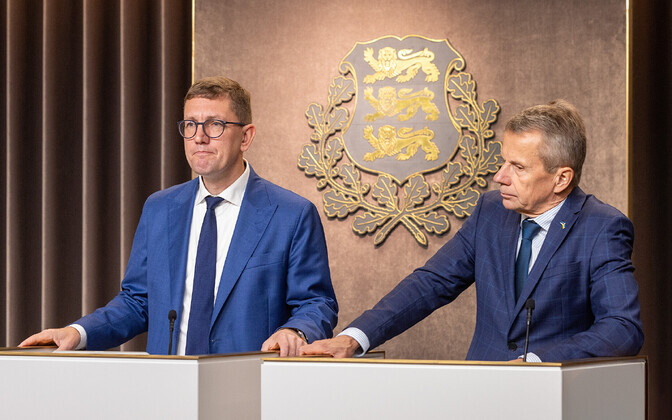
Now, the Ministry of Finance is drafting a bill to allow people to rejoin the second pension pillar and stop it from being changed in the future, Prime Minister Kristen Michal (Reform) and Minister of Finance Jürgen Ligi (Reform) said at the weekly government press conference.
According to the draft sent for interagency review, three main changes will be made to the law.
First, the restriction for rejoining the second pillar after leaving will be shortened from 10 years to five. Second, it will not be possible to leave the second pillar more than once. Third, those who continue contributing will be allowed to withdraw only part of their savings, rather than the entire amount.
“Half a million people in Estonia are in the second pension pillar. A great many people are in the second pillar. We discussed this this week and made fundamental decisions. This means that it will now be easier to rejoin the second pension pillar. The Ministry of Finance is working this out. It will also be possible to access part of the money for essential life needs, which is likewise important,” said Michal.
Five-year notice
The prime minister said protections against future changes will also be written into the legislation.
“One very important principle going forward is that any future changes that could worsen pension savings for those half a million people or reduce the value of their assets must be announced by the state five years in advance. This means people can be assured that any changes will be fixed five years ahead of time,” he told the assembled media.
“As for the second pension pillar, we should all be able to count on the state not acting in bad faith with our assets. Not with the money that goes into pensions and helps grow the Estonian economy. That five-year clause will be included,” the prime minister stressed.
Michal said the draft bill will soon be put out for review.
“We’ll see what kind of political debate follows. I have said before, and I will probably say it again, that the dismantling of the second pension pillar — even if people had only small amounts saved there — and the encouragement to withdraw funds was one of the greatest financial wrongs ever committed against people’s sense of security and their future. We are trying to build a system where people have more freedom to use their money, but where the pension pillars will no longer be torn down in the future,” said Michal.
Partial withdrawals possible
Ligi added that this bill will correct one of the most foolish decisions ever made in Estonia.
“I do not know of any other that has been so destructive in terms of long-term concerns. When it comes to old age, the whole thing was built on this tinfoil hat mythology — articles were written, thesis papers guided, and even academic posts held based on the claim that if you spend pension money, children will start being born. What actually happened was that as soon as the pillar opened, various imbalances emerged, including in economic results, which I’m not allowed to name in detail due to a court settlement. But the data exists. And amid all this, what happened — as everywhere else — is that the birth rate plummeted, not rose. It’s a sad story,” the finance minister said.
He said lessons have been learned, such as where the rules were too rigid and where returns were hindered
“We have already corrected those mistakes. I’d point out that Estonia is at the top among OECD countries in terms of second pillar returns. This was helped by changes already made — fewer investment restrictions, which were initially imposed out of caution. So the second pillar’s returns are very high, and the talk about money being burned there was nothing more than a grand-scale deception of the public,” Ligi said.
The minister stressed that, in addition to a faster path to rejoin the second pillar, the draft bill also includes the possibility of partial withdrawals.
“There are moments in life when partial use of pension money is a vital necessity, and now we are expanding that possibility so that the entire pillar does not have to be emptied. It can be withdrawn in part, and we will likely clarify during the legislative process what that portion is. It is not meant to allow 99 percent to be taken out,” said Ligi.
The exact date for the changes to take effect has not yet been finalized, but it will likely be next year, he added.
Isamaa: Coalition does not expect to be in office after 2027
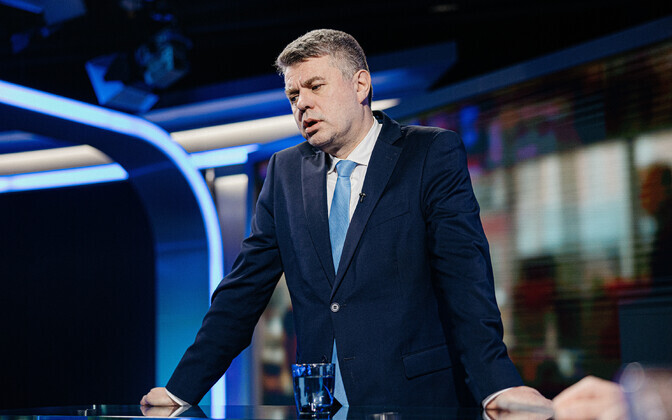 Urmas Reinsalu. Source: Priit Mürk/ERR
Isamaa chairman Urmas Reinsalu said that the government’s new pension bill shows Reform and Eesti 200 do not think they will be in power after the next election in 2027.
Leaving the second pension pillar was one of Isamaa’s biggest promises at the 2019 election. The reform came into effect in 2021.
“There are two things here. One is that changes to the second pillar cannot be made within five years, to make it somehow ‘Isamaa-proof,’ as the prime minister and finance minister put it. This is clearly a signal that the government sees itself as a departing one, with no business governing in 2027,” he commented.
The chairman said the parties are “taking on debt, increasing obligations, signing contracts” which are not in the public interest.
“As for the specific proposals, when I read the news, I understood there were elements like withdrawing pension assets in parts from the second pillar and using them as collateral for real estate. These are essentially offerings of greater freedom and flexibility regarding second pillar assets. That, in itself, is more or less an acknowledgment of Isamaa’s earlier pension reform,” Reinsalu said.
ERR asked Reinsalu whether Isamaa, if it enters government after the parliamentary elections, would reverse this initiative.
“I promise that Isamaa will inform the public honestly about its intentions regarding fiscal policy and other substantial steps planned for 2027. As for the second pillar nuances that are proposed to be changed, we will review them and form our position,” he replied.
This story was updated to add comments from Urmas Reinsalu and more details about the draft bill.
—
Follow ERR News on Facebook and Twitter and never miss an update!