
At the top of Xiaomi’s lineup, the 17 Ultra and 17 Pro Max may look similar, but they’re built with very different users in mind. One prioritizes advanced photography and feature depth, while the other focuses on endurance, practicality, and value. The real differences don’t show up in raw specs; they show up in daily use. This comparison highlights where each phone fits best and who should choose which.
1. Design and Display
Build and Feel
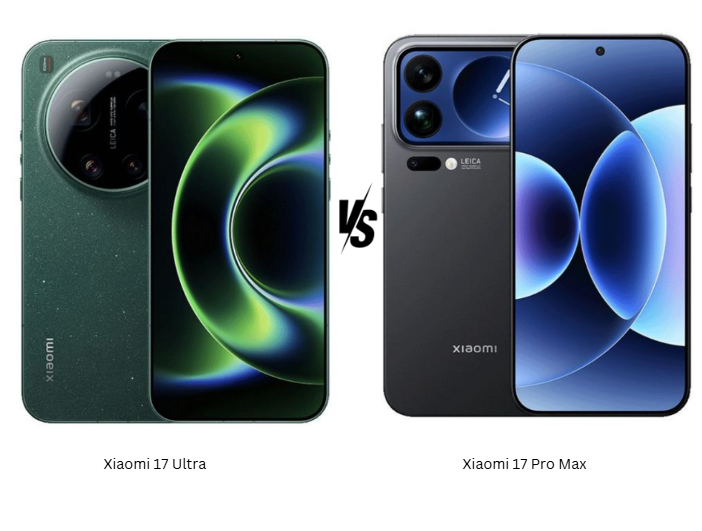
Both phones lean premium, but they communicate it differently. The 17 Ultra focuses on a professional, camera-first identity with a rugged, confidence-inspiring finish that feels purpose-built rather than decorative. It subtly prioritizes durability and grip, making it feel like a tool meant for heavy daily use. The 17 Pro Max, by contrast, goes for a cleaner, more futuristic aesthetic. Its standout secondary rear display adds personality and practical flair, especially for notifications, widgets, and quick camera previews. The Pro Max feels more lifestyle-oriented, while the Ultra feels more workhorse-like.
Display Quality
Up front, both devices deliver an equally elite viewing experience with smooth adaptive refresh rates, excellent brightness, and strong HDR support. Content looks vibrant and controlled on both, with no meaningful compromise in color or clarity. The difference is in flexibility: the Pro Max’s rear display quietly changes how the phone is used day to day, while the Ultra keeps the focus entirely on the main screen.
Verdict
Choose the Ultra for a serious, utilitarian feel. Pick the Pro Max for visual flair and everyday convenience.
2. Specifications
Performance
Performance is effectively identical on both models. The same flagship chipset, modern architecture, and fast storage ensure smooth multitasking, reliable gaming, and long-term software confidence. Day-to-day use feels instant on either device, with no clear advantage in raw speed. The difference is more about how that performance is framed: the Ultra feels tuned for sustained, intensive workloads, while the Pro Max feels optimized for balanced, always-on responsiveness. Neither choice sacrifices longevity or future-proofing.
Battery and Charging
Battery strategy is where separation becomes clearer. The 17 Pro Max prioritizes endurance, comfortably suiting users who value long screen-on time and fewer charging interruptions. Its faster wired charging reinforces its “set and forget” appeal. The 17 Ultra counters with more flexible charging options, including broader reverse charging support, which adds utility for accessories and travel scenarios. It feels designed for versatility rather than outright capacity dominance.
Verdict
Power users who value endurance should lean toward Pro Max. Users who want flexibility and ecosystem convenience will prefer the Ultra.
3. Camera
Main and Secondary Lenses
The 17 Ultra is unmistakably the photography-first device. Its larger main sensor, advanced periscope system, and pro-grade extras make it more adaptable across lighting conditions and focal ranges. It feels built for enthusiasts who want consistent results without relying heavily on software correction. Zoom transitions are smoother, and creative control feels more deliberate. The 17 Pro Max still delivers excellent results, especially in everyday photography, but its camera setup feels more streamlined and less experimental. It favors reliability over ambition, which many users will appreciate.
Selfie Camera
Both phones offer high-resolution front cameras that handle detail and dynamic range well. The Pro Max gains a slight edge in focus reliability, while the Ultra emphasizes natural color tuning. Neither feels like a compromise, even for frequent video calls or content creation.
Verdict
Choose the Ultra for photography depth and flexibility. Choose the Pro Max for dependable, fuss-free imaging.
4. Pricing
The pricing difference plays a major role in positioning. The Xiaomi 17 Ultra launches at $999, clearly targeting users who want the brand’s most advanced camera system and feature-complete flagship experience. The higher price reflects its specialized hardware, satellite communication support, and photography-centric design philosophy. It feels aimed at enthusiasts who know exactly why they are paying extra.
The Xiaomi 17 Pro Max comes in at $899, undercutting the Ultra while delivering nearly identical performance, display quality, and a larger battery. That price gap makes it immediately appealing to users who want flagship power without committing to the most expensive tier. The inclusion of a secondary display further strengthens its value proposition, adding functionality rather than just specs.
Verdict
The Ultra justifies its cost through specialization. The Pro Max offers stronger overall value for most buyers.
5. Conclusion
Xiaomi 17 Ultra stands out with its advanced camera hardware, satellite communication, and accessory-friendly design touches. It feels engineered for users who treat their smartphone as a creative or professional tool.
The 17 Pro Max differentiates itself with its rear display, ultra-large battery focus, and strong value positioning. It feels more adaptable to everyday routines, blending innovation with practicality.
Verdict
Xiaomi 17 Ultra is best suited for photography enthusiasts, power users who rely on advanced connectivity, and buyers who want the most capable Xiaomi flagship available. Xiaomi 17 Pro Max is ideal for users who want top-tier performance, excellent battery life, and standout usability features at a lower price.
Neither device is the “wrong” choice; the decision comes down to whether specialization or balanced value matters more in daily use.
Read More: