When audiences think back to the Second Golden Age of Television, a few big names spring to mind. A certain generation can remember waiting each week for a new episode of The Sopranos or The Wire, making each cliffhanger more nail-biting than the last. But the show that benefited from these anxiety-inducing storylines the most was 24.
As the title suggests, the show takes place over 24 hours, ensuring that audiences don’t miss a second of the action. While the original series was a huge success and spanned across 8 seasons, its leading man didn’t think it would last that long. As such, 24 managed to overcome all of its obstacles, making it one of the most highly acclaimed dramas ever made.
24 Changed the Face of Network Television Forever
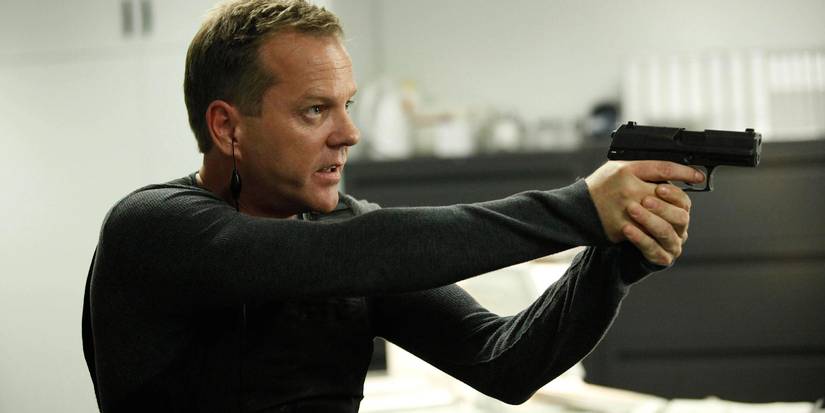
Jack Bauer aims his gun to the right in the show 24
Image via 20th Century Fox Television
24 introduced the world to Jack Bauer, an agent at the Counter Terrorist Unit Los Angeles Division, who spent most of his days trying to foil terrorist plots before they reached civilians. However, Bauer’s life is turned upside down when his wife and daughter are kidnapped by a group of people who tried to assassinate the US President, David Palmer. Thus, the protagonist has to find out why he is being targeted while also keeping the general public safe from the grave threats that lie ahead. The story takes place over 24 hours, so each episode focuses on an hour of this day.
It goes without saying that 24’s unusual format is what helped it stand out the most. The idea that one day could be spread out across 24 episodes seems completely absurd, but the writers ensured that there was plenty of tension to go around. Instead of forcing audiences to watch boring pieces of exposition, such as traveling or waiting for crucial pieces of information to arrive, the show used commercial breaks to its advantage. The writers made sure that these moments were linked to a break, so that the plot could skip a few minutes ahead while still giving the impression that everything was occurring by the hour. Each commercial break was bookended by a split-screen with a ticking clock in the middle. So, even after a short break, audiences could jump straight back into the action, while still keeping the impression that everything was occurring within an hour.
The split-screens also ensure that the subplots are kept in real-time, again, giving audiences the idea that Bauer is running against the clock. Admittedly, these small techniques may seem fairly basic, but they were a key part of what made 24 so unique. Other political dramas enjoy developing plots off-screen, mainly because it seems so plausible. The writers cannot expect audiences to be in several different places at once, so they tend to use lengthy periods of dialogue to ensure that viewers are kept in the loop. On the flip side, 24 ensured that audiences followed Bauer every step of the way, making sure that they could not turn away from the tension. As such, 24 changed how viewers consumed network television because, rather than using commercial breaks as a chance to change the channel, audiences used that time to take a well-needed break from the ongoing drama.
Even with its ingenuity and fantastic reception, a lot of insiders were worried about how fans would react to 24. Aside from its unique format, the show premiered just a few weeks after the Twin Towers attacks. Obviously, the team could not have planned such a travesty, but a show about the attempted assassination of a US President seems a tad too close to home. The 9/11 attacks completely changed the contemporary TV industry, and many shows were scared that a controversial storyline could trigger another catastrophic event. However, 24 helped to change how audiences view terrorism, especially in America. As the world remained on high alert, Jack Bauer’s fight for peace highlighted to audiences that these plots are constantly being thwarted, making the likelihood of another event, like the Twin Towers attacks, quite unlikely.
The Show Lives on in Other Forms
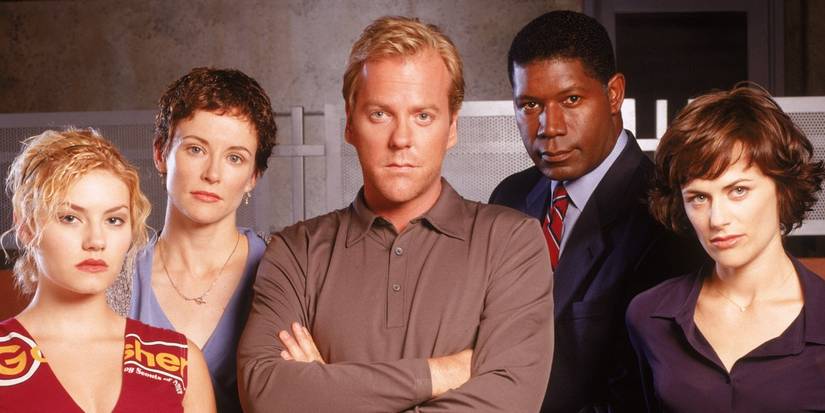
Kim Bauer, Teri Bauer, Jack Bauer, David Palmer, and Nina Myers pose together in 24
After 8 seasons, 24 bid farewell with a deeply powerful conclusion. After uncovering a conspiracy regarding the US and Russian governments, Bauer is forced to go on the run. In the final scene, Bauer speaks with Chloe O’Brien and asks her to protect his family. As a whole, fans were very pleased with this ending because, despite its ambiguity, it proved that Bauer will always live life on the edge. However, in 2014, 20th Century Studios brought Jack back for one final fight in a miniseries called 24: Live Another Day.
This series is set four years after the end of Season 8 and takes viewers to London, where Bauer is living in hiding. Meanwhile, a terrorist threatens to take over a collection of US drones to bring the people of London to their knees. Even though this series takes place in an entirely new setting, fans loved every second of this hard-hitting thriller. 24: Live Another Day was a hit because it replicated everything that made the original series so popular. Aside from every moment being accentuated by a ticking clock, this short series made sure that the stakes were high. Plus, the show did a really impressive job of making its threat seem more plausible, focusing on modern developments in cyberterrorism and how they have the potential to harm large populations. More than anything, Jack Bauer remained a true action hero, suggesting that even after a four-year break, audiences were still desperate to find out what happened to him.
Unsurprisingly, 20th Century Studios has been keen to explore Jack Bauer’s background in a series of spin-offs and prequel series. In 2018, the studio was in talks to develop a prequel series, but the idea was scrapped by 2010. The main project that has kept audiences on their toes is the infamous 24 feature film. Shortly after the 8th season, the team began discussing ideas for a film, and by 2010, Kiefer Sutherland boasted that the script was well underway.
A few months later, reports suggested that the film was going to be a crossover with the Die Hard franchise, which was ultimately squashed by the release of A Good Day to Die Hard in 2013. After two years of proposed release dates, Sutherland finally announced in 2016 that a 24 film was still up in the air. But, after nearly 10 years of rumors, 20th Century Studios finally announced that it would be collaborating with Imagine Entertainment to make the long-discussed project. Although there is still no concrete evidence that this film will actually be released, fans are still anxious to see what’s in store for the franchise.
Very Few Political Thrillers Have Managed to Replicate Its Success
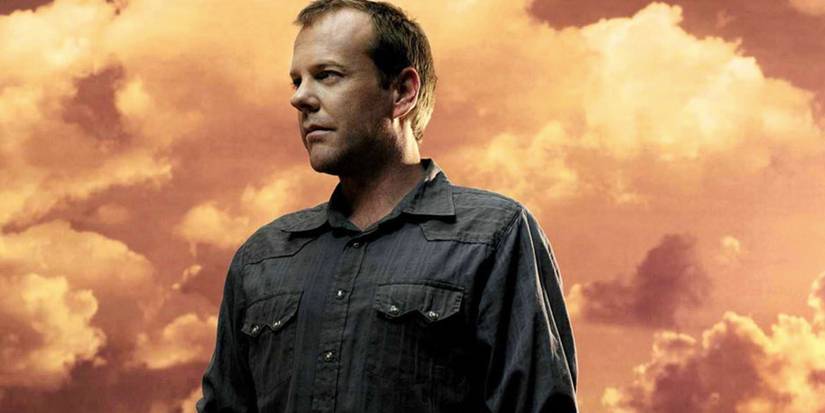
Jack Bauer (Kiefer Sutherland) looks over in 24 Redemption
Image via 20th Century Studios
In fairness, 24 was not the first political thriller to break the mold, especially in the US. Yet, it did pioneer a new type of drama, one that wasn’t afraid to unpack contemporary anxieties or showcase the grittier side of public safety. Although a lot of modern shows have managed to capture 24’s essence, particularly in terms of conspiracy, very few dramas have matched up to its impact.
Even Homeland, which was produced by 24’s Howard Gordon, struggled to maintain its high levels of action and pace. By the end of its third season, Homeland had killed off one of its biggest characters, Brody, and forced Carrie to spend the rest of her life floating from one identity to the next. So, even though Homeland and 24 touch on the same themes, it’s clear that the latter did a much better job of keeping the audience engaged.
Arguably, one of the big reasons why modern dramas cannot match up to 24 is because of streaming. Back in 2001, audiences had to wait for a new episode each week, encouraging them to ponder the cliffhangers for days before finding any answers. While it may seem strange for younger audiences, this traditional format helped to keep tensions at an all-time high. Nowadays, audiences can watch shows like The Night Agent and Slow Horses all in one sitting if they please.
While streaming can highlight how addictive a show can be, it does nothing to build tension, especially in longer series. As such, it seems that 24 managed to find success in the appropriate era, one which saw terrorism as a major threat, as well as one that valued TV just as much as film. So, although the 24 film still feels worlds away, fans still have a lot of love for this groundbreaking series.
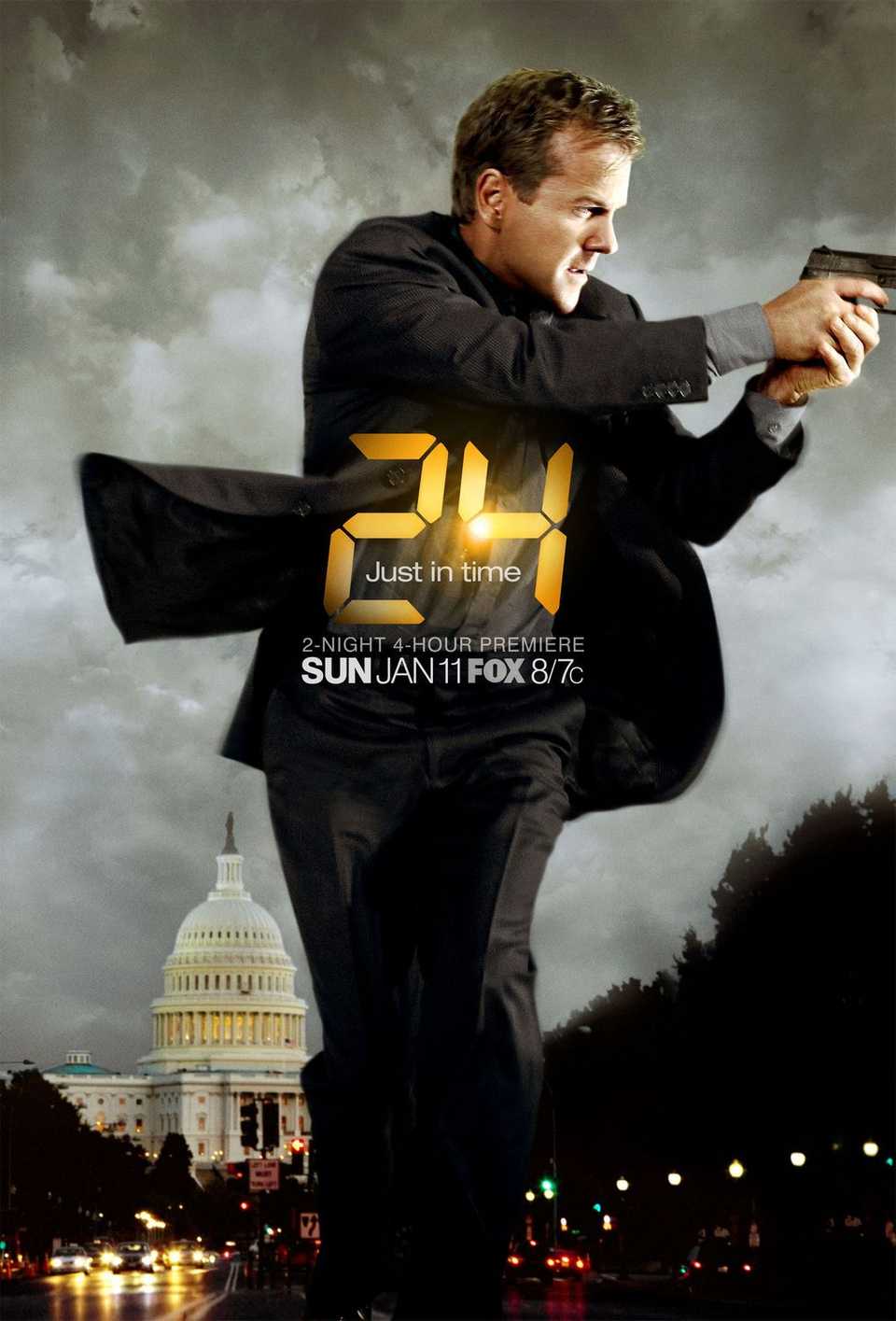
24-tv-series-poster.jpg
Release Date
2001 – 2009
Showrunner
Robert Cochran