
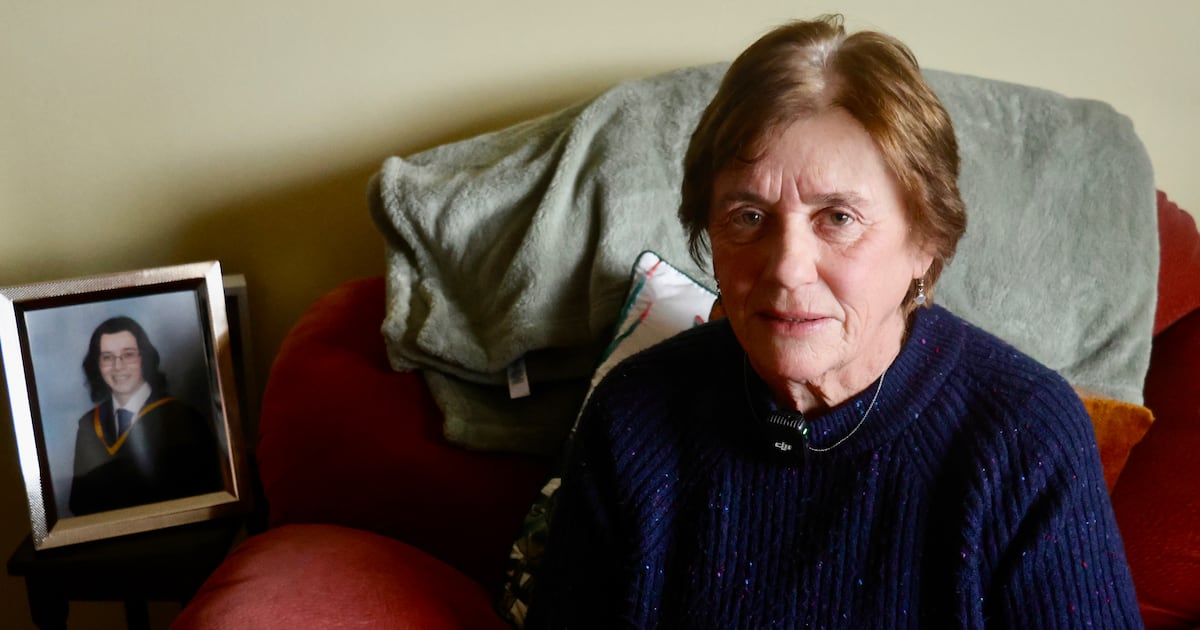
ESB Networks has apologised to customers in north Galway who have been experiencing persistent cuts a year since Storm Éowyn.
Dunmore resident Joan Comer said she has counted 20 electricity blackouts since Storm Éowyn. The storm left her without electricity for eight days.
At the time of the storm, she was caring for her terminally ill son, Rory (29), who suffered from brain cancer. He died last March.
Mrs Comer said the blackout was a “complete nightmare” and they were left on edge even after they were reconnected, as the power would go on and off.
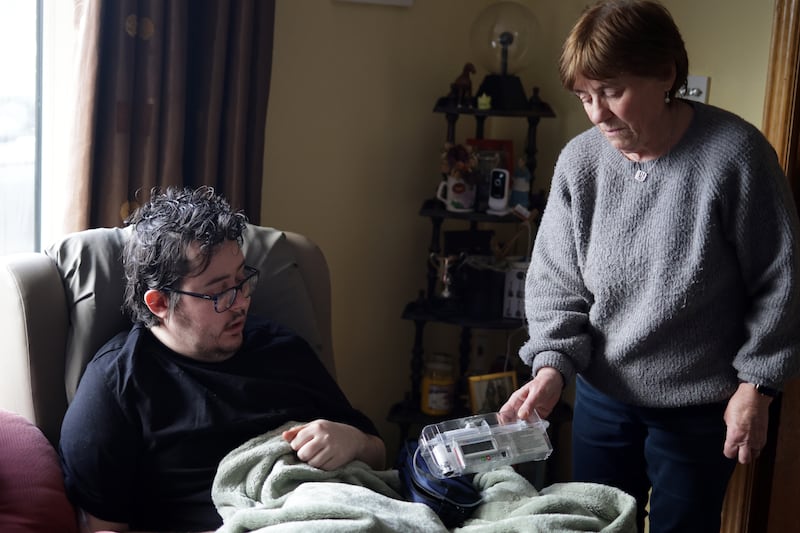 Rory Comer had to receive controlled drugs for his palliative care from a nurse by candlelight during this time, according to his mother, Joan Comer (right). Photograph: Chris Maddaloni
The storm contaminated the local water supply, and residents were advised to boil all water for consumption, but they had no electricity to do this. Consequently, they were obliged to buy bottled water in Tuam, she said.
Mrs Comer said local residents have been given no explanation for why power shortages are still happening a year after the storm, which occurred in the early hours of January 24th and generated the highest recorded wind speed in Ireland of 184km/h at Mace Head in Co Galway.
In response, ESB Networks said it acknowledged the disruption caused.
“These interruptions have primarily been caused by lightning events, timber and vegetation, wildlife and equipment failure on the network.
It said crews were mobilised promptly to repair damage, replace equipment and restore supply as quickly and safely as possible after these events.
“We apologise to all homes, farms and businesses impacted for the inconvenience caused,” added ESB Networks.
A spokesman said ESB Networks was looking to strengthen the existing Ballygar 38kV substation. “This work is at an early stage of planning and development.”
Maureen Folan (74) shows the destruction to her home in Carna, Galway after Storm Éowyn ripped the roof off of the building. Video: Ronan McGreevy
Mrs Comer criticised the communication by ESB Networks on the issue. She said it would be preferable to receive automatic updates when power cuts occur rather than having to go online and enter a meter point reference number.
Storm Éowyn left almost 800,000 ESB Networks customers without power. The last of these were not reconnected until February 11th, 18 days after the storm.
ESB Networks has identified 10 counties worst affected by the storm: Cavan, Clare, Donegal, Galway, Leitrim, Longford, Mayo, Roscommon, Sligo and Westmeath.
Some 710km of forestry corridors have been identified where trees are close to power lines.
“Certain critical forestry corridors for medium voltage and 38 kV electric lines have been prioritised for cutting based on interference and access levels,” said the company. It added that the agreement of the relevant landowners will be needed.
“While individual landowner responses are positive, agreements are taking time.”
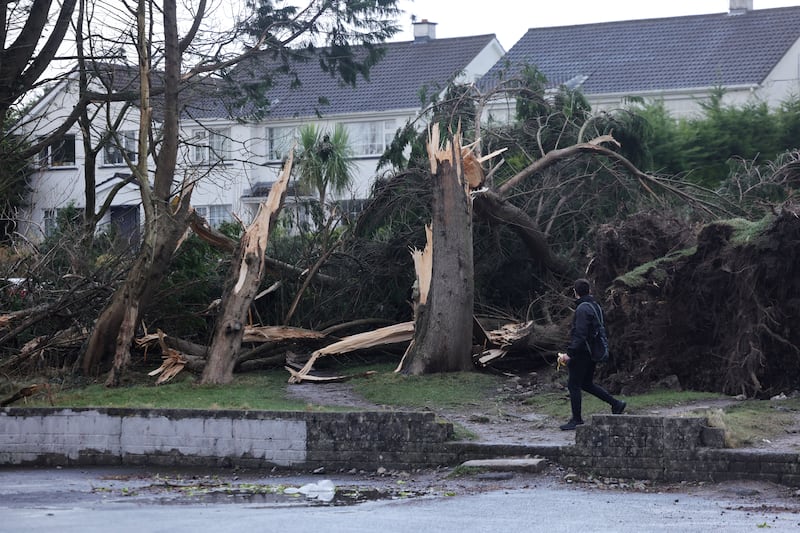 Storm damaged and fallen trees at Glenanail Drive in Galway City during Storm Éowyn.
Photograph: Alan Betson
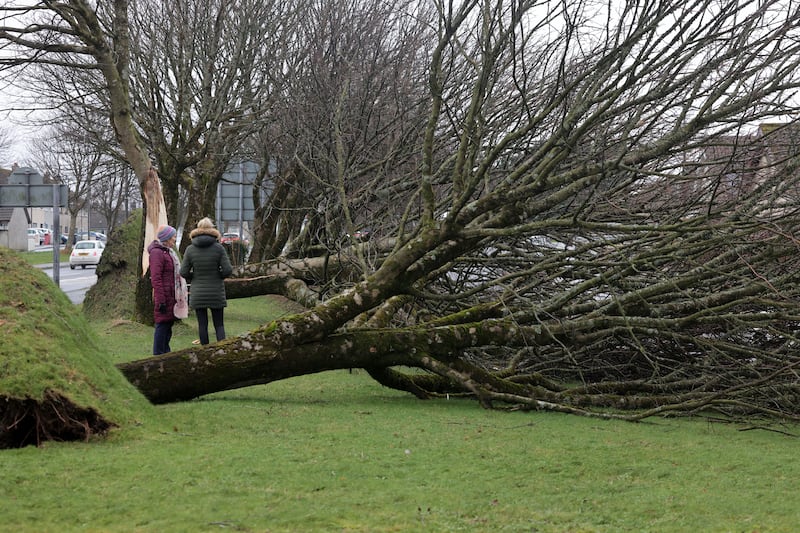 Fallen trees at Browne Roundabout, in Galway City as Storm Eowyn moved across the country. Photograph: Alan Betson
Roscommon-Galway Fine Gael Senator Gareth Scahill criticised the slow progress of the Electricity (Supply) (Amendment) Bill 2025, legislation which he said should be fast-tracked. This would give ESB Networks statutory powers to manage vegetation and trees near power lines.
“The heads of the Bill were approved last summer. However, since then, nothing has changed, and there doesn’t seem to be any urgency,” he said.
“My constituents are tired of vague assurances. They want to know how long they will be without power when the next storm hits.”
He warned that the State remains “exposed and underprepared” should another storm like Éowyn hit the country.
State-owned commercial forestry business Coillte estimates between 50 million and 60 million trees, or 2½ times the annual harvest, were felled in the storm and will take at least another year to clear all the fallen trees.
Forestry owners are in a race against time as felled trees must be cleared within two years if they are to be turned into timber.