
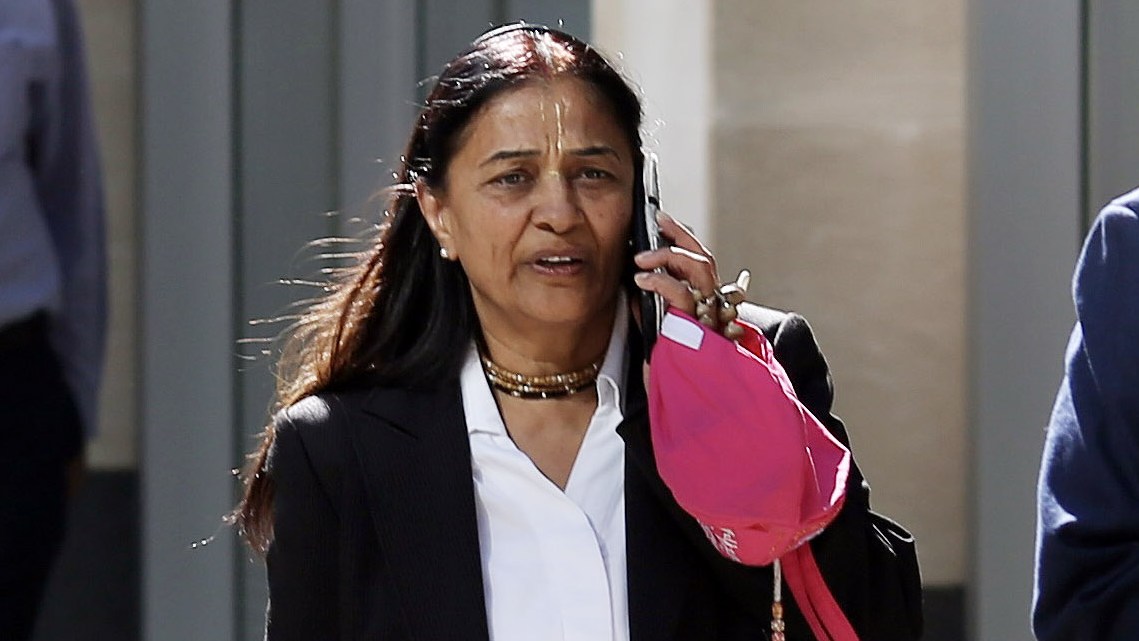
A daughter who inherited almost all of her father’s £600,000 fortune has now been left with a £400,000 legal bill after she was successfully sued by her siblings.
In a longstanding inheritance row, Anju Patel was taken to court by her siblings Piyush and Bhaventta Stewart-Brown, over the will of their father, Laxmikant.
Laxmikant, who died aged 85 in October 2021, had handed his £600,000 house to Anju, his oldest child, in his will, leaving the other children only £250 each.
Anju, 58, claimed that her father’s drastic decision to virtually disinherit two of his children could be explained by a growing mistrust he had developed towards them because “they were only after his property”.
But the younger siblings took her to the High Court in London, claiming that a “cloud of suspicion” hung over the way the will was drawn up and executed. Laxmikant’s final will was made only two months before his death, when he was terminally ill and in a hospital subject to Covid restrictions.
The judge, Jason Raeburn, ruled in favour of Bhavenetta last December, upholding an earlier will made in 2019 that split the £600,000 estate roughly three ways between the siblings, and declaring the circumstances of the final will to be “highly suspicious”.
Apart from losing almost two-thirds of her inheritance, Anju is now also responsible for paying her sister’s legal costs, leaving her facing a bill which her lawyers said could be over £400,000, as well as her own undisclosed legal costs. Vijaykant Patel, the executor of the 2021 will, was also made jointly and severally liable for paying Bhavenetta’s costs.
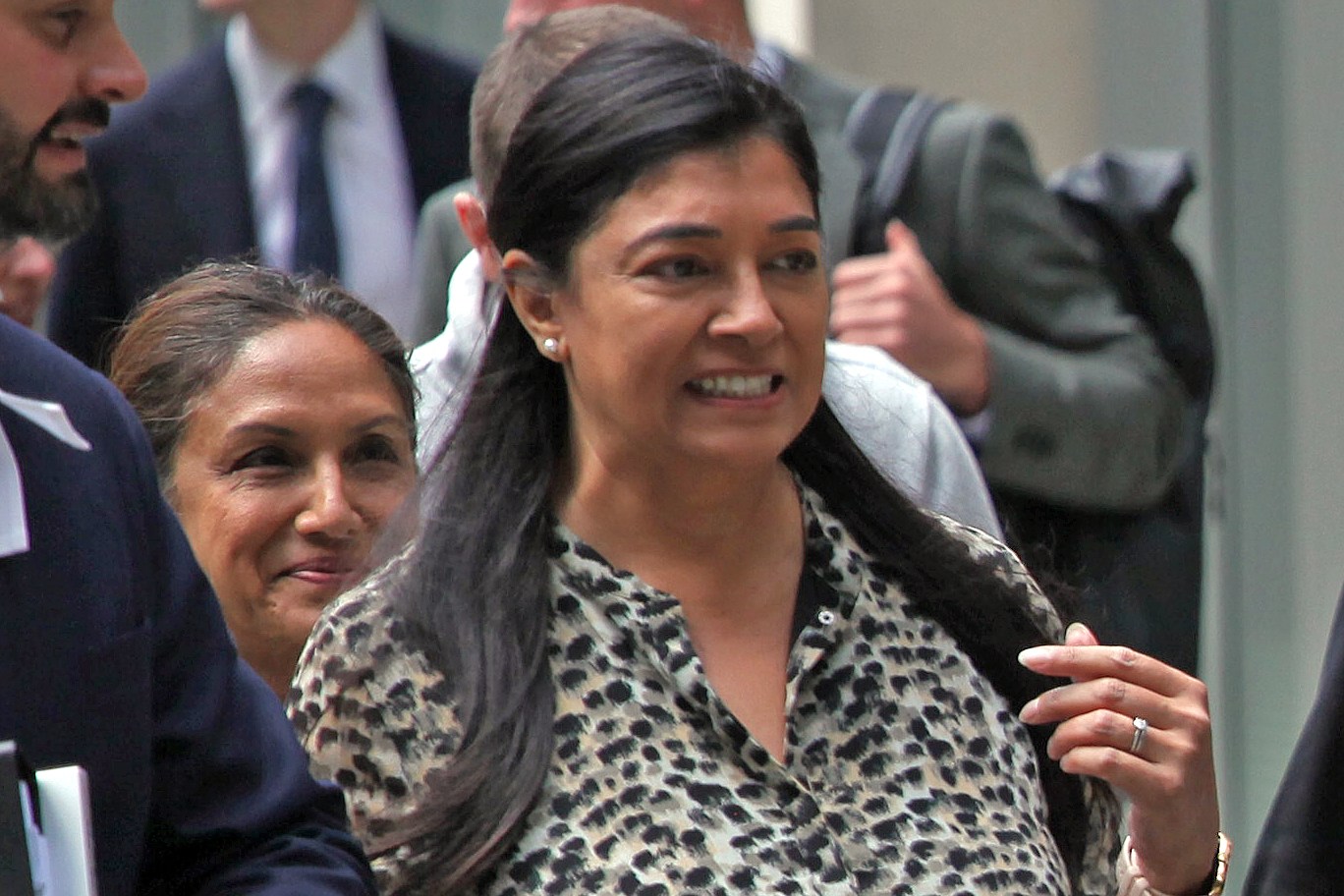
Bhaventta Stewart-Brown was labelled by her older sister as “bad tempered”
CHAMPION NEWS
The court’s decision means that the approximately £250,000 that Anju is entitled to under the upheld 2019 document will be completely wiped out by the costs of the case.
The court had earlier been told that Laxmikant’s will of 2019 had left £50,000 to Anju, with the rest of the estate split in shares of 33 per cent to each of the children and 1 per cent to a charitable trust administered by Anju. But the document made in 2021 left virtually everything to Anju.
• Battle of wills as number of contested inheritances surges
Anju told the court that her father had complained that Bhavenetta and Piyush had failed to show him “true affection”, saying they had “failed in their sense of duty, but as a father I have not forgotten them”. He was also said to have labelled his son, Piyush, a “hugely controlling” figure and complained of Bhavenetta’s “bad temper” and of her taking “massive advantage” of her elderly father.
By the time of his death his main asset was his £600,000 home in Harrow. That house was left entirely to Anju under his last will, a decision that Bhavenetta’s barrister, Tim Sherwin, described as “most odd”.
Bhavenetta’s legal team claimed Laxmikant’s apparent change of heart made no sense in light of his clear wish to split his estate predominantly equally in his previous 2019 and 2018 wills.
The judge ruled that the 2021 will — which was signed by Laxmikant while in hospital — was questionable and did not look like it had been signed by all the participating parties using the same pen. “I am not therefore satisfied that a signature was made by [Laxmikant] in the presence of all the witnesses at the same time, so there was no due execution of the will,” Raeburn said.
The judge also found that there was no compelling evidence that Laxmikant “knew and approved” of the final will. “The particular circumstances of the instructions and execution of the 2021 will are suspicious — highly suspicious,” he said.
The judge refused permission for Anju’s lawyer to appeal against the ruling, ordering an up-front payment of £180,000 plus VAT to go towards costs.