
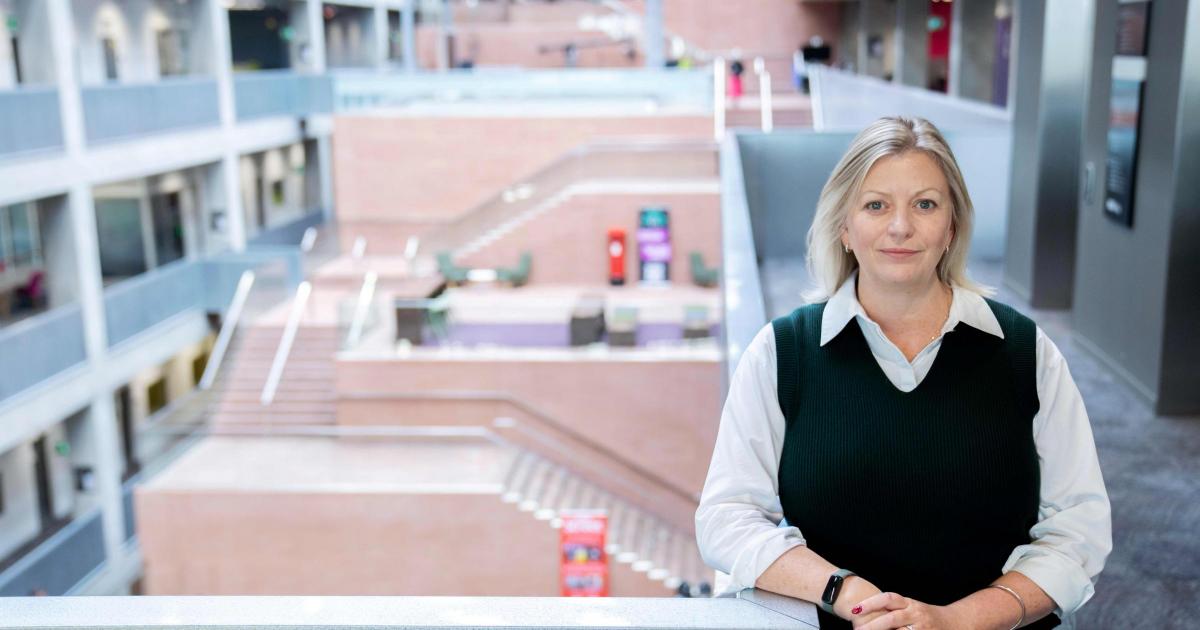
Ms Valentine said BBC Scotland “needed to do something” to tackle the dwindling number of listeners turning in late at night and wanted to “try something different” by launching a new show running five nights a week.
Read more:
She denied claims that the Scottish music was being downgraded under the revamp, which sparked protests from industry leaders over the scrapping of “cultural significant” shows.
Ms Valentine defended bringing in a new commercial radio DJ to fill the late-night slot four nights a week and a drive to attract new audiences by playing “more mainstream easy-listening tracks”.
BBC Scotland is based at Pacific Quay in Glasgow.
The Herald revealed plans to bring several Radio Scotland shows to an end in November as part of a shake-up ordered by new Radio Scotland boss Victoria Easton-Riley.
Lynne Hoggan’s new show, Up Late, has been running between Monday and Thursday, from 10pm till midnight, since the start of this year. The slot is filled by comic, actor and writer Ashley Storrie on Friday nights, while singer-songwriter Roddy Hart, who previously had a mid-week programme, now presents a new show, Mixtape, on Saturday and Sunday evenings.
Billy Sloan’s BBC Radio Scotland show was dropped at the end of last year. (Image: Colin Mearns)
Ms Valentine said: “The (audience) figures have been declining across the late nights. We needed to do something about it and we needed to try to do something different.
“The audience was telling us that they were not consuming those programmes in great numbers.
Singer-songwriter Roddy Hart presents a new BBC Radio Scotland show on Saturday and Sunday evenings. (Image: Kris Kesiak)
“The share of the available audience at that time of night was really small and had been in gradual decline for quite a long time.
“More broadly across Radio Scotland, I wanted to find places where could bring in and develop new talent. We are clearly not going to do that on our breakfast programme
“Radio knowledge would tell you that people want consistency, so we have brought in one presenter across four days, we have kept the Friday night presenter and we put Roddy Hart, who is a big proponent of the Scottish music scene, in a new show across Saturdays and Sundays.”
Mr Valentine said the Radio Scotland changes were aimed at growing its audience, but insisted its music strategy had “not changed”.
She added: “We absolutely have a strategy of playing Scottish music and new Scottish music across the week.
“It is early days and we are only a few weeks in, but we have done a little bit of our own research.
“Broadly speaking, from the last week in December to the first two weeks in January, we are representing the same number of Scottish artists.
“I would just add on this, because I know a lot has been written and said about it, that we are not using a playlist for this. When you think of a playlist you think of it coming out of a computer. None of these late-night programmes are playlisted.
“Across the piece, we support a lot of specialist music programmes.
“The late-night programme is not a specialist music programme, but it’s absolutely where it was in terms of supporting those (Scottish) acts.
“We are looking for growth. If you are an emerging Scottish artist you will want more people to listen to your music.”
Ms Valentine was asked about BBC Scotland’s brief to producers seeking ideas for a new late-show which said the broadcaster wanted to focus on “more mainstream, easy listening tracks which will appeal to audiences aged 45 and over” and “provide “a late-night companion to wind down the day.”
She said: “Easy listening can be interpreted in different ways. I think everything that we do is easy listening.
“Fundamentally, we want audiences to feel a warmth in terms of the presentation, to feel they are welcome and to feel that it is inclusive and that is an easy listening. We are not playing endless Matt Monro. That is now what we meant at all.”
Luke McCullough, corporate affairs director at BBC Scotland, added: “There is such a mischaracterisation of some of the coverage about what those programmes were.
“I used to sometimes listen to the old schedule. I heard the last programme of one of those presenters going out.
“In the edition I heard, there was Billie Holiday, Nina Simone, Crosby, Stills and Nash, The Ramones and a choir from New York.
“It was a very interesting listen, but it wasn’t new and emerging Scottish talent. It wasn’t a new music programme.”