
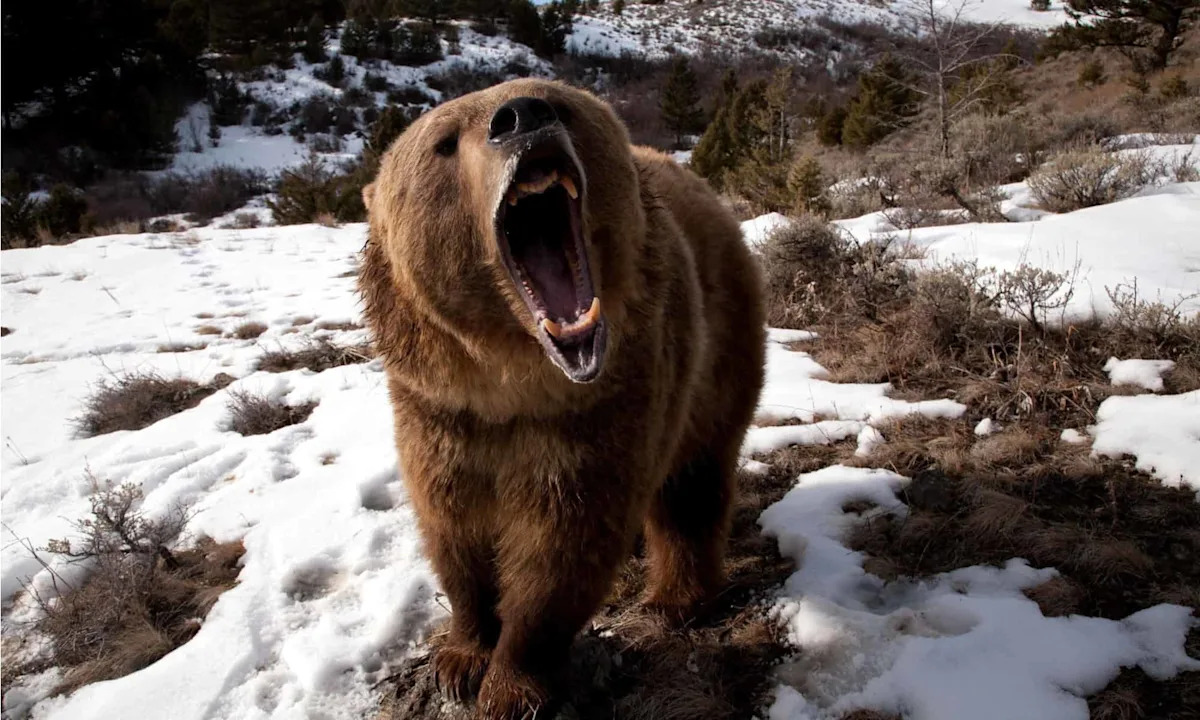
The post A 700-Pound Grizzly Sat Inches From This Photographer. His 3-Word Response Saved Him appeared first on A-Z Animals.
Watch the Video
Click here to watch on YouTube
Quick Take
Surviving a close encounter with a 700-pound grizzly requires maintaining absolute stillness within its critical space.
The crushing power of a grizzly’s jaw creates a lethal risk during close-range observations.
Lightning strikes pose a statistically similar threat to humans as grizzly bear encounters.
Executing a 3-word vocal command was necessary to redirect the apex predator as it approached the photographer.
Can you imagine spotting a grizzly when you’re out enjoying nature? It would be heart-racing enough to spot one from a distance, but imagine one that casually walks up to your camp chairs, literally feet from you?
Well, that’s exactly what happened to one photographer with ice in his veins – an enormous grizzly casually stopped by and sat down next to him. His camera didn’t even shake!
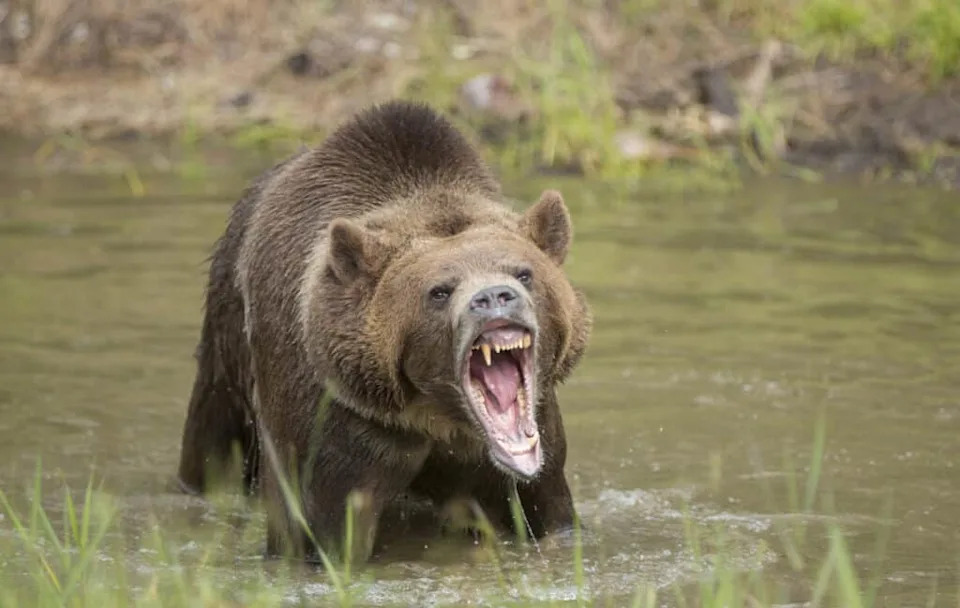
Grizzly bears have jaws powerful enough to crush a bowling ball.
©Jack Nevitt/Shutterstock.com
(Jack Nevitt/Shutterstock.com)
This is a short clip, but one that starts with a jaw-dropping, eerily peaceful but tense moment. In the background, you can see some snow-covered mountains with a large, open green space just ahead of a, wait for it—huge grizzly bear.
Almost comically, there is a lawn chair on the right side of the screen, as if the bear had been invited for a daytime hangout. Seemingly unbothered by the man’s presence off to his right, the bear looks around and casually walks forward toward the rushing river just below.
He stops to take in the sight, the way a tourist would. At this point, he is a mere couple of feet from the man’s lawn chair and the man. Its size can be fully appreciated at this angle—and so can its mighty claws.
The grizzly’s slow yawn and heavy breathing may look like human sadness or boredom, but in wild bears, these can be signals of the animal processing its surroundings or simply cooling down after the physical exertion of fishing.
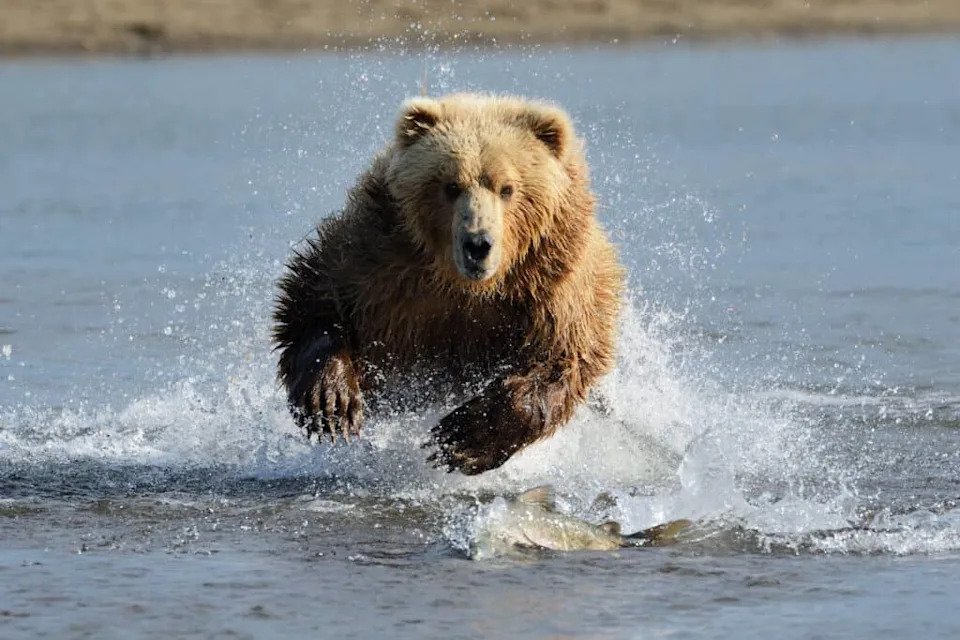
Grizzly Bears are expert fishers with their own unique methods.
©AndreAnita/Shutterstock.com
(AndreAnita/Shutterstock.com)
Attributing human emotion to a bear should be left for cartoons, but the scene is much too rare, and begin to feel as though they both need this time away with a friend out by the cleansing aura of rushing waters.
The cameraman holds the camera steady, and the grizzly continues looking out onto the water, not acknowledging the presence of the man or the little site he’s created for himself. White birds fly in the background as the bear decides this is a nice place to rest.
The bear sits back and places its front paws just ahead of its torso, resting on the ground. Suddenly, he stands up and starts walking toward the man. The man responds quickly, turning the camera and saying “Hey, hey, hey” to the bear.
The bear, disinterested, walks around the man and away from him. At the end of the short clip, the camera captures another camera pointed out toward the water, where somewhere around 10 grizzly bears can be spotted. This cameraman probably wasn’t counting on such a close encounter, but his nerves of steel paid off as he earned some truly epic close-up footage of this enormous bear.
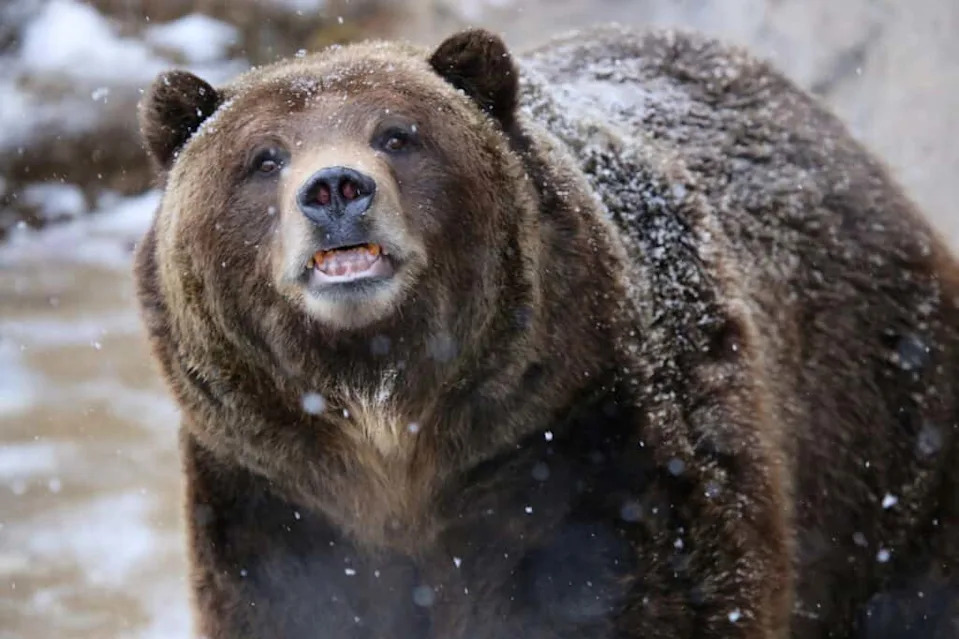
Grizzly bears can weigh upwards of 700 pounds.
©Steve Boice/Shutterstock.com
(Steve Boice/Shutterstock.com)Would You Keep Your Cool if a Giant Grizzly Approached You?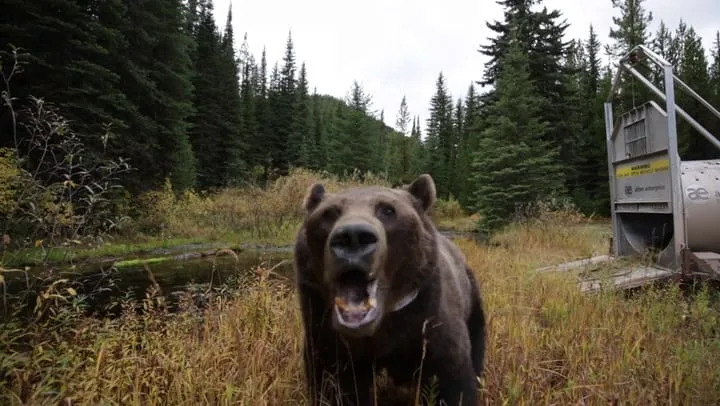
Grizzly bears can be extremely dangerous in the wild but they are also intelligent and reclusive and will alter their habits to avoid humans.
A grizzly encounter would be a major challenge for the average person. This encounter took place at the McNeil River State Game Sanctuary, where bears have become ‘habitually indifferent’ to people. Because the bears and humans follow strict rules of coexistence, the bear felt comfortable enough to rest near the photographer without perceiving him as a threat or a source of food.
Grizzly bears weigh upward of 700 pounds — the males being much heavier than the females. A large female can weigh up to 350 pounds. While grizzlies are significantly larger and heavier than black bears, they are typically smaller than polar bears and the massive kodiak bears found on the islands of southwestern Alaska. With a bite force of over 1,100 PSI, a grizzly has enough power to crush heavy bone and thick materials — a strength often compared to the force needed to crack a bowling ball.
They can be distinguished from black bears by a concave-looking face and a shoulder hump full of muscles that attach to the Grizzly’s backbone for extra strength for digging. Their very long, sharp claws on the front feet also give them extra ability to dig for food and to dig out their dens. Do not rely on color for identification. Black bears can actually be brown, cinnamon, or even blonde. Instead, look for the grizzly’s prominent shoulder hump and concave facial profile, which Black bears lack.
Is It Normal for Grizzly Bears to Approach Humans?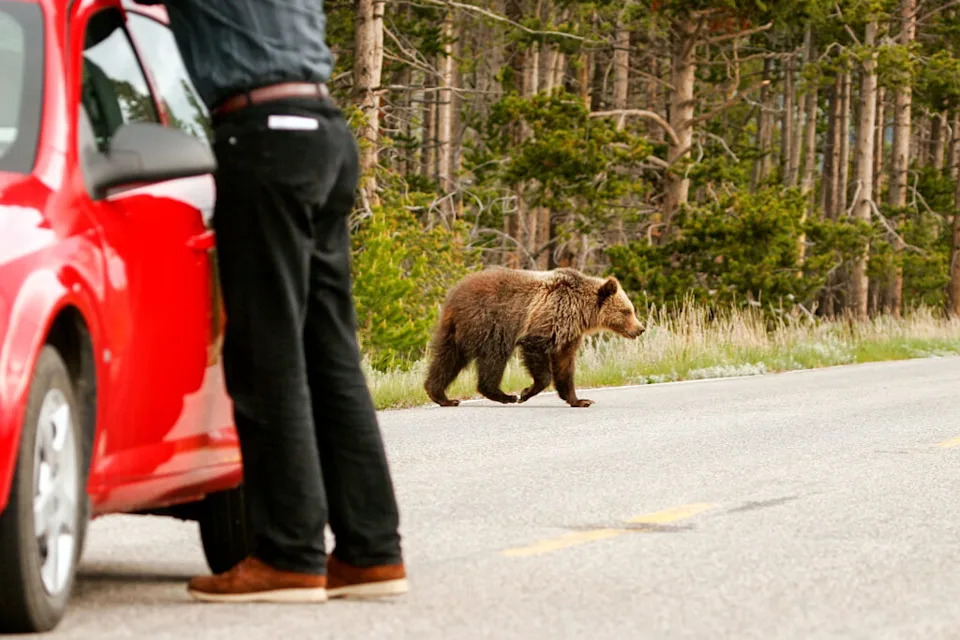
Grizzly bears are intelligent and reclusive; they will alter their habits to avoid humans.
©Don Mammoser/Shutterstock.com
(Don Mammoser/Shutterstock.com)
Fortunately, the bears don’t consider humans to be prey. Visitors to national parks known for bears, such as Yellowstone, are about as likely to be killed by a lightning strike as a bear attack. Grizzly bears are curious, with good eyesight and excellent memories, hearing, and sense of smell. They are also intelligent and reclusive; they will alter their habits to avoid humans and much like any animal, they have what is called a “critical space”, an area surrounding them that they will defend. These bears are more likely to be indifferent to human presence, although every bear encounter will be different.
It is important to remain calm during any encounter with a wild animal and if you are traveling in an area with bears, you should prepare yourself on how to proceed.
Where do Grizzly Bears Live?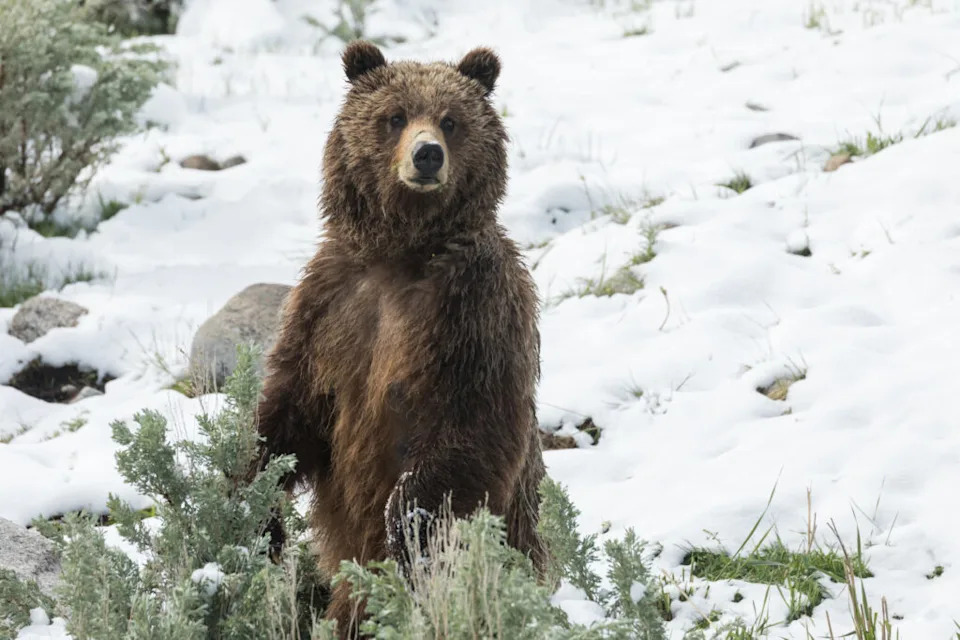
There are about 21,000 grizzlies in Canada. Their life expectancy is 20-25 years.
©Kelp Grizzly Photography/Shutterstock.com
(Kelp Grizzly Photography/Shutterstock.com)
Unless you live in Alaska, Idaho, Montana, Washington, or Wyoming – you don’t have to worry about grizzlies. They were once more widespread but have been hunted almost to extinction in some areas and still suffer from habitat loss. There are about 21,000 grizzlies in Canada. Life expectancy is 20-25 years.
Watch the Video
Click here to watch the video.
The post A 700-Pound Grizzly Sat Inches From This Photographer. His 3-Word Response Saved Him appeared first on A-Z Animals.