
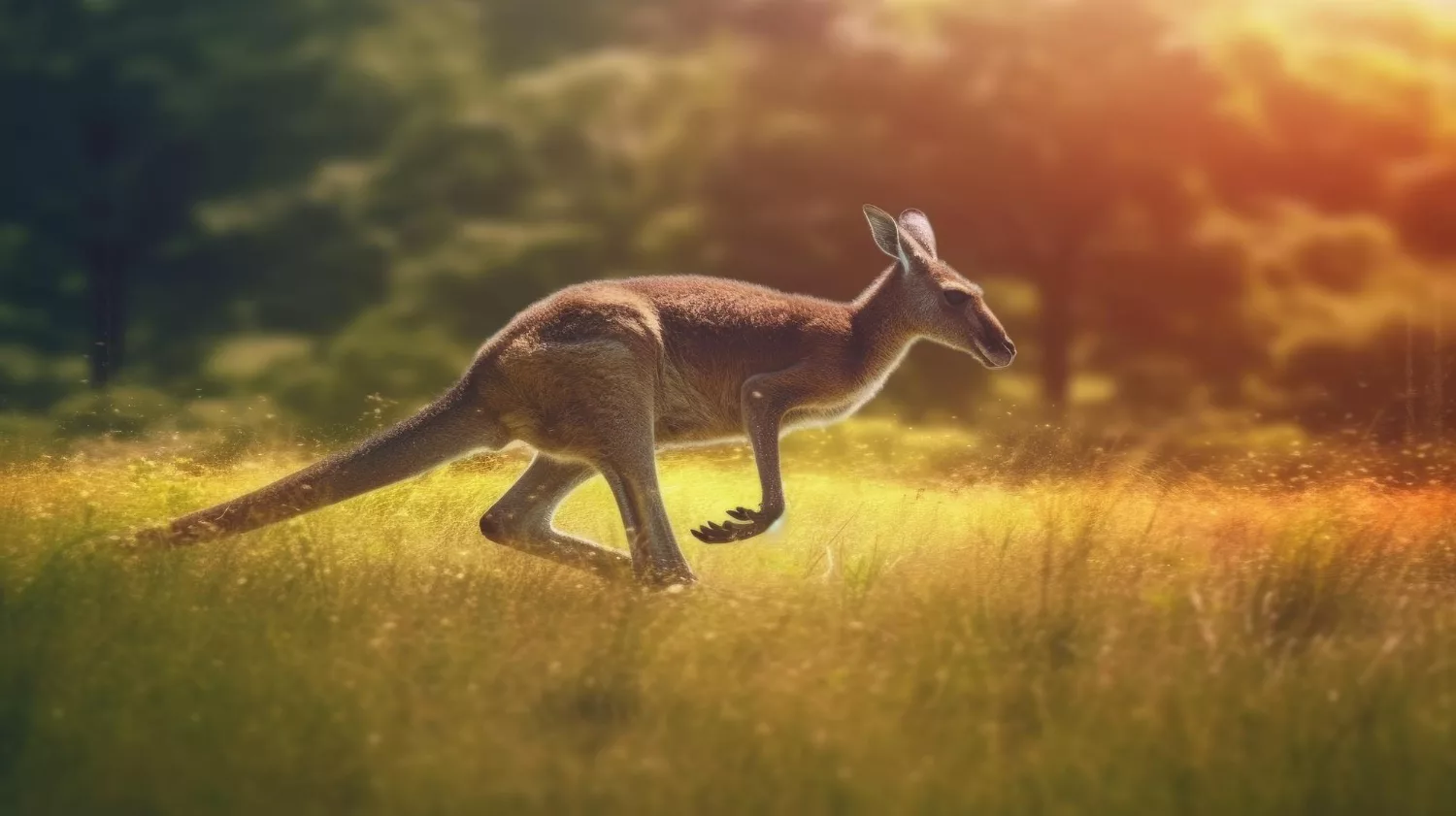
For a long time, scientists thought there was a hard limit to hopping.
Go beyond a certain body weight, the logic went, and the physics simply would not work. Tendons would snap. Bones would fail. Energy costs would explode. That idea helped explain why today’s largest living hopper, the red kangaroo, tops out at around 90 kilograms.
But fossils have a habit of quietly complicating neat theories. New research examining the remains of giant prehistoric kangaroos suggests that some of these animals, despite weighing more than 200 kilograms, may still have hopped. Not shuffled. Not lumbered. Actually hopped.
And that changes how we think about movement in extinct megafauna. During the Ice Age, Australia had enormous kangaroos. Some species are thought to have weighed as much as 250 kilograms. For years, scientists believed these giants stopped hopping and opted for slower, more energy-saving walking instead. This idea seemed logical. Hopping appears easy for smaller kangaroos, but applying that movement to an animal the size of a small motorcycle seems dangerous.
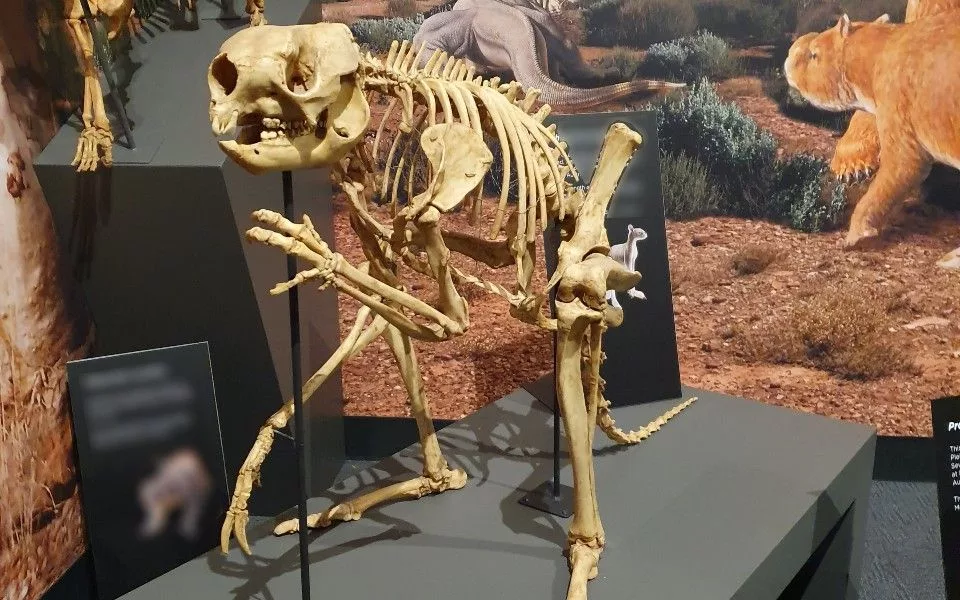 Sthenurine skeleton in the South Australian Museum.
Image credit: Megan Jones
Researchers looked closely at bones and tendons from extinct kangaroo species, comparing them with those of modern kangaroos and wallabies. They focused on structures that matter most for hopping. Ankles. Feet. The long elastic tendons that act like biological springs.
The anatomy of these giant kangaroos did not show clear signs of abandoning hopping. Instead, many features looked consistent with animals built to store and release energy, just like their modern relatives. In some cases, the proportions suggested that hopping may still have been mechanically viable, even at much larger sizes.
It is a bit like discovering that a bridge you thought would collapse under heavy weight was actually reinforced in subtle ways you had not noticed before.
One key takeaway from the study is that body mass alone may not determine how an animal moves. Muscle arrangement, tendon elasticity, and limb posture all matter. A lot. Evolution can fine-tune these systems in ways that are not obvious at first glance.
Understanding how large animals moved helps scientists rebuild entire ecosystems. It shapes our view of predator-prey interactions, migration patterns, and even how animals reacted to climate change. If giant kangaroos could hop efficiently, they might have traveled further and used landscapes in ways we had not thought before.
For decades, the notion that hopping has an upper size limit went mostly unchallenged. It made sense and was neat. But fossils remind us that evolution doesn’t always meet our expectations. Sometimes it finds new ways to adapt. Other times it pushes limits further than we consider reasonable.
The evolution of kangaroo locomotion
The researchers are careful not to exaggerate their findings. Fossils can’t capture everything. Soft tissues seldom survive, and behavior doesn’t fossilize at all. However, the anatomical evidence is strong enough to reopen the discussion about how these animals moved.
Not through sudden changes overnight, but with small, careful cracks forming in ideas we thought were solid.
The next time you see a kangaroo hopping easily across open ground, try to imagine a much larger version doing the same thing millions of years ago, shaking the ground a bit more with every landing.
Journal Reference
Jones, M. E., Jones, K., & Nudds, R. L. (2026). Biomechanical limits of hopping in the hindlimbs of giant extinct kangaroos. Scientific Reports, 16(1), 1309. DOI: 10.1038/s41598-025-29939-7