
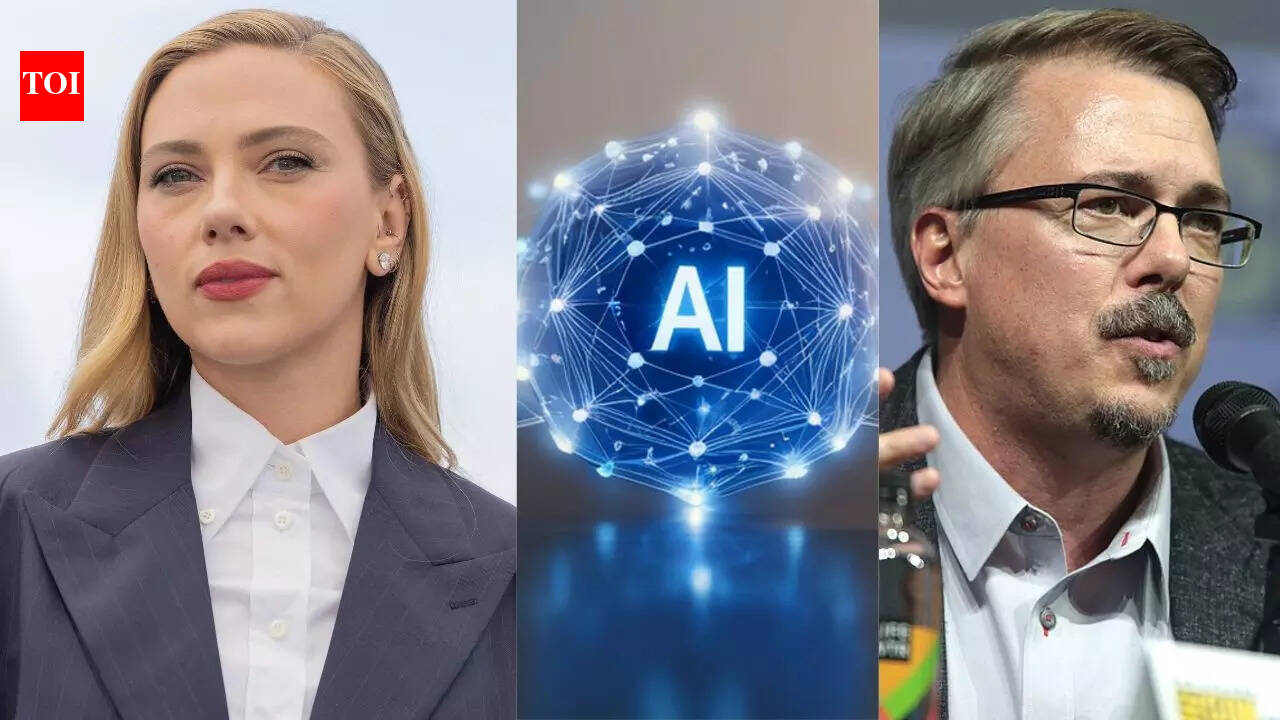
 Scarlett Johansson and Vince Gilligan join 800 artists to protest AI use of copyrighted work The battle between artists and companies that make artificial intelligence is no longer just happening in courtrooms or private meetings. It is now well-known, loud, and supported by some of the biggest names in culture and entertainment. According to reports, more than 800 famous creators signed an open letter in January 2026 asking AI companies to stop using copyrighted work without permission. The list included actors like Scarlett Johansson and Cate Blanchett, the band R.E.M., and Breaking Bad creator Vince Gilligan. Their message was simple. Innovation should not come at the cost of stealing someone’s work. For years, writers, musicians, photographers, and filmmakers have watched their content get scraped from the internet and fed into AI systems. Most of the time, they were never asked. They were never paid. And they had no way to opt out. Now, many of them are pushing back together, through lawsuits, campaigns, and public pressure. This is no longer just about technology. It is about survival, ownership, and respect.
Scarlett Johansson and other artists protest AI copyright use through open letter and Human Artistry Campaign
The open letter was released through the Human Artistry Campaign’s “Stealing Isn’t Innovation” movement. It was signed by more than 800 artists and rights holders. Some are famous. Many are not. But all of them depend on creative work for their living.
Scarlett & Jonathan Kiss Again; Red Carpet Replay Leaves Fans Shocked
The letter called on AI companies to form ethical partnerships with creators. It asked them to stop using books, films, music, articles, and images without permission. It also warned that current practices could damage the creative economy in the long run.One part of the letter stood out. It said that America’s creative industry supports jobs, exports, and economic growth. Yet some tech companies are building massive AI platforms using this work without authorisation.In other words, artists feel their labour is being treated like free fuel for billion-dollar systems.
Lawsuits against AI companies over copyrighted training data in US and Europe
Alongside the letter, legal action is growing fast. As of early 2026, around 60 copyright-related lawsuits were active in the United States alone. Similar cases are unfolding across Europe.Writers’ groups, media companies, photographers, and music labels are taking part. Many cases focus on the same issue. Without permission, AI systems were trained on copyrighted material.Some lawsuits are aimed at large language models that have been trained on news articles and books. Others focus on image generators that learned from millions of copyrighted photos and artworks.So far, results have been mixed. A few cases have been dismissed. Some have moved forward. Others are still tied up in long legal procedures. But one thing is clear. The courts are now deeply involved in shaping how AI will work in the future.
How AI models use copyrighted books, images, music and articles for training
Most modern AI systems learn by studying huge amounts of data. This includes:News articlesBlog postsNovelsSong lyricsPhotographsPaintingsVideosSocial media postsThe software looks for patterns in this material. It learns how sentences are formed, how images are structured, and how melodies flow. Over time, it becomes capable of generating new content that looks or sounds original. The problem is how this data is collected. In many cases, it is scraped automatically from public websites. No emails are sent. No licenses are bought. No contracts are signed. From a technical point of view, it works well. For a creator, it feels like copying on a huge scale.
Fair use debate in AI training and copyright law disputes
“Fair use” is a common defense for AI companies. This is a legal idea that lets you use copyrighted material without permission in some situations, like for research, education, or commentary.They say that training an AI model changes everything. They say the system does not store or reproduce the original work directly. It only learns from it. Creators strongly disagree.They say their work is being copied in full and stored in training databases. They argue that AI outputs can sometimes closely resemble original material. And they point out that these systems compete directly with human creators.For a freelance writer, photographer, or composer, this feels personal. If a machine trained on your work replaces you, fair use starts to feel very unfair.
Scarlett Johansson’s OpenAI voice controversy and celebrity response to AI
One of the most visible moments in this debate happened in 2024. Scarlett Johansson raised concerns about OpenAI’s Advanced Voice feature.A voice option called “Sky” sounded very similar to her character in the film Her. Johansson said she had declined to license her voice. Her legal team contacted OpenAI.Soon after, the company suspended the feature.That incident became a symbol. It showed how closely AI systems can imitate real people. It also showed how quickly trust can be lost when someone doesn’t follow the rules.Since then, more famous people and performers have spoken out against voice cloning, deepfakes, and digital copies.
A growing movement that shows no sign of slowing down
The January 2026 letter was not the end of this story. It was more like a checkpoint. More creators are joining the movement. More lawsuits are being filed. More debates are happening inside studios, newsrooms, and tech companies.This is not a clean fight between good and bad sides. Most artists use technology. Many admire its potential. Many AI engineers respect creative work.But right now, trust is broken. Rebuilding it will take more than statements and pilot programs. There will need to be clear rules, fair pay, and open communication.There will still be tension until then. And artists, both quietly and loudly, will keep telling the world that every dataset has a person behind it who made something out of nothing.