
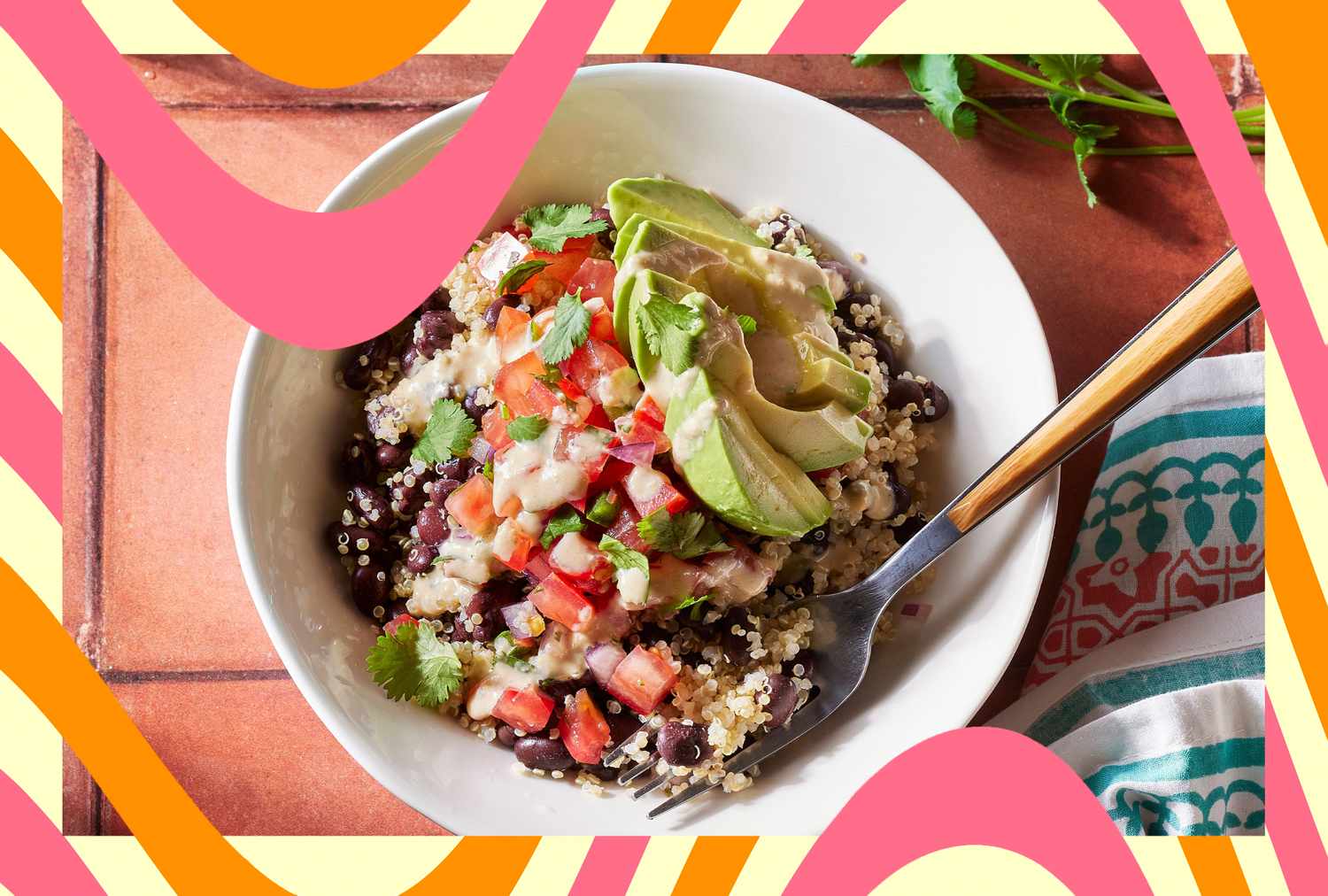
Quinoa is rich in protein and fiber, helping you stay full and satisfied.One cup of cooked quinoa provides 8 grams of protein, helping boost your protein intake.Pair it with lean protein, plenty of vegetables and a delicious dressing.
Grain bowls aren’t just instagram-worthy, these popular bowls are also nutrient-dense, endlessly customizable and a convenient option for lunch or dinner. Whether you’re building one at home or grabbing a healthy option when eating out, they all follow the same basic formula: start with a whole grain base, add a protein, pile on colorful vegetables and finish with a flavorful dressing.
When you’re looking to build a better bowl and hit your protein goals, high-protein toppings like chicken or salmon are likely top of mind—but don’t overlook your grain. While grains provide mostly carbs, many also pack some protein. So, which grain will help you score the most? Dietitians all point to the same winner.
Why Quinoa is the Best High-Protein Grain
Technically, quinoa is a seed rather than a grain. But, it’s considered a grain based on its culinary definition and use. Here’s why it’s a great choice for adding more protein to your grain bowls.
It’s Rich in Plant-Based Protein
First, let’s take a look at how quinoa compares to other whole grains. Cooked quinoa has about 8 grams of protein per serving compared to other grains like brown and white rice that have around 4 grams of protein per serving, says Umo Callins, M.S., RD, CSSD, LD, CPT.,, That’s double the protein from a simple grain swap.
“Quinoa is a complete protein and contains all nine essential amino acids which is not typical for grains,” adds Callins. “This is really valuable for grain bowls that are plant-forward because the base contributes to both protein and carbohydrates rather than just carbohydrates like other grains.”
It’s High in Fiber
As you dial in on boosting the protein in your grain bowl, don’t forget about fiber. Over 90% of adults fall short of the recommended 25 to 34 grams per day. Quinoa helps cover both bases, providing protein and fiber. One cup of cooked quinoa provides around 5 grams of fiber, says Jamie Nadeau, RDN. She adds that quinoa’s fiber is great for supporting gut health. Studies suggest that the fiber in quinoa doesn’t just help you stay regular, but may also promote positive changes in your gut microbiome.
“Along with protein, the fiber in quinoa supports steady energy, fullness and better blood sugar balance,” says Talia Follador, RDN, LDN.
It’s Versatile and Quick to Prepare
Beyond its impressive nutrient profile, quinoa is incredibly versatile thanks to its nutty, earthy flavor. It pairs well with a variety of ingredients and cooks in just 15 minutes, much faster than many other grains.
It’s also a smart option for those with dietary restrictions. “Quinoa is also naturally gluten free so it’s perfect for those who have celiac disease or a gluten intolerance,” says Nadeau.
How to Put Together a High-Protein Grain Bowl
Want a grain bowl that keeps you full and energized for hours? Try these tips for building your next high-protein, nutrient-packed bowl:
Pick a Grain
Think of your grains as the foundation of your grain bowl—and don’t be afraid to mix it up. While rice and quinoa are the most popular, you can also experiment with farro, bulgur, couscous, polenta and more. Some grains take longer to cook, so consider making a batch for several bowls or using frozen, pre-cooked grains to save time. For a lower-carb option, cauliflower rice is a delicious alternative.
Choose a Lean Protein
Now that you’ve got your base, it’s time to load up on protein. Choose lean proteins like chicken, salmon or even soft- or hard-boiled eggs. Plant-based proteins like beans, tofu or tempeh also work beautifully.
Don’t be afraid to mix and match for extra protein. “One of my favorite tips is to layer protein instead of relying on just one source,” shares Follador. “For example, pair quinoa with chickpeas or lentils, then add a protein-rich topping like chicken, salmon, tofu, tempeh or a soft-boiled egg. Protein adds up quickly when you stack it this way.”
Add 2–3 Vegetables
Now comes the fun part: adding color and nutrients to your bowl. Aim for two to three different vegetables, and consider mixing raw and cooked for texture and variety. Adding veggies not only boosts nutrition but also adds volume while keeping calories in check, shares Nadeau.
Finish With Some Flavor
Once your bowl is assembled, finish it off with a flavorful sauce or dressing. “A drizzle of tahini dressing or slices of avocado are perfect additions to round out the bowl,” says Nadeau. Sauces don’t just add flavor, many also provide healthy fats, which help make your meal more satisfying and support the absorption of fat-soluble vitamins.
Our Expert Take
There’s a lot to love about grain bowls: they’re easy to make, packed with nutrients and endlessly versatile. In fact, it’s a smart formula for assembling a balanced meal that offers plenty of protein, carbohydrates, fiber and healthy fats.
For an extra protein boost, consider a higher-protein grain base like quinoa, which adds protein, fiber and convenience. Then layer on additional protein-rich toppings, colorful vegetables and a flavorful dressing to create the perfect, satisfying bowl.