
It’s 2041 and an astronaut on Mars Station 1 orbiting the Red Planet is inspecting life support systems in the bowels of the habitat. They open a compartment and are aghast to discover a mysterious goop clinging to the walls in microgravity that definitely shouldn’t be there. In their shock, they immediately have flashbacks from every alien-based science fiction movie they’ve ever seen, and are convinced they not only just discovered the first signs of alien life, but they won’t live to tell about it. After telling the rest of the crew in a heated panic, they calmly explain it’s not an alien menace, but a substance called biofilm, which has been present on Earth for billions of years.
They explain that biofilms are communities of microorganisms that stick to surfaces and to each other, enveloped by a protective, self-produced slimy layer. Biofilms help microbes survive by sharing resources, communicating, and resisting harsh conditions, most notably antibiotics. As color begins returning to his face, the crew explains while biofilms can cause health risks to humans, both on Earth and in space, the risks in space are greater due to biofilm’s ability to more easily attach itself to surfaces in microgravity. They jokingly tell him to grab a Snickers in the crew snack pack, because he’s not himself when he’s hungry, and everything will be okay.
But how can biofilms be used for space exploration? This is what a recent study published in *npj Biofilms and Microbiomes* hopes to address as an international collaboration of researchers investigated the pros and cons of using biofilms in spaceflight. This study has the potential for scientists to better understand the role of biofilms in spaceflight while mitigating health risks of astronauts.
For the study, the researchers first reviewed the lengthy and complex history and attributes of biofilms, including how they contributed to early life on Earth, complex life forms, human health, and plant production. For spaceflight, the researchers reviewed how spaceflight disrupts biofilm structure and function, influence gut-biofilm interaction, and how microgravity influences rhizosphere-biofilm interaction, with the rhizosphere being the zone where roots, microbes, and soil interact.
Finally, the researchers examined potential spaceflight biofilm applications based on data obtained from the NASA Open Science Data Repository (OSDR), which promotes a publicly available and inclusive model for pursuing scientific research. These potential applications include precision and regenerative medicines and enhancing agriculture by improving crop yield and quality while reducing chemicals of pesticides. The study notes that biofilm communities could be designed for in situ pharmaceutical production, alleviating the need for medical resupply from Earth.
“Biofilms have supported life since primordial Earth,” the study notes in its conclusions. “Embedded in multicellular life, biofilms should be understood not only as risk agents to be eliminated but also as complex and adaptive biological tools to be harnessed. Space-based biofilm inquiry, built on Open Science principles, offers an opportunity to develop innovative biofilm-based technologies. These novel technologies will both enable deep-space exploration ambitions and generate sustainable, meaningful impacts on Earth.”
This study builds on a more than two-decade research history of examining the use of biofilms in spaceflight, with recent studies including a 2025 paper published in Science of Biofilms* that simulated a microgravity biofilm reactor where researchers observed biofilm growth and development under space-based conditions. Another 2025 paper published in the Journal of Microbiology* also explored how biofilm grows under space-based conditions while discussing potential risks and mitigation strategies. Biofilm formation in space was also explored in a 2023 paper published in npj Microgravity.
As noted, NASA has been studying biofilms for decades, specifically focusing on biofilm characteristics in space compared to Earth. This includes studying how biofilm communities attach to surfaces more easily in microgravity, potentially leading to equipment damage and astronaut health risks, and have also been observed to exhibit resistance to antimicrobials and antibiotics. Due to the closed system environment on space missions, biofilm communities could risk clogging water systems, corroding metals and pipes, and damage air filtration systems, the last of which is extremely vital for astronauts to get oxygen and filter out carbon dioxide and other unwanted chemicals.
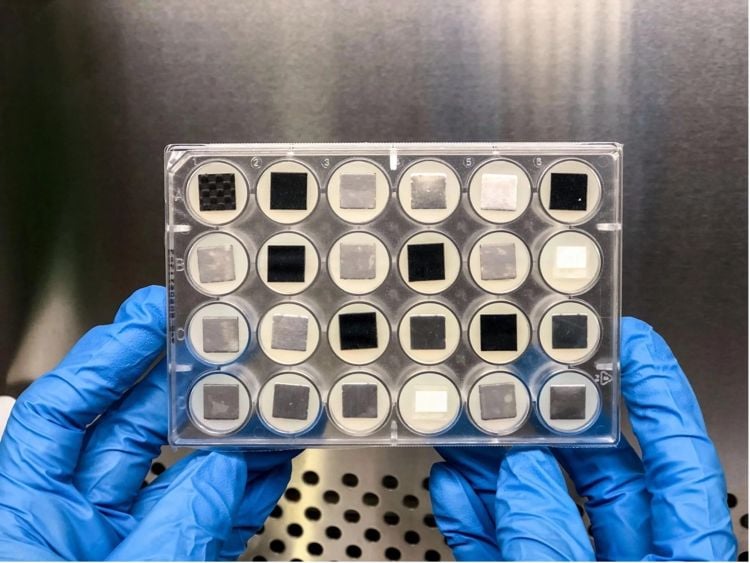
Arguably the most comprehensive research endeavor to better understand biofilm activity in microgravity is the Characterization of Biofilm Formation, Growth, and Gene Expression on Different Materials and Environmental Conditions in Microgravity (Space Biofilms) investigation conducted aboard the International Space Station (ISS). For this research, astronauts explore the intricate and complex processes responsible for biofilm growth and development in microgravity. Like countless other research endeavors on the ISS, findings from this research could impact Earth applications, including mitigating biofilm health hazards.
Biofilm research is just one of many research areas that will impact human space exploration, whether it’s on the ISS, the Moon, or Mars. While biofilms pose health risks to astronauts, they also possess countless applications that could enhance human space exploration.
How will biofilms contribute to spaceflight in the coming years and decades? Only time will tell, and this is why we science!
As always, keep doing science & keep looking up!