
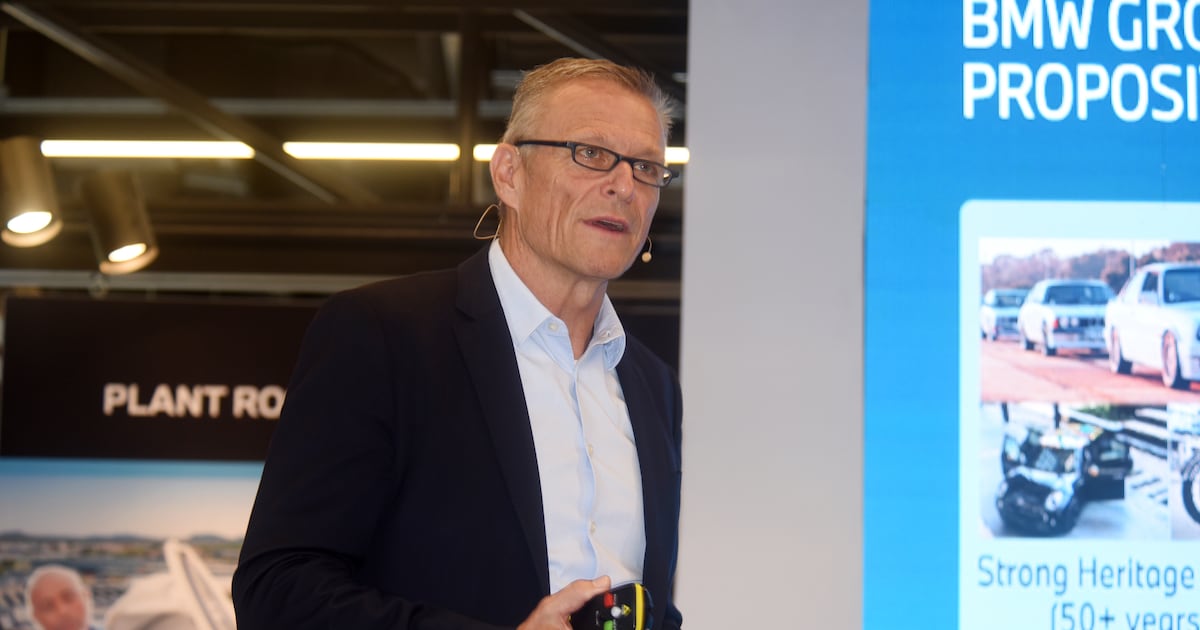
South Africa’s automotive industry is not calling for steep hikes in vehicle import duties and instead wants targeted auto policy adjustments to support domestic manufacturing, BMW South Africa’s CEO said on Wednesday.
Peter van Binsbergen was responding to questions on remarks to parliament by the international trade commissioner, flagging the gap between South Africa’s 25% duty on imported vehicles and the 50% maximum rate allowed by the World Trade Organisation (WTO).
In the same parliamentary sitting on Tuesday, deputy trade minister Zuko Godlimpi told legislators his ministry is reassessing hiking tariffs on imported vehicles.
“Fifty-percent is the bound rate within the WTO. I can tell you now no-one’s asking for that from the industry side. That must be very clear,” Van Binsbergen told journalists.
“He [the commissioner] was just saying what’s possible.
“We’re looking for a fine-tuning of all the levers within APDP [Automotive Production Development Programme] and not only one big hammer,” said the CEO, who is also president of the country’s car industry body Naamsa.
A jump to the 50% ceiling would be “a shock to the system”, said Van Binsbergen, warning of unintended consequences for consumers, “the worst being affordability for the entry-level consumer”.
BMW leads premium segment
The CEO said BMW’s South African arm recorded the highest-ever premium segment share locally for its BMW brand last year, growing to 46.2% from 44.3% in 2024 despite affordability pressures and intensifying competition, including from Chinese brands.
The BMW brand also grew retail sales by 12% in 2025, while its Rosslyn plant produced more than 79,000 vehicles last year, the highest volume in the plant’s 52-year history.
The carmaker plans to launch the BMW iX3, the first model from the all-electric “Neue Klasse” series, in South Africa in the second half of the year.
The model is one of BMW’s great hopes in the premium electric vehicle market globally. In South Africa, the BMW brand has a 22% market share of the battery electric vehicle segment.