
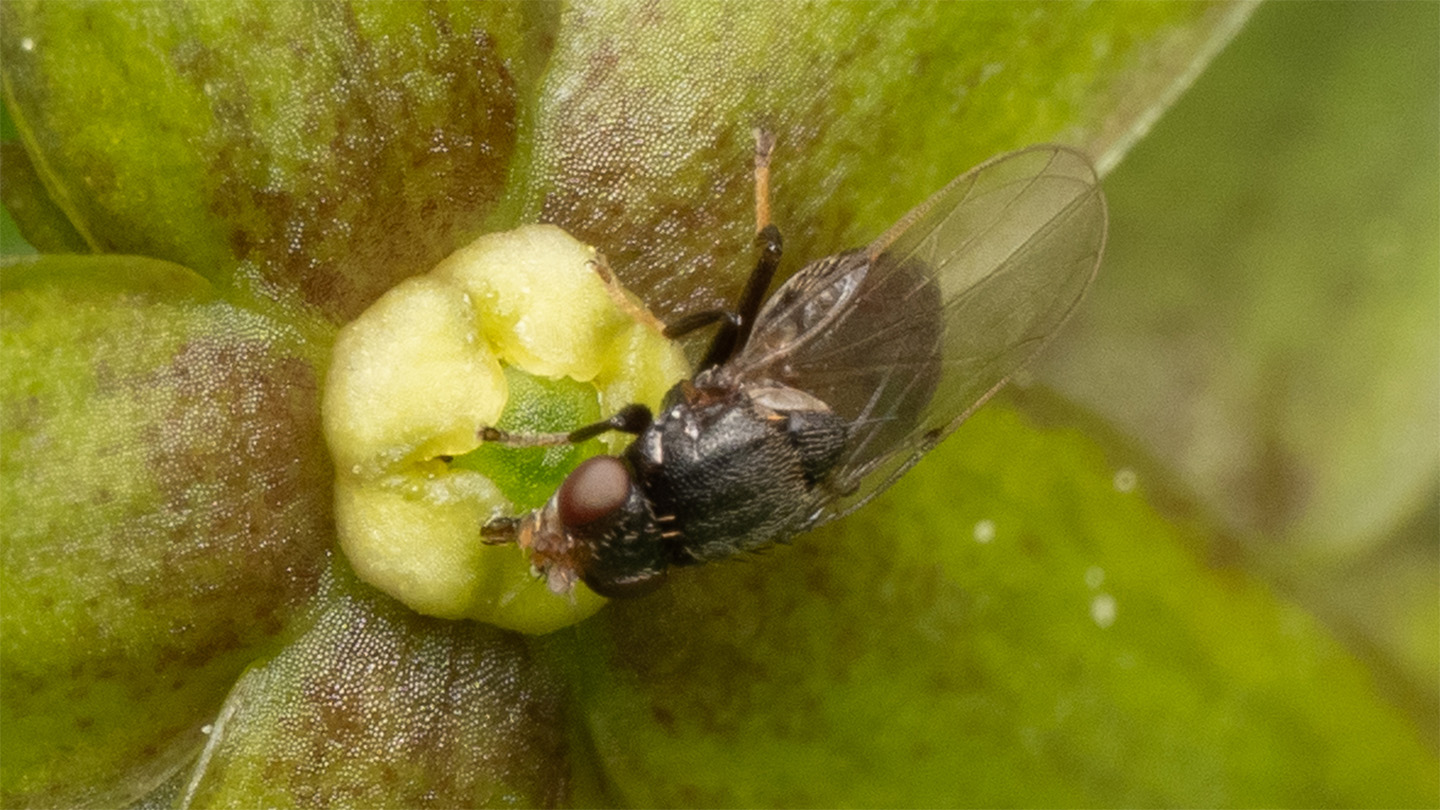
behavior: The way something (often a person or other organism) conducts itself or acts towards others.
biology: The study of living things. The scientists who study them are known as biologists.
botanical: Having to do with the field of biology that focuses on plants. The scientist in this field is known as a botanist.
bug: One of many species of small insects with mouthparts that evolved an ability to pierce and suck liquids from a plant. Also a slang term for any insect.
chemical: A substance formed from two or more atoms that unite (bond) in a fixed proportion and structure. For example, water is a chemical made when two hydrogen atoms bond to one oxygen atom. Its chemical formula is H2O. Chemical also can be an adjective to describe properties of materials that are the result of various reactions between different compounds.
dupe: To fool.
evolve: (adj. evolving) To change gradually over generations, or a long period of time. In living organisms, such an evolution usually involves random changes to genes that will then be passed along to an individual’s offspring. These can lead to new traits, such as altered coloration, new susceptibility to disease or protection from it, or different shaped features (such as legs, antennae, toes or internal organs). Nonliving things may also be described as evolving if they change over time. For instance, the miniaturization of computers is sometimes described as these devices evolving to smaller, more complex devices.
hypothesis: (v. hypothesize) A proposed explanation for a phenomenon. In science, a hypothesis is an idea that must be rigorously tested before it is accepted or rejected.
insect: A type of arthropod that as an adult will have six segmented legs and three body parts: a head, thorax and abdomen. There are hundreds of thousands of insects, which include bees, beetles, flies and moths.
nectar: A sugary fluid secreted by plants, especially by flowers. It encourages pollination by insects and other animals. It is collected by bees to make into honey.
pollinate: (n. pollinator) To transport male reproductive cells — pollen — to female parts of a flower. This allows fertilization, the first step in plant reproduction.
predator: (adjective: predatory) A creature that preys on other animals for most or all of its food.
prey: (n.) An organism hunted by another, often for food. (v.) To attack and eat another organism.
species: A group of similar organisms capable of producing offspring that can survive and reproduce.