
For Louth County Council, leadership by example is a driving force in its response to climate change

It was described as a once in a generation event: torrential rainfall in October 2023 that caused some of the worst flooding ever recorded in Co Louth.
Parts of the Cooley Peninsula and the popular coastal village of Carlingford were submerged by unprecedented flooding, with local residents speaking of “roads turning into rivers”.
Now, two years later, that can be clearly seen as what it was: an exceptional weather event. And, as evidence on the impact of climate change has indicated, there will be more of those to come.
But what can be done at local level, in towns and villages, and by local communities to address what has become a real threat?
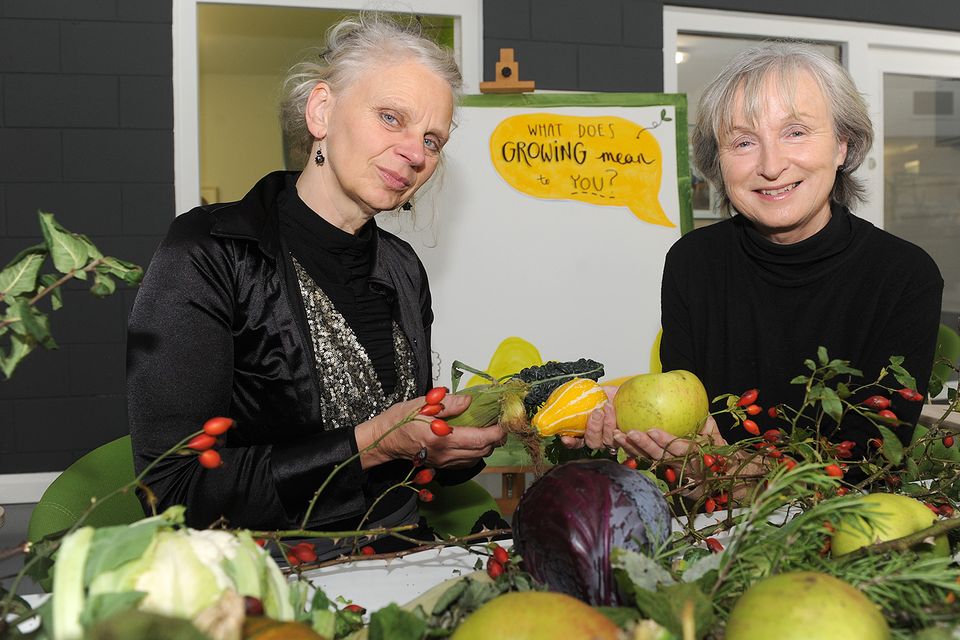
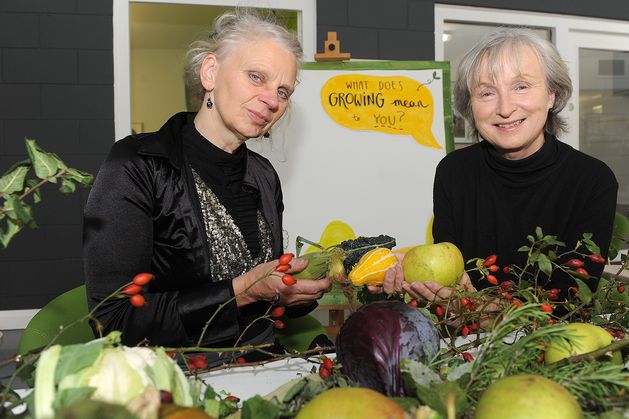
Groundswell founder Pamela Whitaker and Blackrock Park’s Eileen Carter at the launch of the Louth Urban Food Sanctuary in 2023. Photo: Aidan Dullaghan/Newspics
How your county is weighing in on fighting climate change
This is the challenge facing local government, where councils are playing a crucial role in developing mitigation and adaptation strategies.
“Co Louth and Louth County Council [LCC] are facing a wide range of pressing climate challenges,” said a spokesman for the council’s environment team.
“We are seeing more very heavy rainfall, which is making flooding worse. At the same time, this rainfall isn’t spread evenly over the year like it used to be, meaning that water reserves can start to run low earlier in the year.”
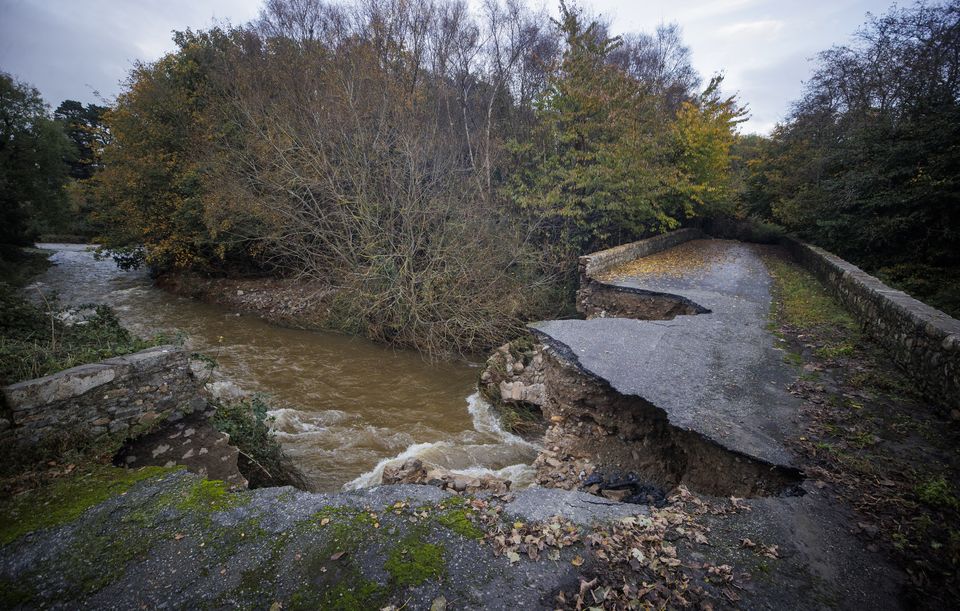
The River Big Bridge outside Carlingford partly collapsed after heavy rainfall in 2023. Photo: PA
Like many local authorities around the country, in response to national policy, Louth adopted a Climate Action Plan last year – a five-year strategy outlining short-, medium- and long-term plans to make the county more climate resilient.
“Reducing our carbon footprint is a real focus for us,” the spokesman said. “We have national targets of lowering our CO2 emissions by 51pc by 2030 and becoming net zero by 2050. We are also required to reduce our usage by 50pc by 2030.”
One of the key elements of achieving these targets is leading by example.
“For us, as local government, we have to show leadership and that we are getting our own house in order,” the spokesman said.
“[LCC] is taking concrete action to reduce emissions and lower energy consumption, beginning with our own operations.
“Our fleet team is playing a key role, with 22 new electric vans set to hit the roads in the coming weeks. We have also switched several vehicles across the county to [hydrotreated vegetable oil] fuel – a cleaner alternative to diesel that helps lower our carbon footprint.”
He said these steps are “part of our wider push to make the council more energy efficient and climate friendly, showing commitment to real, practical change”.
This has displayed a direct climate benefit for the community
In terms of energy use, LCC has improved its energy performance by over 55pc compared to the baseline period of 2006-2008, according to SEAI. Louth council used 16,593,278kWh of energy in 2024 compared to 37,270,632kWh in the baseline period. The council’s CO2 emissions also reduced by 2,030,618kg between 2016 and 2024.
The local authority has been delivering the Community Climate Action Fund. The council was allocated €604,000 under the fund, and this has directly funded 22 climate action projects at a local level.
At Drogheda Town FC, €77,900 was granted under the fund to upgrade 22 halogen floodlights, which were previously powered by a diesel generator, to LED.
“This has displayed a direct climate benefit for the community, as it contributes to lower carbon emissions and a more sustainable future for the club and community.”
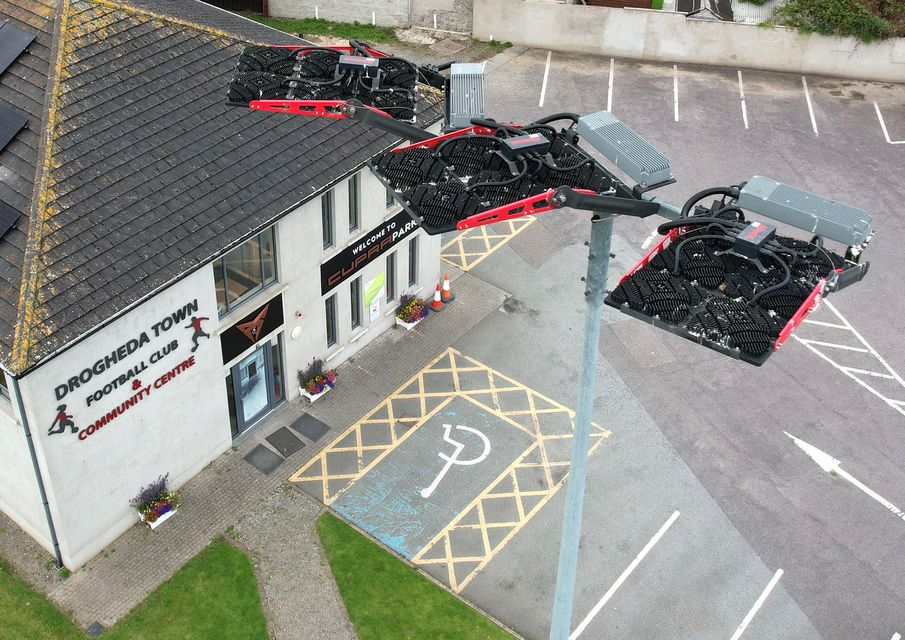
LED floodlights installed at Drogheda Town FC
“This was led by the Creative Ireland team in Louth County Council and looked at food security and community outreach. This brought communities together in the county to share recipes and help grow more food locally.”
He added: “So much of the work we do at Louth County Council could be thought of as climate action, be that the operations team resurfacing roads after flooding or the engineers restoring parts of the coastal defences after a winter storm, or our community team helping community groups when there are power cuts. We have always reacted to extreme weather.
“Over the next five years, we will continue to lead out in climate action through new active travel projects to allow people to get around by bike or walking, and new flood defence projects in Drogheda, Dundalk and Carlingford.”
The success of Louth’s climate action plan will be measured by its actions. Each year, the local authority will report to the Department of Climate, Energy and the Environment on how the actions are progressing.
“Louth County Council is uniquely positioned to lead when it comes to climate action,” the spokesperson said.
“We are close to our communities, and our 1,000 plus services put us in constant contact with the public. By taking affirmative action, we can have a positive influence over our localities.
“We will do our part, we will use our position of influence, and we will be strong advocates for making positive changes.”
Funded by the Local Democracy Reporting Scheme