
Comment: Last week brought more agonising and expensive climate change-related disasters with loss of life and livelihoods. Many New Zealanders have connected the dots between repeated floods, landslips, water pollution, with the wilful neglect of political long-term thinking and the decaying infrastructure that exposes us to further harm.
On the RNZ interview after Mt Maunganui’s landslip, PM Christopher Luxon sidestepped questions on his party’s woeful lack of climate change action to focus on the major three reforms he is relying on “to make the country fundamentally wealthier and lift the living standards of everyone”.
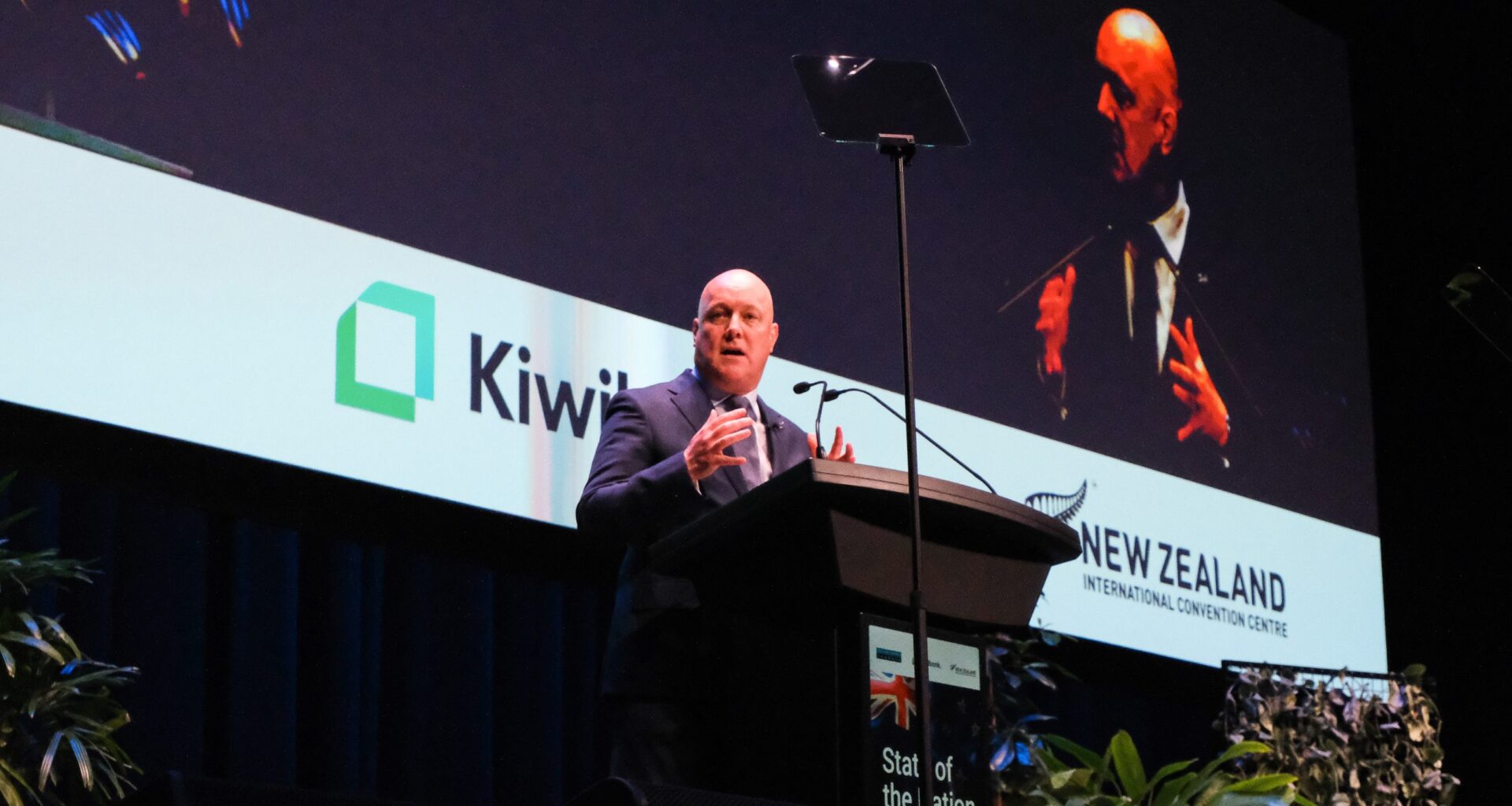
In order, these are: KiwiSaver increase to 12 percent, RMA reforms, and education reforms as set out in the State of the Nation speech.
What we need is real leadership to forge a collective multiparty agreement to ensure immediate prioritising of the existential threats we face. Our brightest and best should be working on it. Instead, Luxon makes his election promise of ‘KiwiSaver changes’ the primary centrepiece. We may as well turn off the lights now.
To put it into context, KiwiSaver is already being lifted to 3.5 percent employee /3.5 percent employer from April this year. By 2028 it will be 4/4 or a total of 8 percent. KiwiSaver balances will surge even further ahead for the well-paid, leaving behind the long tail of the many who have had to cash in their KiwiSaver, or put it on hold to survive this recession. Many under total remuneration packages must find the extra themselves, and the self-employed will have very little incentive to set up or to contribute to their KiwiSaver at all.
It’s bizarre that National’s ‘long-term thinking’ is to announce a policy that forces the private sector to save more. He says he wants ‘to support financial security’ by increasing employer and employee contributions over time, “rising to 6 percent each by 2032, and a combined contribution of 12 percent, matching Australia”.
In Luxon’s view of economics, his policy must produce more savings. It may for some well-placed employees, but others will simply reduce other savings and repay their mortgages more slowly, especially when they are already struggling under the 4 percent rate. Furthermore, workers can expect smaller future wage increases as the employer struggles to pay the extra contributions.
Ultimately it makes little difference to who bears the burden whether contributions are split between employer and employee, or all paid by the employer alone as in Australia. Make no mistake, there will not be more financial security for any but the top earners while women, self-employed, disabled, sick, Māori and Pasifika will fall further behind.
The second fallacy is that somehow those savings will magically result in the kind of investment needed to make the economy grow. If 6 percent hasn’t achieved this, and the rise to 8 percent is likely to hurt the recovery, 12 percent is not going to do it either. Basic 101 economics says more savings doesn’t guarantee more real investment, nor quality investment, and especially not investment in the mitigation of climatic catastrophes we need for our collective survival.
Luxon’s claim he is ‘matching Australia’ is just wrong. How much does he know about Australia’s system? Will he match that country’s tax incentives for superannuation? Or is this a Trojan horse for doing what National have wanted to do all along – take the pressure off NZ Superannuation by means-testing it like the Australians do?
If so, does he know that an Australian means test is based on joint marital income and assets and is very comprehensive, intrusive and complex?
Luxon’s plan is not about increased financial security for you and me, but to shift the risks of pension provision away from government and onto workers. That is achieved by offsetting part of a person’s larger (but riskier) lump sum KiwiSaver against their (stable and secure, state-protected) NZ Super income entitlement.
His State of the Nation speech also proclaimed “an inevitable lift in the retirement age” regardless of advice from the Retirement Commission and others.
So that’s evidently decided; New Zealanders will have to save more and work longer regardless of health or circumstance.
The second reason he is so keen on his KiwiSaver plan is “to establish a spine of national capital, sheltered from the winds of financial and political change offshore, and available to invest in the businesses and infrastructure here at home that we will need to become richer as a society”.
How does that work when KiwiSaver is largely invested in paper assets (shares) of other countries? Is he considering commandeering private KiwiSaver contributions and forcing their investment in the likes of hospitals, pipes and roads? If so, what return will be paid to a private KiwiSaver? How is that cheaper than state borrowing? Won’t KiwiSaver have to be compulsory? Ironically, all this state control may remind you of Muldoon and invite accusations of ‘communism by stealth’?
Luxon has also claimed this will “make New Zealand a more attractive place to build a career and raise a family, by closing the gap with Australia on superannuation contributions”.
Seriously? By making us feel even poorer through the forced 12 percent saving? Employers don’t have a magic money tree: after waiting so long for the elusive recovery, gross wages are doomed to grow much more slowly.
Those trying to raise a family on a limited wage face unaffordable housing and a punitive tax regime including 15 percent GST on everything. Is Luxon planning to ‘close the gap’ by reducing GST to the Australian 10 percent? Will he also introduce a zero-tax band like Australia’s for the first $18,200 earned? Will he reduce the clawback of family tax credits and repayments of student loans to reduce New Zealand’s punitive Effective Marginal Tax Rates to match those of Australia?
I doubt Luxon would do any of the above. He has already gutted KiwiSaver by removing all but the very last vestiges of subsidy.
Most baby boomers will be fine – they got the best of the state subsidies for KiwiSaver and now are getting the best of NZ Super.
If KiwiSaver remains voluntary and unsubsidised, most low-income people will not be able to afford to be in it – unless forced to do so by making it compulsory. Is this how he means by matching the Australian way?
“We have announced these changes early, so employers and employees have plenty of time to prepare, but over time we expect they will lead to much larger retirement balances,” he said.
Oh goody, time to prepare to go to Australia.
According to Luxon: “For a 21-year-old earning $65,000 and making default contributions in line with the changes already delivered at this year’s Budget, they could expect to retire with around $1 million in their KiwiSaver account by the time they turn 65. Following National’s proposed changes, that same individual could expect their KiwiSaver balance to be about $400,000 larger – or about $1.4 million in total – assuming they increase their contributions to the planned higher default rates over time.”
Luxon finished with a triumphant election flourish – this magical pie-in-the-sky retirement balance of $1.4m is only if you elect National.
If that is how he plans to build the future and ‘only with National’ as if there is no alternative, we are locked into a visionless, aimless, more divided backwater of ever more inevitable climate change-related tragedies.