
The new class of drugs has changed the game when it comes to weight loss. So what are the key dietary considerations you need to know before you start taking them?
 Save
Save
You have reached your maximum number of saved items.
Remove items from your saved list to add more.
Save this article for later
Add articles to your saved list and come back to them anytime.
Got it
AAA
In recent years, the weight-loss industry has been seriously disrupted by the arrival of a new range of medications: the semaglutides, or GLP-1 medications. Targeting appetite as well as glucose and fat metabolism, these drugs work on underlying issues driving disproportionate weight gain in those predisposed to developing glucose regulation issues and type 2 diabetes.
They can also deaden persistent hunger, which is what makes dietary compliance difficult for many. While GLP-1s may sound too good to be true, the reality is they can be. Unless they are used in the right way, with the right diet and exercise prescription, they are unlikely to keep the weight off once you stop using them.
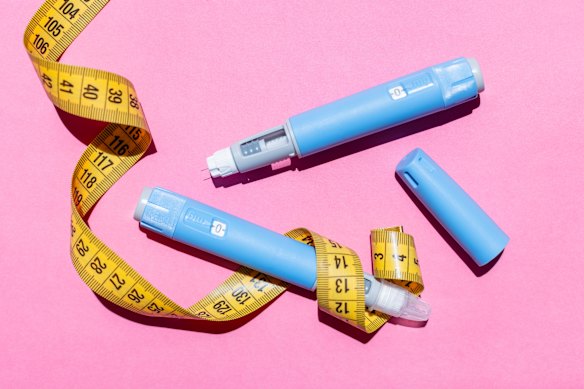 GLP-1s stimulate the secretion of insulin in the body.iStockWhat are GLP-1 medications and how do they work?
Semaglutide drugs work in a number of ways. Primarily they are GLP-1 (glucagon-like peptide-1) agonists, which means that they act to stimulate the secretion of insulin in the body. As insulin is the central regulator of both glucose and fat metabolism, more tightly controlled insulin levels can support fat loss in individuals susceptible to high glucose levels.
In addition, these drugs help to reduce the amount of glucose that is released from the liver after food consumption, and slow digestion slightly to help reduce blood glucose spikes and subsequent lows that can leave individuals feeling faint and craving sweet food.
The best recipes from Australia’s leading chefs straight to your inbox.
It is the dual effect of these drugs, in which they target both insulin and glucose regulation, while simultaneously reducing appetite and sweet cravings, that makes these types of drugs so different to other pharmaceuticals that have targeted weight loss to date.
Key dietary changes
In theory, GLP-1s sound amazing – eat fewer kilojoules without feeling hungry and lose weight relatively quickly? There are a few reasons that this is not always ideal, and more importantly does not guarantee that any weight lost is kept off for good.
While eating significantly fewer kilojoules will result in relatively quick weight loss, or one to two kilograms a week for some people, when weight is lost quickly, a significant proportion of weight loss is muscle mass. While this may mean losses on the scales, over time reductions in muscle mass mean reductions in metabolic rate, or the number of kilojoules the body needs to function.
This explains why those on fad, extreme diets lose weight quickly, but also regain it quickly when they return to their old eating patterns and habits. Over time, they are creating a cycle in which they need fewer kilojoules to maintain the same weight.
 Prioritising protein is important for people with limited appetite.James MoffattRelated ArticleFocus on protein
When kilojoules are being restricted, consuming adequate amounts of protein will help to minimise muscle mass loss. For the average person, a minimum of 1.2-1.4 grams of protein per kilo of ideal weight, or 80-100 grams of protein daily, will be required. For people who have limited appetite, this will require careful meal planning to ensure that when food is consumed in three to four meals and snacks each day, each meal offers 20-30 grams of protein.
Learn hunger-based eating
It sounds simple, but ultimately very few people eat because they are hungry. Rather, we eat because other people are eating, because tasty foods are on offer, because we are scared of feeling hungry, and because we are afraid of missing a meal. As GLP-1 medications significantly affect hunger, if you find you are eating irrespective of hunger, this will become apparent. Eating small meals every three to four hours, and stopping eating when pleasantly full rather than stuffed, is a key to weight loss success using GLP-1 medications.
 Boost your fibre intake by eating vegetables and fruit throughout the day.William MeppemRelated Article
 Get enough fibre
When food intake is significantly reduced, our intake of dietary fibre tends to take a beating too, affecting digestive health and regularity. For this reason, a focus on including a couple of serves of wholegrain foods – at least one piece of fruit as well as raw or cooked vegetables at every meal – will help you to reach a daily target of 30 grams of dietary fibre to keep your digestive tract working efficiently.
Protect metabolism
While restricting food intake is one half of the energy balance equation, ultimately the key to increasing metabolic rate and the body’s ability to burn kilojoules, is to train the body in a way that builds muscle mass. As mentioned, this can be achieved by prioritising protein intake at each meal to reach daily targets, as well as by including weight training in your exercise routine. This means that when you do reduce or stop using a GLP-1 medication, you will be less likely to regain the weight you have lost, which is what currently happens to at least two-thirds of people who try these medications to support weight loss.
Related Article Related Article
 Save
Save
You have reached your maximum number of saved items.
Remove items from your saved list to add more.
 Susie Burrell is an accredited practising dietitian and nutritionist.From our partners