
The railway to the Gara Djebilet iron ore deposit was officially inaugurated by President Abdelmadjid Tebboune on Sunday, enabling large-scale shipments from the site.
Gara Djebilet, discovered in 1952, remained largely dormant for decades due to its remote location and high processing costs.
Located in Algeria’s western desert near the Moroccan border, the deposit is estimated to contain approximately 3.5 billion tonnes of iron ore, with around 1.7 billion tonnes considered exploitable using current technology.
With these reserves, Gara Djebilet stands as the largest iron ore deposit in both Algeria and North Africa.
First shipment and production plans
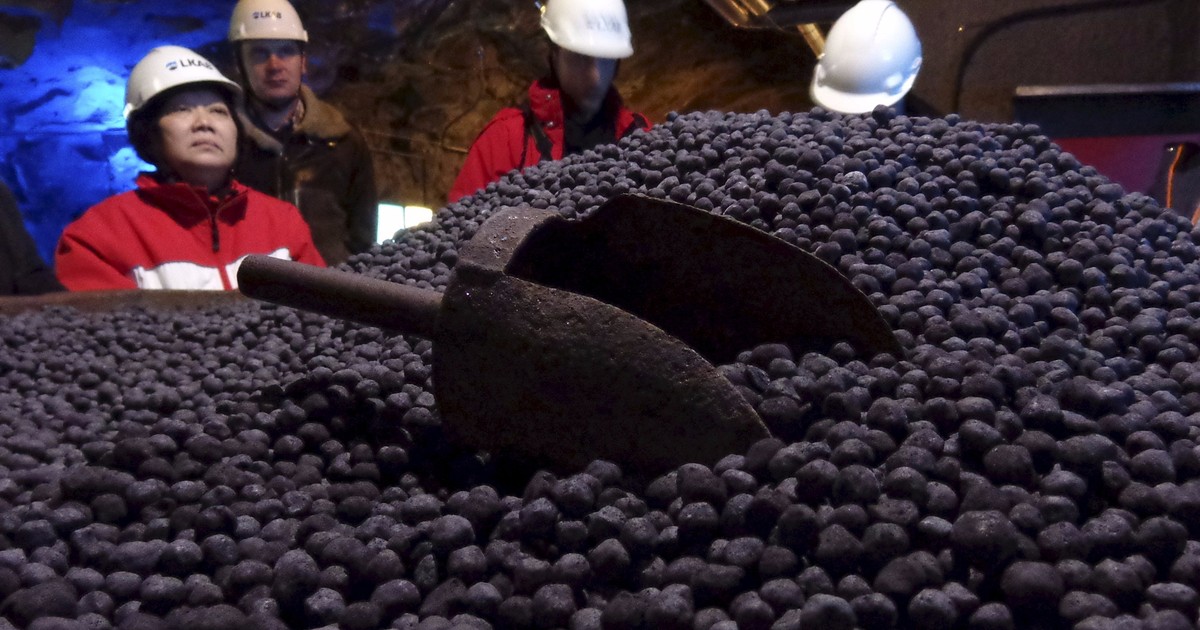
The first shipment of iron ore extracted from Gara Djebilet, amounting to 1,450 tonnes, was transported on Tuesday from Tindouf province.
Freight cars departed for Bechar province, where the ore will undergo initial processing before being sent to the Tosyali complex in Bethioua, Oran province.
During the inauguration, President Abdelmadjid Tebboune described the project as “one of the largest strategic projects in the history of independent Algeria.”
The mine is expected to produce 4 million tonnes per year during the initial phase, with production projected to triple to 12 million tonnes per year by 2030, according to estimates by the state-owned Feraal Group, which manages the site.
In the long term, output could reach 50 million tonnes per year, significantly reducing Algeria’s reliance on imported iron ore and saving an estimated $1.2 billion annually.
Connecting the mine to industry
The railway, built by Algerian state-owned companies in partnership with China Railway Construction Corporation (CRCC), links Gara Djebilet to Tindouf and Béchar, before connecting to existing tracks leading to the Mediterranean coast and the port city of Oran.
Oran hosts a major steel complex operated by Turkey’s Tosyali Holding, which will play a central role in processing part of the mine’s output.
Partners and builders
Mining operations are led by Algeria’s state group Sonarem, through its iron and steel subsidiary Feraal.
China’s Sinosteel provides technical expertise and constructs processing facilities to treat the high-phosphorus ore, while Tosyali participates through joint ventures focused on iron concentrate and steel production.

Early production and future potential
Since industrial ramp-up began in 2022, Algeria has extracted more than 250,000 tonnes of ore during pilot operations.
Revenue generated so far has been limited, with most of the output used for testing, stockpiling, and domestic trials rather than international sales.
Once the railway and processing facilities are fully operational, authorities estimate annual output could reach 30–40 million tonnes, generating billions of dollars in export revenue and supplying domestic and international steelmakers in Europe, Asia, and the Middle East.
A broader African context
For Algeria, the project is central to reducing dependence on oil and gas, which account for over three-quarters of export earnings and about half of state revenue.
By reopening Gara Djebilet with Chinese support, Algeria aims to transform one of North Africa’s largest iron ore deposits into a strategic driver of industrial growth, jobs, and economic diversification.