
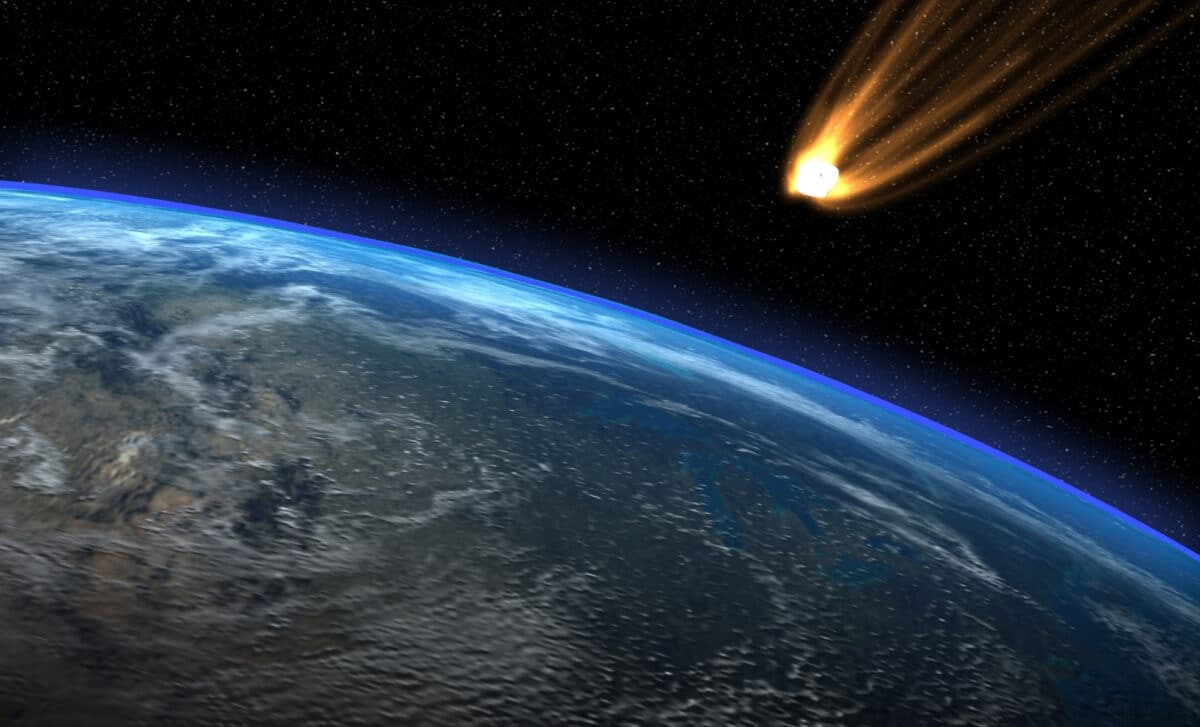
Named Chwichiya 002, the specimen may offer an unprecedented glimpse into the interstellar materials that helped form the Solar System over 4.5 billion years ago. First classified by French meteorite collector Jean Redelsperger, this meteorite is now at the center of international scientific analysis due to its exceptionally primitive composition and the high concentration of presolar grains embedded in its structure.
The meteorite was unearthed in 2018 near the village of Haouza, in a region of Morocco known as Chwichiya, where several small fragments bearing fusion crust were found. Redelsperger, who personally recorded the GPS coordinates of the discovery site, quickly realized the importance of the find and contacted research teams. The first analyses, conducted by Jérôme Gattacceca at the CEREGE research center, classified the meteorite as C3.00 ungrouped, which is the most primitive type ever recorded among carbonaceous chondrites.
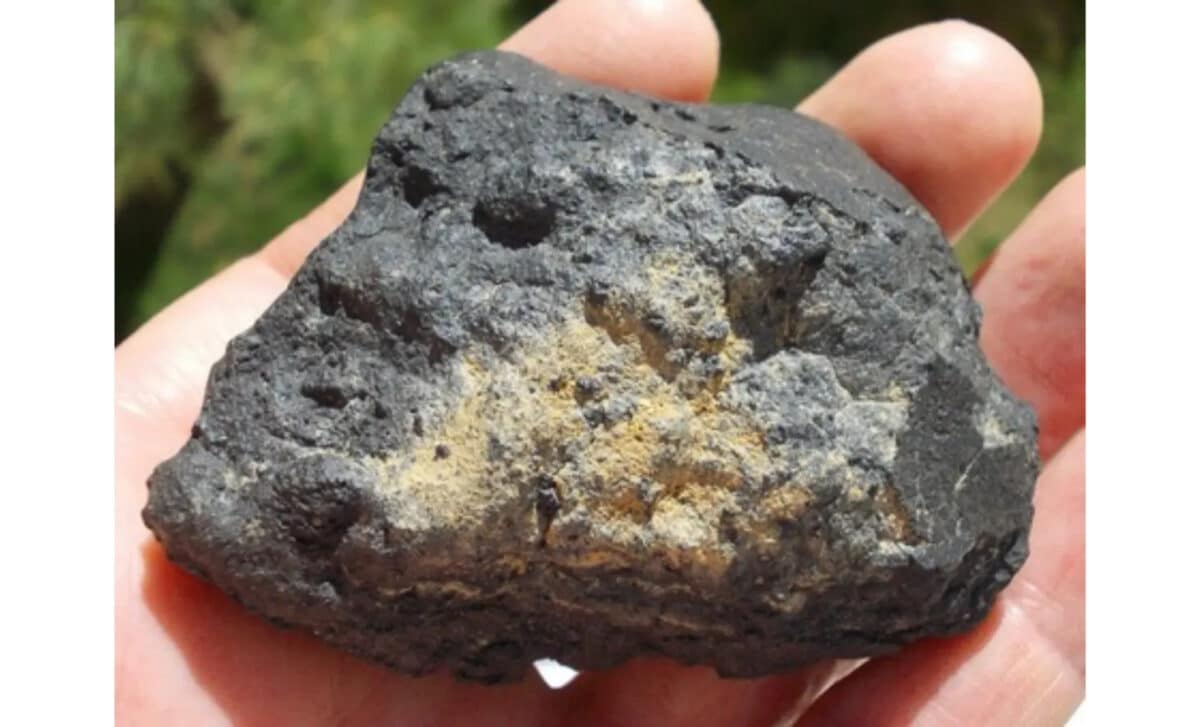 The main fragment of Chwichiya 002 – © Jean Redelsperger
What sets this rock apart is not just its classification, but the fact that it appears to have undergone minimal heating and almost no aqueous alteration on its parent body. As Redelsperger shared, this rare condition makes Chwichiya 002 a potential time capsule of the earliest moments of the Solar System.
Phages as Future Frontline Defense
Meteorite classification has long evolved from simple observation to complex geochemical analysis, and finds like Chwichiya 002 are now used to redefine existing categories. According to Futura, this specimen belongs to a very rare new class of carbonaceous chondrites, designated as CT3, setting it apart from more common meteorite types.
Over time, collectors and researchers have developed a system to trace the origins and transformations of these rocks. Primitive meteorites like this one are believed to have formed from the raw material of the protosolar nebula, the dense cloud of gas and dust that eventually birthed our Solar System. Unlike differentiated meteorites, which have been melted and chemically altered, undifferentiated or primitive chondrites preserve their original structures. Chwichiya 002’s C3.00 ungrouped classification highlights this untouched nature.
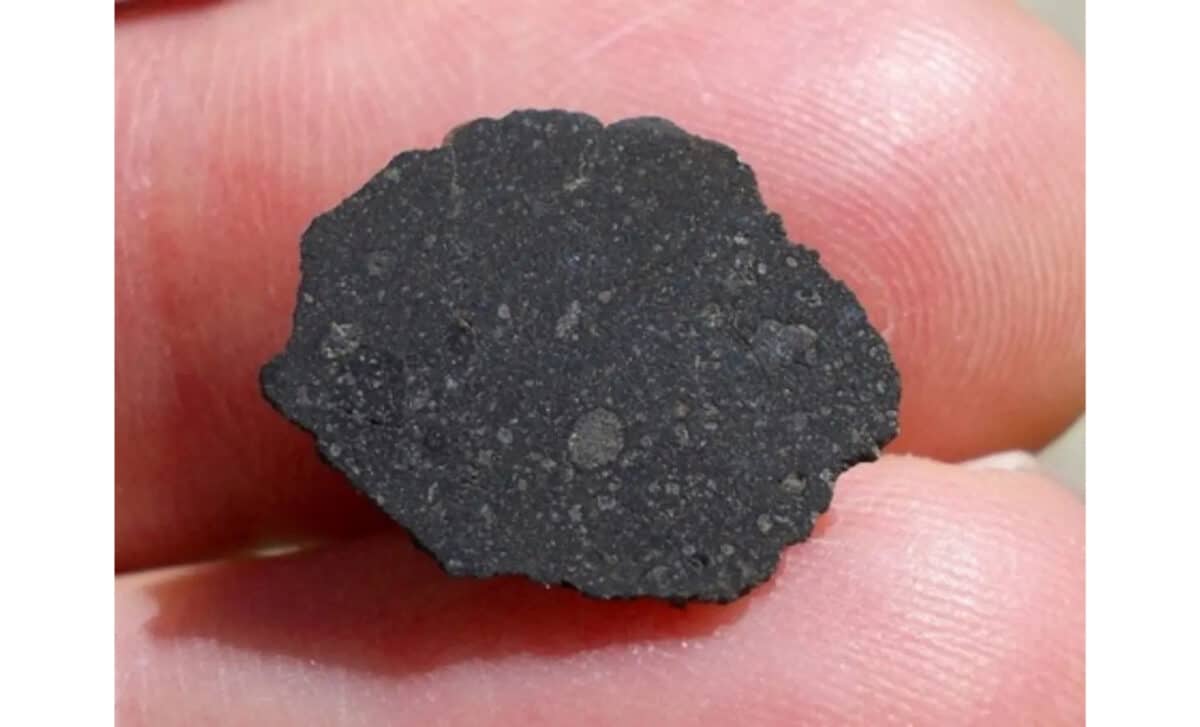 A cross-section of Chwichiya 002. The chondrules are clearly visible, but not the pre-solar grains – © Jean Redelsperger
Moreover, laboratories around the world have suggested that Chwichiya 002 may share chemical affinities with samples returned from asteroid Ryugu by the Hayabusa2 mission, as well as with material expected from asteroid Bennu, the target of NASA’s OSIRIS-REx mission. These similarities, if confirmed, could strengthen the link between meteorites found on Earth and near-Earth asteroids studied by recent space missions.
Phages as Future Frontline Defense
What truly distinguishes Chwichiya 002 is its high concentration of presolar grains, rare microscopic particles that condensed before the formation of the Sun, making them the oldest solid materials ever discovered. These grains originate from dying stars, including supernovae and asymptotic giant branch stars, and were expelled into the galaxy long before becoming part of the Solar System’s material reservoir.
Presolar grains did not form in the cooling protoplanetary disk surrounding the young Sun, but instead in stellar atmospheres, millions or billions of years earlier. These tiny fragments of interstellar dust journeyed through the galaxy, were trapped in the molecular cloud that collapsed to form the Solar System, and eventually found their way into objects like meteorites and comets.
Such grains have previously been found in meteorites like Murchison and Allende, both of which have played significant roles in advancing our understanding of cosmochemistry and the origin of organic compounds. The Murchison meteorite, discovered in Australia in 1969, was later found to contain more than 70 amino acids, offering insight into the possible chemical pathways that led to life.
Silent Witnesses of Stellar Evolution
The presence of presolar grains in Chwichiya 002 doesn’t just inform us about meteorites, it provides a direct sample of ancient stellar material. These grains are fossil records of the dynamic processes inside stars, including the nucleosynthesis of heavy elements and their subsequent dispersal into space through stellar winds and explosions.
Stars between one and eight solar masses, like our Sun, eventually evolve into red giants and expel their outer layers. It is within these environments that heavy elements are forged and dust grains crystallize. Each grain carries with it a unique signature of its origin, determined by the star’s physical conditions, wind speed, and chemical composition.
These fragments, embedded deep within meteorites like Chwichiya 002, help researchers reconstruct the interstellar environment that seeded our planetary system. The grains not only connect us to long-extinct stars, but also trace the cyclical nature of cosmic matter, from stellar birth and death to the formation of planets, and life.