
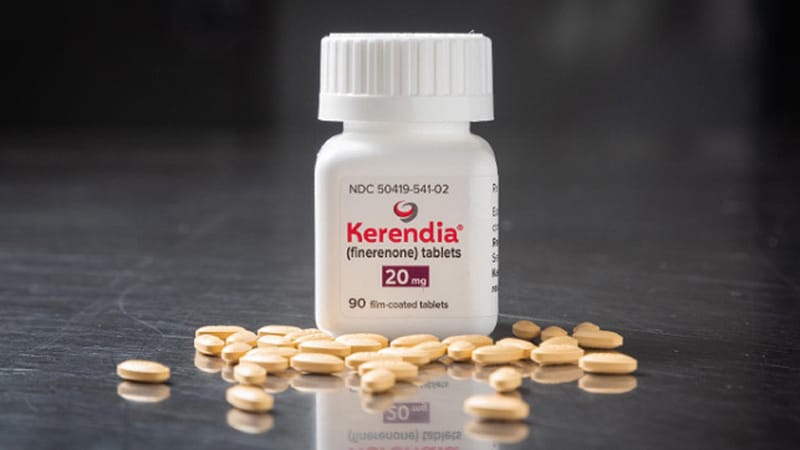
European regulators have moved to broaden the clinical use of Kerendia (finerenone, Bayer), backing its role in a large and previously underserved heart failure population.
At its January meeting, the European Medicines Agency’s (EMA’s) Committee for Medicinal Products for Human Use issued a positive recommendation to expand the marketing authorization of Kerendia to treat symptomatic chronic heart failure in adults with a left ventricular ejection fraction of 40% or higher.
The decision also introduces a new 40-mg film-coated tablet strength specifically for this indication.
If adopted by the European Commission, Kerendia would be authorized in the EU for two distinct indications. The medication was initially authorized for managing chronic kidney disease with albuminuria linked to type 2 diabetes in adults. The newly recommended heart failure indication would extend its approved use beyond renal disease, expanding the clinical scope for this mineralocorticoid receptor antagonist.
How the Mineralocorticoid Blocker Works
Kerendia contains finerenone, which binds to mineralocorticoid receptors responsible for triggering inflammatory and fibrotic processes in organs. Through receptor blockade, the medication halts inflammation and scarring, minimizing organ damage. The drug comes as oral tablets administered once daily, with dosing adjusted according to kidney function.
Evidence At a Glance
The approval is based on the phase 3 FINEARTS-HF trial, an international study involving 6001 participants with heart failure and an ejection fraction of 40% or higher. Participants received finerenone (maximum 20 mg or 40 mg once daily) or matching placebo in addition to standard therapy.
Over a median follow-up of 32 months, finerenone demonstrated significant benefit for the primary composite endpoint of total worsening heart failure events and cardiovascular death. In the finerenone group, 1083 primary outcome events occurred in 624 of 3003 patients, compared with 1283 events in 719 of 2998 placebo recipients (rate ratio, 0.84).
Total worsening heart failure events numbered 842 in the finerenone group vs 1024 in the placebo group (rate ratio, 0.82). Cardiovascular mortality rates were 8.1% and 8.7% in the finerenone and placebo groups, respectively.
In the secondary analysis, finerenone reduced a composite endpoint of cardiovascular death, heart failure hospitalizations, and urgent visits by 15% compared with placebo. The trial showed an 11% reduction in the need for outpatient oral diuretic intensification. Outpatient worsening events requiring diuretic adjustments affected 21% of trial participants and were found to correlate with an increased risk for mortality.
Safety Profile and Prescribing Considerations
The most frequent side effect of Kerendia is increased blood potassium, occurring in more than 1 in 10 patients. Other frequent adverse effects (up to 1 in 10 people) include hyponatremia, hypotension, pruritus, and a decline in kidney function.
The medication is contraindicated in patients with Addison disease and must not be combined with potent CYP3A4 inhibitors.
Kerendia remains under additional monitoring, meaning it receives more intensive surveillance than other medicines.
Detailed recommendations for product use will be described in the updated Summary of Product Characteristics, which will be published on the EMA’s website in all official EU languages after the European Commission grants the marketing authorization change.