
Estimated reading time: 5 minutes
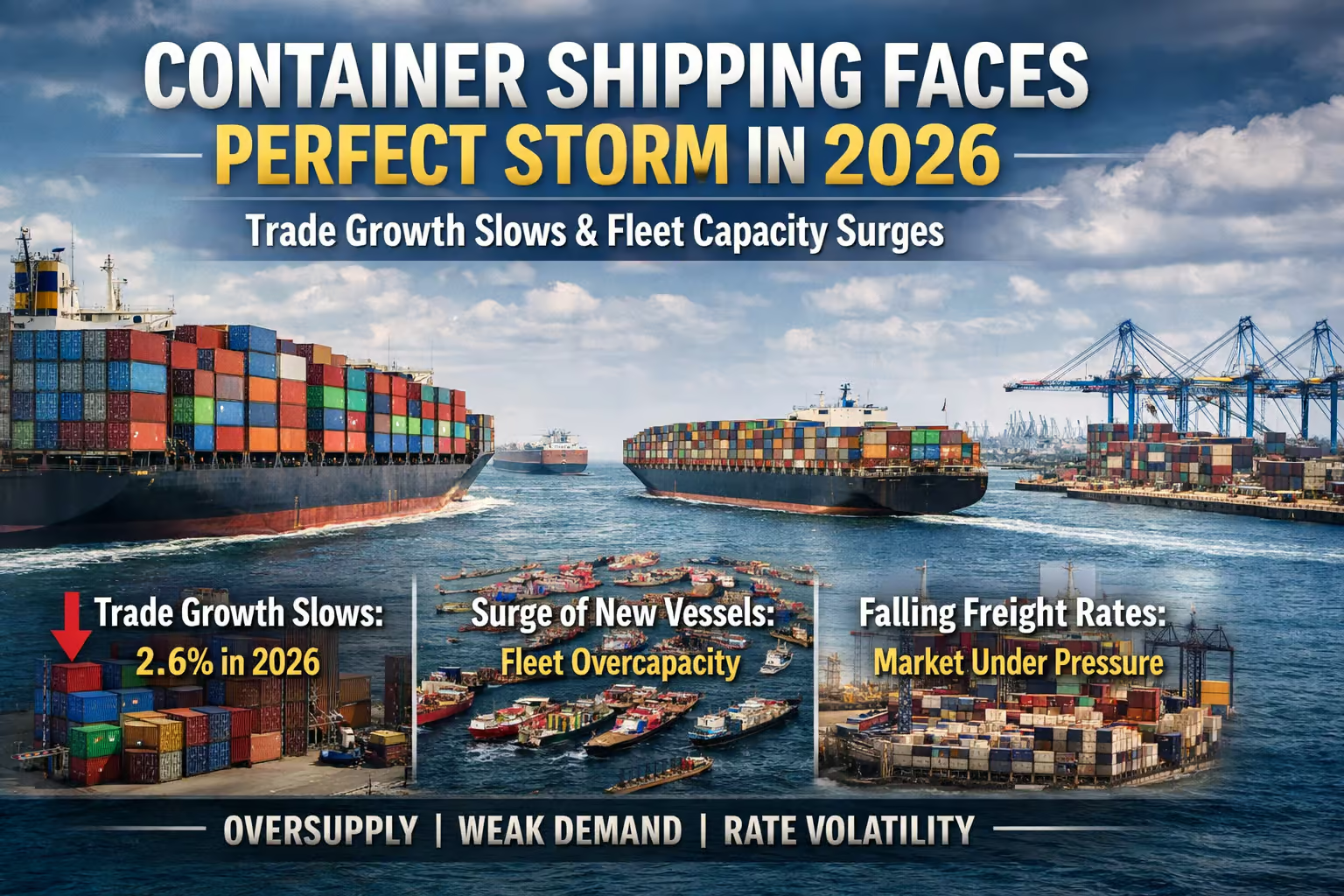
Global container shipping lines are bracing for a challenging year as world trade volume growth slows to 2.6 percent in 2026, down sharply from 4.1 percent in 2025, while new vessel deliveries threaten to flood an already fragile market with excess capacity.
Market and Operational Impact
The International Monetary Fund’s January 2026 World Economic Outlook projects global GDP growth will remain steady at 3.3 percent in 2026, but this headline figure masks a significant slowdown in trade volume growth. Sea Intelligence analysis reveals that the decline in trade growth is largely driven by a “front loading” effect in 2025, where shippers accelerated imports to avoid anticipated tariff increases. As a result, 2026 is expected to experience a “payback” period of suppressed volumes, compounded by a structurally higher US tariff cost base of approximately 18.5 percent.
The slowdown in trade growth is particularly acute in containerized cargo, where demand is heavily reliant on high value, low volume technology exports. Export growth from Asia excluding China reached 13.2 percent in 2025, but roughly 70 percent of this growth was driven by technology exports, which do not translate into significant container volume demand. This creates a challenging scenario for container shipping stakeholders, as the IMF’s trade projections are based on monetary value rather than TEU, obscuring the reality of weaker physical demand for volume dense goods.
On the supply side, the global container shipping fleet grew by 7 percent in 2025, outpacing demand growth of 5 percent. Maritime Strategies International forecasts fleet growth of 3.5 percent in 2026, compared to just 2 percent demand growth. The situation is further complicated by the potential return of Red Sea transits, which could release an additional 1.75 million TEU of latent capacity into the market. Analysts warn that this influx of capacity, combined with weaker demand, could push freight rates lower unless carriers take aggressive measures to manage supply through blank sailings or vessel scrapping.
Freight rates have already shown volatility in early 2026. Spot rates from Asia to the US West Coast surged 22 percent week over week to 2617 USD per FEU in early February, driven by Lunar New Year demand and carrier general rate increases. However, transpacific trade volumes are forecast to decline by 10 percent year over year in early 2026, as US import demand remains suppressed by tariff uncertainty and inventory normalization. The National Retail Federation reports that US container ports experienced year over year declines in import volumes in late 2025, a trend expected to continue into 2026.
Stakeholder Reactions and Next Steps
Carriers are responding to the challenging market conditions with a mix of capacity management and cost control measures. Maersk and CMA CGM have tested limited Red Sea transits in recent weeks, but most alliances remain cautious. The Premier Alliance has announced its Q2 2026 network will continue to route via the Cape of Good Hope, citing concerns over the durability of the ceasefire in the Red Sea and the operational risks of switching routes mid season.
Daniel Richards, an analyst at Maritime Strategies International, notes that while a gradual return to Red Sea transits is likely, the timing remains uncertain. “By this time next year, there will certainly be a much larger proportion of vessels going through the Red Sea. But it really does remain uncertain and very susceptible to reversal,” Richards said. He adds that a shift of services back to the Red Sea would release a significant amount of capacity into the market, estimating that reconfiguring services from the Cape of Good Hope could free up around 1.75 million TEU, or 5 to 6 percent of the global fleet.
Shippers, meanwhile, are adapting to the fragmented market by diversifying port and routing options and prioritizing carrier reliability over cost. Procurement strategies are shifting toward index linked pricing models, which reduce the risk of fixing above market rates while providing protection against sudden spikes. Beroe Inc reports that shippers are also focusing on network and port diversification to mitigate risks associated with congestion and geopolitical disruptions.
Wider Context and Industry Outlook
The container shipping market in 2026 is entering a new phase defined by structural overcapacity and acute volatility. Sea Intelligence describes the situation as a “double squeeze”, where carriers face both suppressed demand and a surge in vessel deliveries. The International Monetary Fund warns that additional sector specific tariffs or non tariff barriers could further disrupt supply chains, particularly in technology and critical minerals.
Regulatory uncertainty is adding to the challenges. The International Maritime Organization’s delay in finalizing its Net Zero Framework has left carriers without clear guidance on emissions compliance, while labor disputes in key European ports and extreme weather events continue to pose operational risks. Congestion and schedule reliability remain below pre pandemic levels, with the latest Global Liner Performance report from Sea Intelligence showing global schedule reliability at around 65 percent.
Looking ahead, the industry’s ability to navigate these challenges will depend on carriers’ capacity management strategies, shippers’ adaptability, and clarity on trade policy and regulatory frameworks. Analysts at Beroe Inc emphasize that success in 2026 will require a combination of forward planning, real time market monitoring, and agile contracting frameworks. The year is shaping up to be a test of resilience, with volatility and execution risk persisting even as pricing pressure eases.
“Breakbulk.News publishes editorial content, including news, features and press releases supplied by third‑party companies, institutions and PR agencies. Third parties who submit material to us are solely responsible for ensuring that all text, images, logos and other content they provide are accurate and that they hold all necessary rights, licences and permissions for news use. By submitting content to Breakbulk.News, contributors represent and warrant that their material does not infringe the rights (including copyright and related rights) of any third party and agree to indemnify Breakbulk.News in respect of any claims arising from their submissions. If you believe any content on our site infringes your rights, please contact us at [email protected] with full details and we will investigate promptly..”

Post navigation