
The initial comment was posted on the Hampshire Chronicle Camera Club Facebook group on February 8, by frequent contributor Mark Ryan.
He said, “We have no John Keats statue . . . But we have a haughty violation of Jane Austen’s wit – because she happened to die here. Who votes for this?”.
The post received three likes.
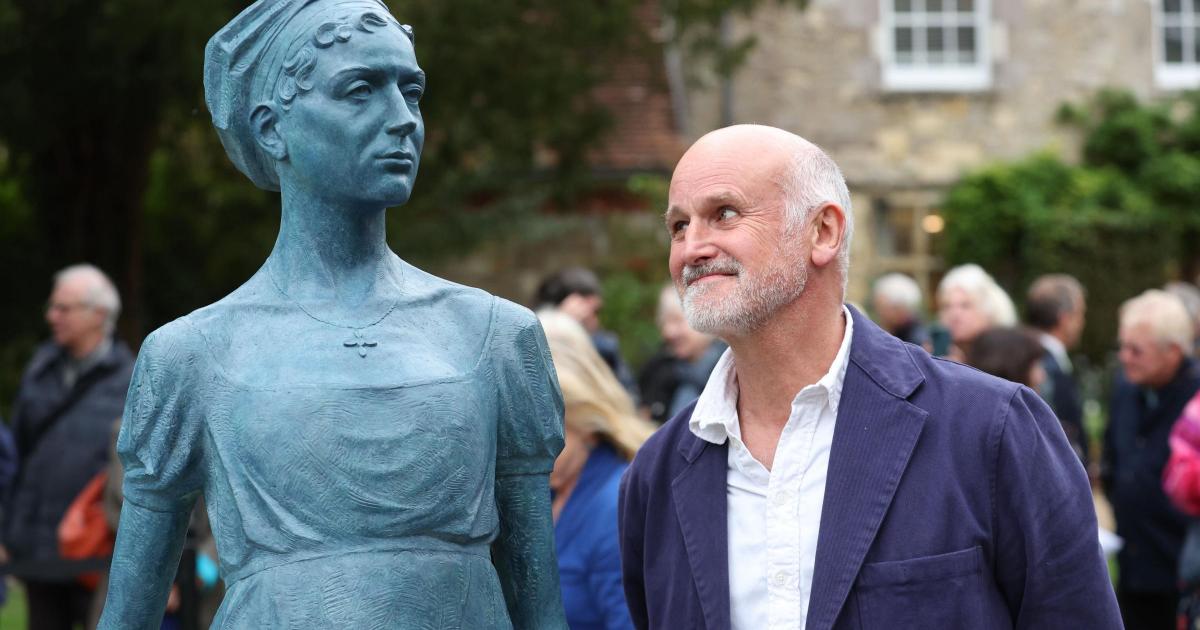
Unveiling of Jane Austen Sculpture at Winchester Cathedral. Sculptor Martin Jennings. (Image: Stuart Martin)
On February 15, Mr Ryan shared that the sculptor had gotten in touch to explain his artistic choices:
The sculptor said: “I would say the face I modelled was more impassive than haughty, but you are entitled to your opinion. Her lightness and wit is expressed more in the figure as a whole, which is rising in a twisting motion as if about to dance.
“I thought it was important to contradict the erroneous impression of Austen as a soft homely figure and to emphasise not only her very slight frame (historically accurate despite the implications of her sister’s sketch) but her authority in the field of social observation and of course in the writing of novels.”
Mr Ryan wrote that Jennings’ response was “much appreciated”.
Martin Jennings is one of Britain’s leading figurative sculptors. He created the Charles Dickens statue in Portsmouth and the George Orwell statue in London, outside the BBC’s headquarters.
His statue of Jane Austen in Winchester was unveiled on October 16 last year, to commemorate the 250th anniversary of the author’s birth.
Jane Austen spent the final weeks of her life at No. 8 College Street, Winchester. She passed away on July 18 1817.