
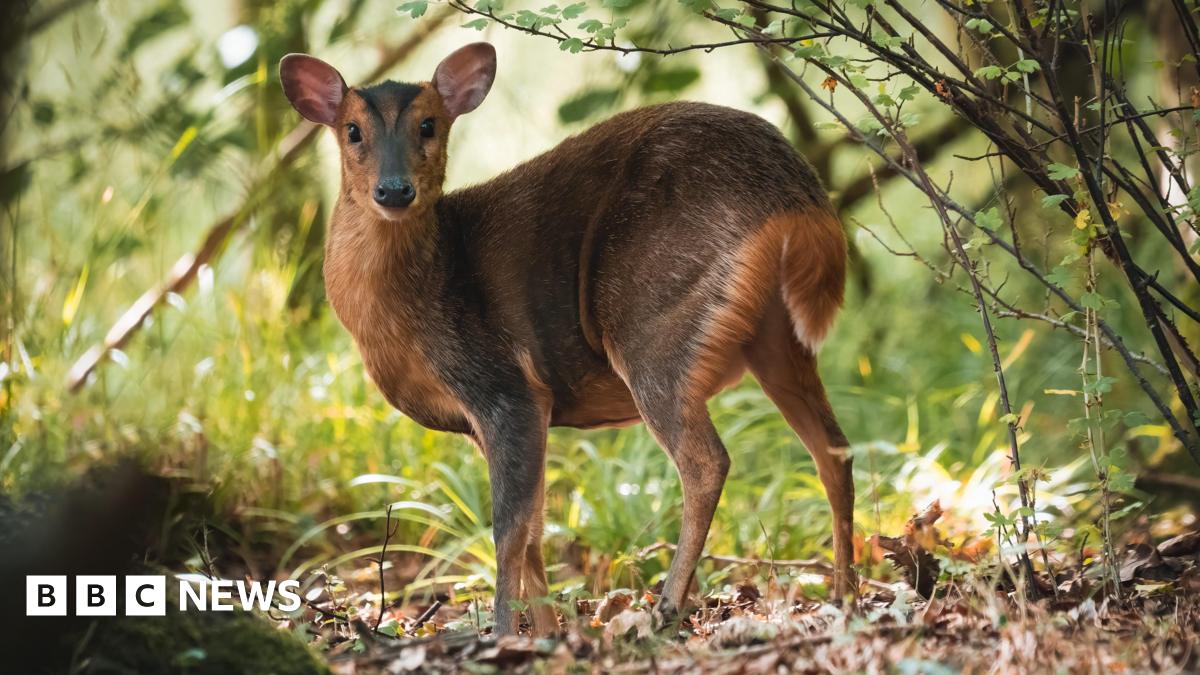
There are currently six deer species in Britain – red, sika, fallow, roe, muntjac and Chinese water – but only red and roe are “truly indigenous”, according to the British Deer Society.
While no-one knows exactly how many deer there now are, official estimates suggest there may be more than two million – a huge increase from the estimated 450,000 in the 1970s and the highest number for 1,000 years.
The government said that current deer management had failed, with 33% of English woodlands now classed as being in an “unfavourable condition” due to excessive trampling and grazing by deer, up from 24% in the early 2000s.
More than 74,000 deer are involved in collisions with vehicles each year, killing between 10 and 20 people and injuring more than 700, according to the RSPCA.
The government’s new 10-year plan aims to identify national priority areas where focused culling is needed and to streamline the process for licensing the shooting of deer, particularly at night and in the closed season, so “landowners can more quickly and easily protect crops and timber”.
Martin Edwards, head of deer and woodland management for the British Association for Shooting and Conservation, welcomed the plan and said there would be “real opportunities to build on the work of both volunteer and professional deer managers in tackling the UK’s expanding deer population”.
The nature minister, Mary Creagh, said the government was committed to helping landowners and farmers tackle the problems caused by deer “so woodlands can flourish and crops can be better protected”.
The government said it also wanted to promote and support a domestic market for the venison from culled deer, including pushing for more to be bought and served up by schools, prisons and hospitals.
The Country Food Trust is a food poverty charity that uses venison from deer shot on estates and farms to provide meals at 1,500 foodbanks, homeless shelters and community kitchens across the UK.
Its chief executive, SJ Hunt, said the charity was trying to make sure those in need were benefiting from deer culls in their own region.
Hunt welcomed the government’s support for a wider domestic market for venison, saying it was a lower-cholesterol meat and a significant source of protein, but called for more funding to help schemes like the Trust’s to make use of culled deer carcasses.