

Communities Minister Gordon Lyons failed to consider testimony that the majority of pubs in Northern Ireland are “Catholic-owned” ahead of largely rejecting reforms of the licensing system, it is argued in legal filings.
Historical figures drawn up by the main trade industry group stated 80% of pubs are owned by people from a Catholic background, which should have formed part of an equality assessment by the minister and his department, according to the legal papers.
The high percentage highlights how the system is grounded in “archaic” rules and laws dating back more than 100 years to a time when pubs were among the few businesses allowing Catholics ease of entry and one more likely avoided by those from the Protestant community, campaigners for reform argue.
Grassroots activists are seeking leave to apply for a judicial review of Mr Lyons’ response to the ‘Stirling’ review of licensing in the north, which took two years to complete and recommended reform of the ‘surrender principle’ that has capped licenses for more than a century and has seen many switch from use in pubs to use in off-sales in recent years.
 DJ Holly Lester, of Free the Night group, is taking the legal action

Holly Lester, an independent disc jockey and co-founder of reform group Free the Night, launched the legal action.
The ‘surrender principle’ “affects my livelihood and the ability of new small, community led venues to enter and operate within the market”, Ms Lester argues.
While there is no publicly available information on the price of licences, industry insiders say they are selling for around £150,000, with most being transferred for off-sales use.
In his response to the review, Mr Lyons said he has “directed my officials to explore how the current licensing regime has contributed to the growth in off-sales and the relative decline in pub licences”.
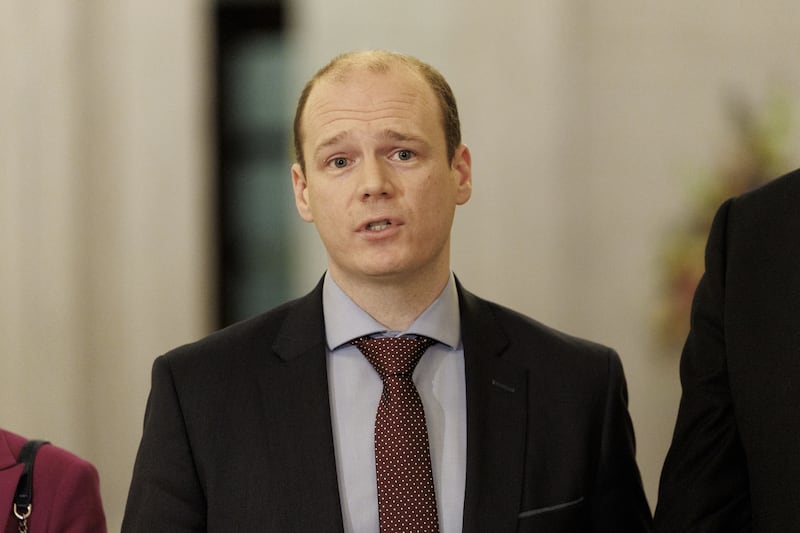 Communities Minister Gordon Lyons facing legal action over response to licensing review. PICTURE: PA
Many smaller pub operators regard the licences as either collateral or as a part of their pension and there are concerns scrapping or substantially reforming the system will wipe out the value overnight. The ‘Stirling’ review suggested measures to soften any impact, including a time limited buy back scheme.
In her legal filing, Ms Lester argues that the minister failed to refer the matter to the Executive despite elements cutting across departments, failed to consider “competition harms” and did not carry out any equality assessment.
The Federation of the Retail Licensed Trade, also known as Hospitality Ulster, highlighted as far back as 2006 that 80% of pubs were “Catholic-owned”, which the legal filing linked to public authorities having “due regard to the need to promote equality of opportunity and good relations”.
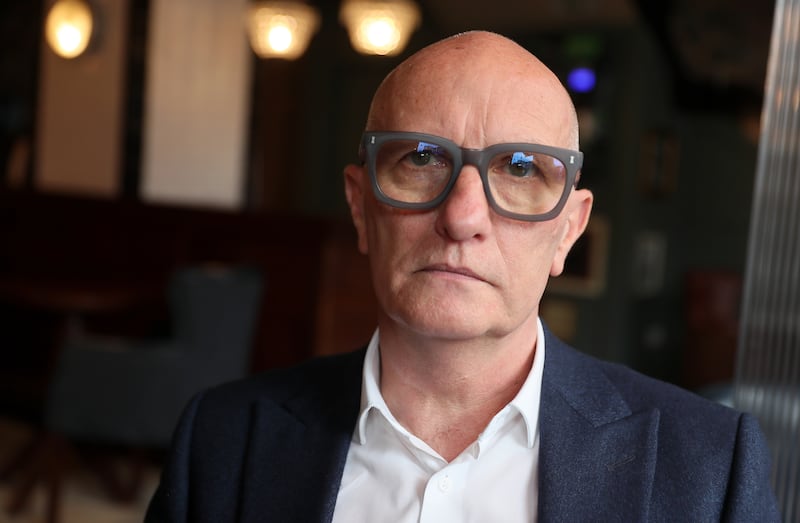 Colin Neill, chief executive of Hospitality Ulster. PICTURE: PA
But advocates for reform more broadly say the barriers to entry for younger entrepreneurs, those from a minority background and anyone wanting to open a smaller craft brew premises, wine bar or independent music venue are “insurmountable” due to the high costs and ability of any existing business in the area, whatever the size or different customer demographic, to object.
Boyd Sleator, a co-founder of Free the Night, added also that the group investigated the 473 listed pub companies in the north and found the average age of the directors was 53. The investigation found just two directors in their 20s.
 Boyd Sleator, co-founder of Free the NIght, a group campaigning for licensing reform
Ruth Sloan, of the Campaign for Real Ale (CAMRA) NI said that the “archaic licensing system” is “bad news for choice preventing innovative, small and specialist pubs and venues opening here – and stopping local independent breweries getting their products onto the bar”.
Ms Sloan added: “It is bad for punter’s pockets with prices in Belfast rivalling those in London.”
The legal filing also takes aim at what is described as the “reliance” placed on figures supplied by Hospitality Ulster, which claimed reforms would result in a loss in trade value of £317m.
Mr Lyons and his department “rejected central recommendations” of the review while “relying on obviously biased and self-serving stake holder supplied figures and assertions without producing their own detailing costings and impact assessment”. Hospitality Ulster was contacted for comment.
In her affidavit, Ms Lester said she is aware of a separate Department for the Economy cost analysis of the ‘surrender principle’, which were not referred to in minister or his department’s response to the review.