
It’s all so fickle really. One scrum-based mangling and yellow card-riddled beating by the Springboks and not just Irish rugby, but the very game itself, was supposedly in grave peril.
Then another comprehensive beating by France on a sodden opening night in Paris and, coupled with heavy defeats for the Under-20s and the Ireland XV side in three chastening days, so both the short-term and long-term prognoses were all doom and gloom.
Even the pathways and the very structures of Irish rugby were called into question, as were the supposed severing between the team and the supporters, not to mention postmortems on the Irish scrum (albeit that remained an issue last Saturday).
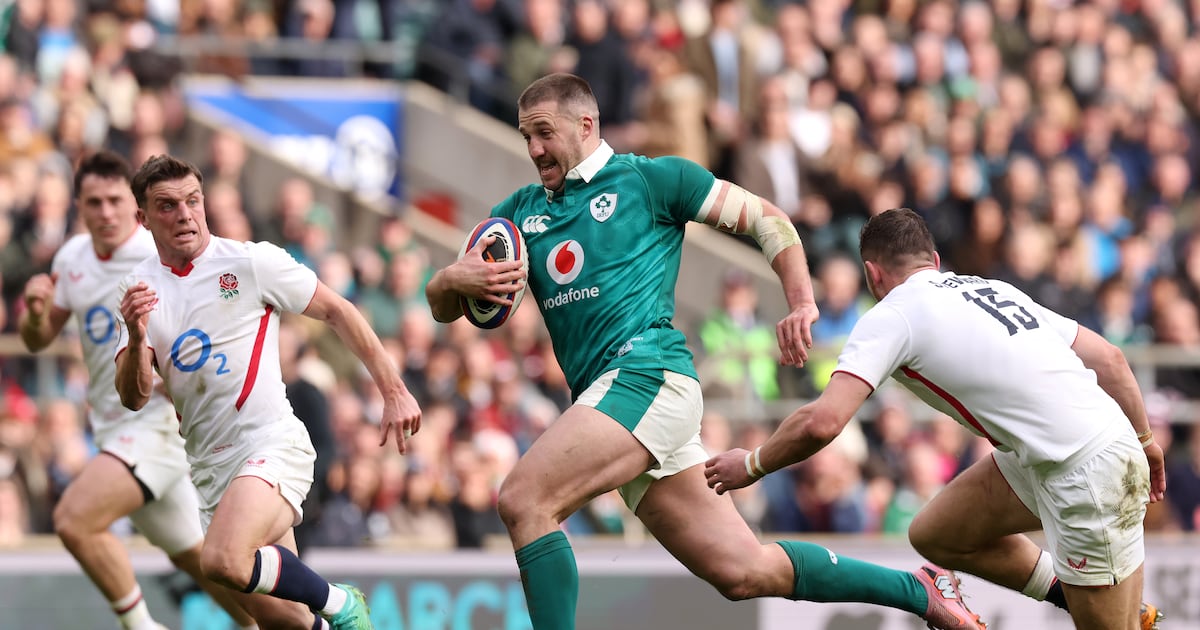
In the wake of Ireland’s record 42-21 win at Twickenham over England last Saturday, Andy Farrell admitted that his side had drawn “inspiration” from the 31-21 bonus-point victory by the Under-20s over their English counterparts at The Rec the night before.
Then, grinning wryly, he couldn’t help but note: “We were told that the pathways are dead where we were two weeks ago. But some great young kids there,” he noted, before grinning again and pointedly adding: “Some frontrow boys coming through there – that’s going to do us proud in the coming years.”
As he did with Paddy McCarthy three years ago, Farrell will be able to have a first-hand look at the Under-20 props Max Doyle, Sam Bishti and co at the “open” training session with Ireland’s senior squad and underage wannabes at the Aviva Stadium on Thursday, an annual event which ticks several boxes.
Where before there were two “down” weeks in the Six Nations, for the first time in this more congested itinerary, this is the only rest week, meaning the opening three rounds were conducted consecutively.
This more demanding physical toll would, it was felt, suit the superior strength in depth of France and England. However, after the events of last weekend, the Irish depth chart looks to be stacking up pretty well against that of England.
For starters, eight of the matchday squad which were part of Ireland’s convincing 27-22 win over England last season at the Aviva Stadium last were unavailable at Twickenham last Saturday. Five of those players – Hugo Keenan, Mack Hansen, Andrew Porter, Ryan Baird and Robbie Henshaw – were among an extensive injury list, as well as the suspended Bundee Aki and retired duo of Peter O’Mahony and Conor Murray.
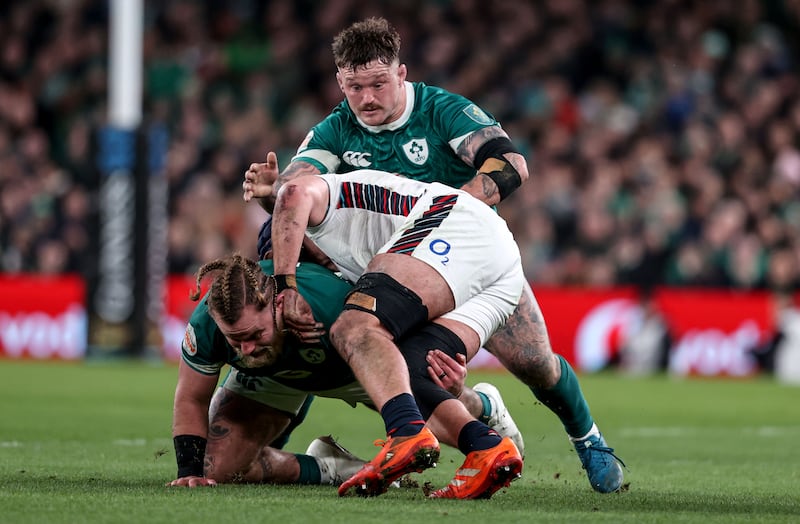 Ireland’s Finlay Bealham supported by Andrew Porter tackled by George Martin of England. Photograph: Dan Sheridan/Inpho
Yet there has clearly been a deliberate ploy to shuffle Ireland’s squad in this more congested championship and, perhaps more pertinently, when compared to the 2023 World Cup. Maybe Ireland have more depth now, but Farrell is clearly striving to ensure he can make more use of his squad next year in Australia than in France.
Injuries have not really forced Farrell’s hand in the first three rounds of the Six Nations. Of the original 35-man squad, Tom Ahern, Jack Boyle and Aki fell by the wayside before a ball was kicked, and the inclusion of Keenan was more based on hope than expectation given he has been sidelined since the Lions tour due to his shoulder operation.
But since the start of the championship, only James Lowe has been sidelined, and retaining Jacob Stockdale among the squad for this week’s two-day camp looks significant.
Yet Farrell made seven changes for the Italian game and another five last week, while also restoring Cormac Izuchukwu and giving a debut to Edwin Edogbo. This has felt like a deliberately different approach.
By contrast, last season, the interim head coach Simon Easterby had his hand forced to some degree by injuries to Hansen (hamstring), Rónan Kelleher (neck) and Doris (knee) in the opening two matches, as well as Joe McCarthy returning to full fitness for the round three game away to Wales.
In Cardiff, Dan Sheehan returned to the starting XV after working his way to full fitness and, in the absence of Doris, also captained the side to their 27–18 win.
Easterby also had all his frontline centres fit and available and could rotate between Garry Ringrose, Aki and Henshaw, meaning Stuart McCloskey wasn’t afforded a look-in. This season, with Henshaw and Aki ruled out for the first three rounds, McCloskey has become one of the team’s mainstays.
Ireland used 27 players in the first three rounds of last season’s Six Nations, and 23 were in the starting XVs. Six started all three matches, three of whom played all 240 minutes, namely Tadhg Beirne, Josh van der Flier and Lowe.
In the first three rounds this season, despite only copping one injury since the tournament began, Ireland have used three more players − 30 − in total, and of these 24 have started. Of seven players to have started all seven games, only Doris and McCloskey have played every minute.
But the contrast with the 2023 World Cup is particularly striking.
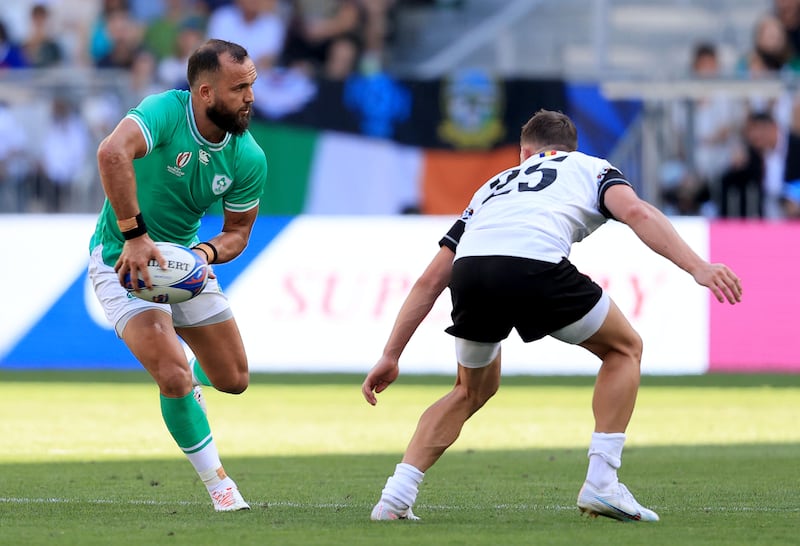 Ireland’s Jamison Gibson-Park. Photograph: Dan Sheridan/Inpho
Farrell used 29 players in the first three pool games when there was, if anything, more scope and need for rotation given the first two games were against Romania and Tonga, before Ireland faced South Africa and Scotland ahead of their quarter-final against New Zealand.
Yet only 20 players featured in the first three starting line-ups. Despite there also being no fallow week, 10 players started all three games, four of them playing all 240 minutes. What’s more, nine of these 10 players would start all five Irish games at the World Cup.
Whether or not that was a contributory factor in Ireland coming up short against the All Blacks, this is not an exact science, and Ireland were still able to mount an attack of 30-plus phases in the final play of an epic game.
But evidently, Ireland will be both more inclined and better equipped to make greater use of their squad at the next World Cup than was the case at the last one. That has to be a positive.
2023 World Cup, first three rounds
Total players used: 29. In starting XVs: 20. Players to have started all three games: 10. Players who have played 240 minutes: 4 (Beirne, Lowe, Aki, Keenan).
2025 Six Nations, first three rounds
Total players used: 27. In starting XVs: 23. Players to have started all three games: 6. Players who have played 240 minutes: 3 (Beirne, Van der Flier, Lowe).
2026 Six Nations, first three rounds
Total players used: 30. In starting XVs: 24. Players to have started all three games: 7. Players who have played 240 minutes: 2 (Doris, McCloskey).
Follow our rugby WhatsApp channel
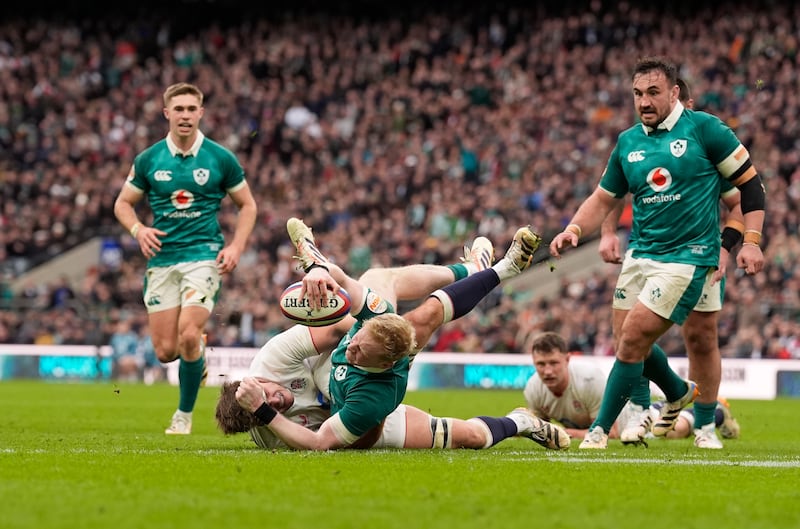
If you want the latest rugby news, analysis and opinion then you should follow our dedicated WhatsApp channel. From Gerry Thornley to Owen Doyle and Gordon D’Arcy, we have every angle covered.
Find the channel here.