
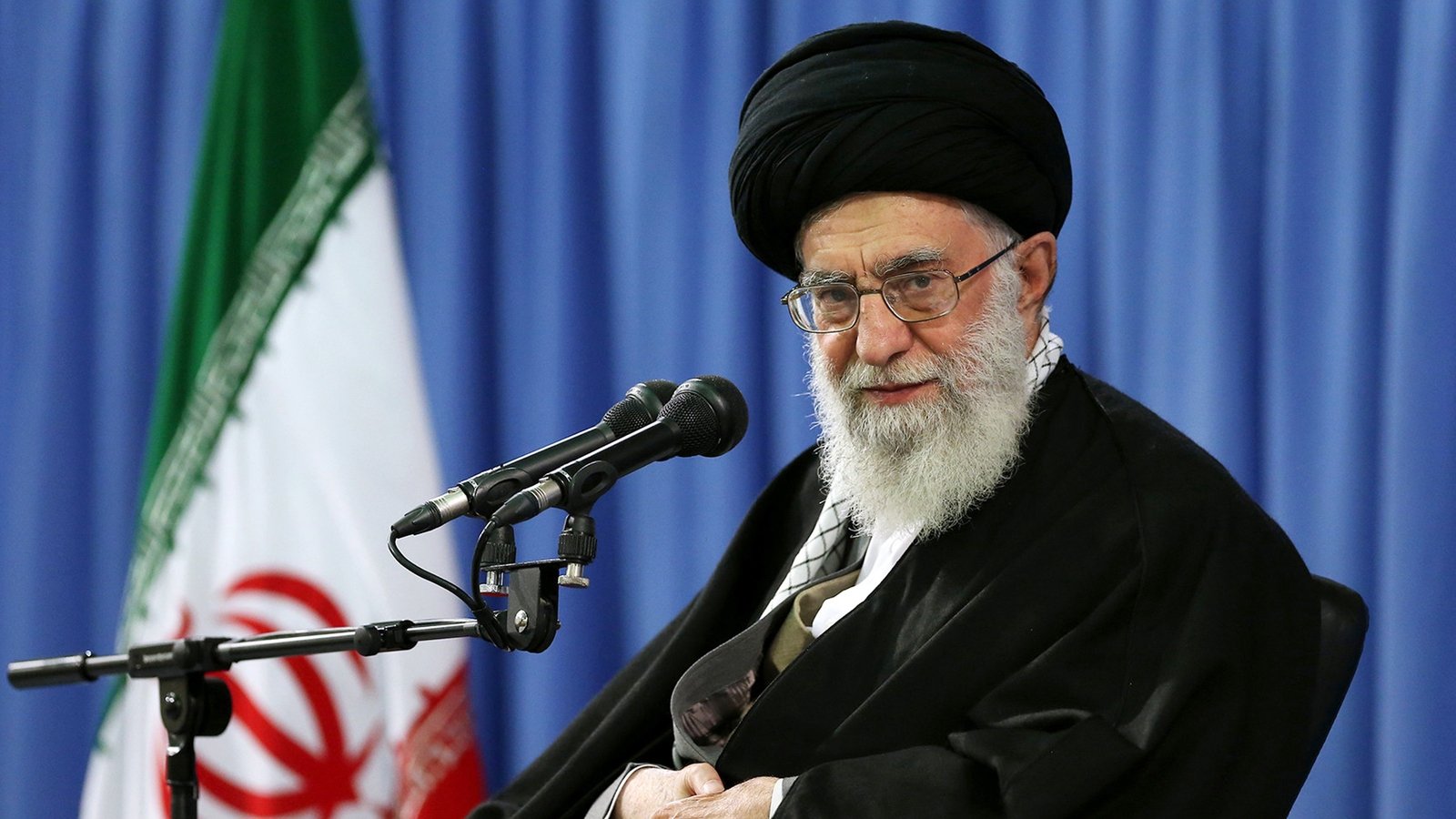
Iran’s Supreme Leader Ali Khamenei was killed on Saturday, state media confirmed, after the United States and Israel launched the biggest attack on Iranian targets in decades.
A senior Israeli official told Reuters earlier that the Iranian leader’s body had been found after a strike, and US President Donald Trump said the United States worked closely with Israel to target the man who led Iran since 1989.
Iran has called the strikes unprovoked and illegal and responded with missiles fired at Israel and at least seven other countries, including Gulf states that host US bases.
Mr Trump, making the biggest foreign-policy gamble of his presidency after campaigning for reelection as a “peace president,” said the strikes were aimed at ending a decades-long war with Iran and ensuring it could not develop a nuclear weapon.
Intelligence and tracking systems monitored Mr Khamenei’s whereabouts, Mr Trump wrote in a Truth Social post, adding that “there was not a thing he, or the other leaders that have been killed along with him, could do.”
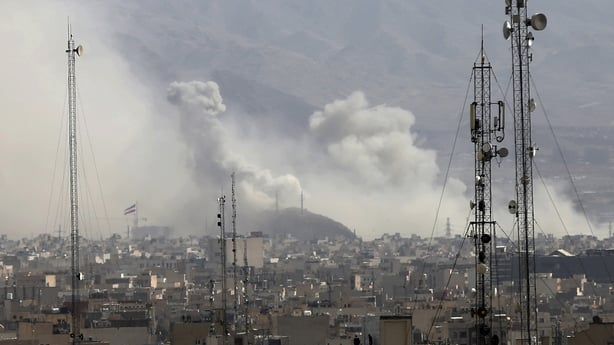
The strikes follow repeated US-Israeli warnings that they would strike Iran again if it pressed ahead with its nuclear and ballistic missile programs
Mr Trump reiterated calls for Iranians to topple the government but warned:
“The heavy and pinpoint bombing, however, will continue, uninterrupted throughout the week or, as long as necessary to achieve our objective of PEACE THROUGHOUT THE MIDDLE EAST AND, INDEED, THE WORLD!”
Israeli Prime Minister Benjamin Netanyahu said Mr Khamenei’s compound had been destroyed.
Three sources familiar with the matter said Iranian Defence Minister Amir Nasirzadeh and Revolutionary Guards commander Mohammed Pakpour were among those killed in the attacks.
Israel’s military said it had confirmed that five other senior military commanders were also dead, including Ali Shamkhani, an adviser to Iran’s supreme leader. Iranian media said Mr Khamenei’s daughter, grandchild, son-in-law, and daughter-in-law were also killed.
Celebrations, fear among Iranians
Witnesses said some Iranians took to the streets in Tehran, the nearby city of Karaj, and the central city of Isfahan to celebrate after reports of Mr Khamenei’s death.
Iran launched hundreds of missiles and drones in response to the attacks, but the Pentagon said there were no US deaths or injuries.
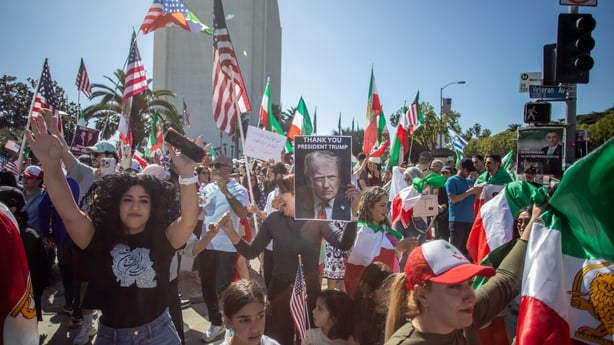
Members of the Iranian community celebrating news of the strikes in Los Angeles
Iran warned that the Strait of Hormuz, the narrow passage through which around a fifth of global oil consumption passes, had been closed. Traders expected a sharp jump in oil prices. Airlines cancelled flights in the Middle East.
Israel’s military said some 200 fighter jets had completed the largest flying mission in its history, hitting 500 targets throughout Iran, including strategic defence systems already damaged in strikes last year.
Trump cites ‘imminent threats’
In a video message on social media, Mr Trump said the aim of the military campaign, which the US Department of Defense named Operation Epic Fury, was “eliminating imminent threats from the Iranian regime.”
The Iranian people should “take over” the governance of their country, Mr Trump said in the video. “It will be yours to take,” he said. “This will probably be your only chance for generations.”
Israeli military operations over the past two years had already killed some of Iran’s senior military officials and severely weakened several of Tehran’s once-feared proxy forces across the Middle East.
After Israel pounded Iran in a 12-day air war in June, joined by the United States, the US and Israel had warned they would strike again if Iran pressed ahead with its nuclear and ballistic missile programmes.
Negotiations between US and Iranian officials took place as recently as Thursday, but senior US officials said that Iran had not been willing to give up its ability to enrich uranium, which the Iranians argued they wanted for nuclear energy but US officials said would enable the country to build a nuclear bomb.
UN Secretary-General Antonio Guterres called for an immediate cessation of hostilities.
Mr Trump faced pushback at home from opposition Democrats, and a few of his fellow Republicans, who said a prolonged campaign against Iran would be illegal without congressional approval and that politicians should vote within days.
Missiles fired at Arab Gulf states
In Israel, sirens and mobile-phone warnings sent Israelis rushing to air raid shelters as Iran launched a series of missile barrages that were mostly intercepted, though some missiles hit.
Emergency teams in Tel Aviv treated at least 20 people hurt by a missile that hit a residential building, Israel’s ambulance service said.
Photos from the scene showed one side of the multi-storey building blown out and its roof caved in.
Iran fired missiles at Abu Dhabi, Dubai, and Doha, all key east-west aviation gateways.
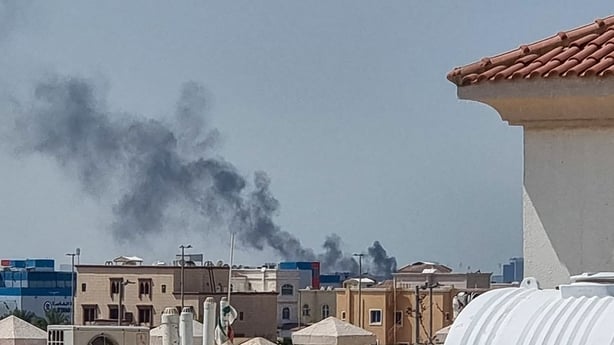
A smoke plume rises over Abu Dhabi from the site of an Iranian missile strike
Aviation sources had told Reuters that an overnight Iranian attack damaged an airport terminal in Dubai. One of the city’s plush hotel districts was also hit.
Loud explosions sounded in Abu Dhabi, capital of the United Arab Emirates, an oil producer and close US ally.
Bahrain said the service centre of the US Fifth Fleet — the base for American naval forces in the region — had been subjected to a missile attack. Video footage showed a thick grey plume of smoke rising from near the island state’s coastline.
Qatar said it had downed all missiles targeting the country and that it had a right to respond.
Kuwait confirmed a missile attack on a US military base there.
Iran promised a stronger response to come, with a senior Iranian Revolutionary Guards commander, Ebrahim Jabbari, saying it had so far used only “scrap missiles” and would soon unveil previously unseen weapons.
Read more:
Iran’s Khamenei: ruthless revolutionary at apex of Islamic republic
US-Iran crisis: who are the main players?
The tense and troubled history of US-Iran relations