
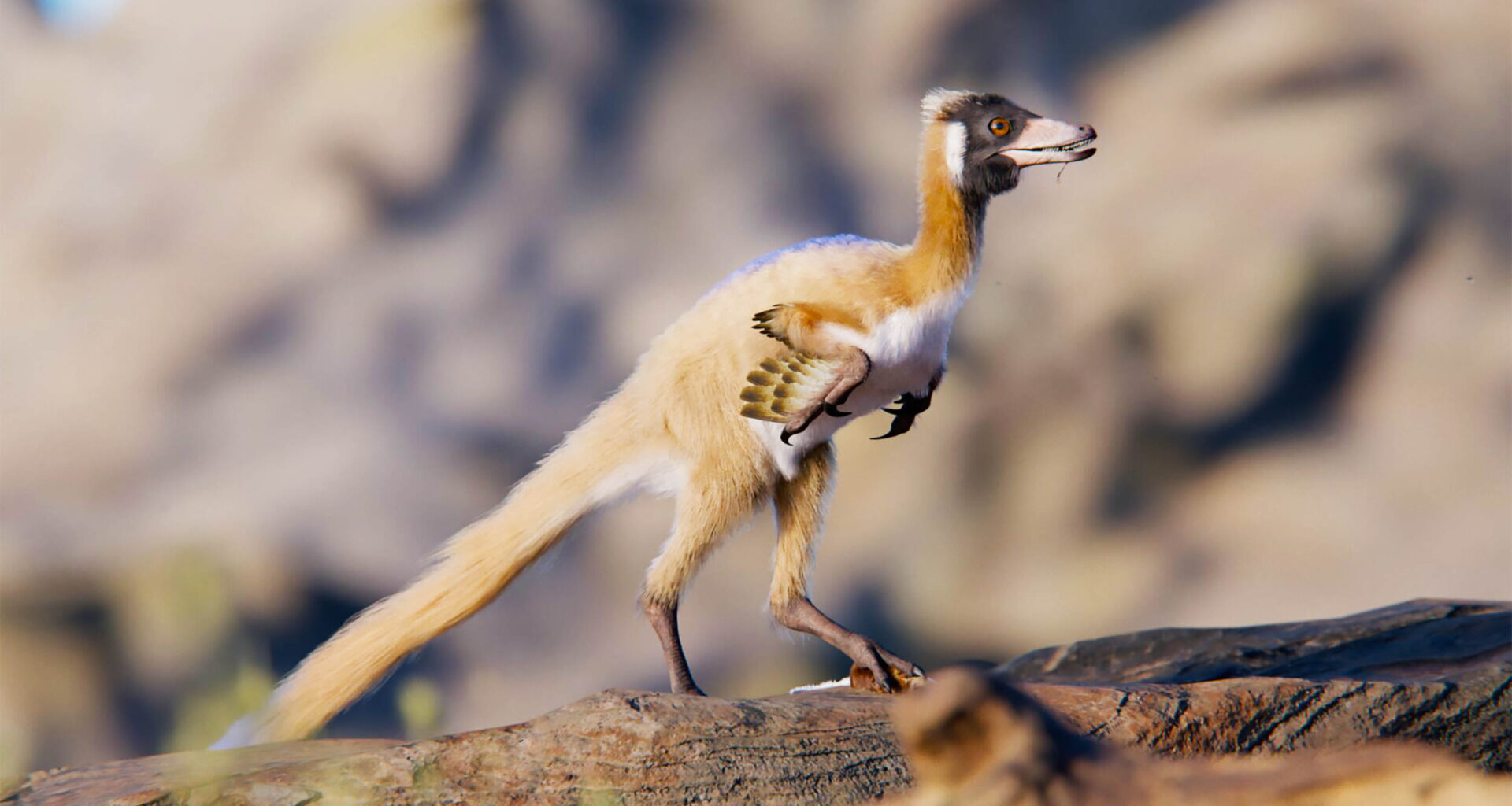
For years, paleontologists have been trying to piece together the story of one of the strangest groups of dinosaurs around – small, bird-like creatures with stubby arms and a single oversized claw.
Now, a nearly complete 90-million-year-old skeleton from Patagonia is helping the picture snap into focus.

The fossil belongs to Alnashetri cerropoliciensis, a member of the alvarezsaurs – an odd group of theropod dinosaurs best known for their tiny teeth and their almost comically reduced forelimbs
The study describing the skeleton was conducted by a team co-led by Peter Makovicky from the University of Minnesota Twin Cities and Sebastián Apesteguía from Universidad Maimónides in Argentina.
Alvarezsaur named Alnashetri
Alvarezsaurs have been something of a headache for researchers. Many of the best-preserved fossils have come from Asia, but in South America, the record has mostly consisted of fragmentary bones.
The bones confirmed the animals’ presence, but they did not reveal how the dinosaurs were built or how they evolved.
That changed in 2014, when a remarkably complete specimen of Alnashetri was discovered in northern Patagonia at the La Buitrera fossil site, a place already famous for beautifully preserved Cretaceous animals.
Scientists had already named the species from fragmentary material, but this new skeleton gave them the first real chance to see the entire animal.
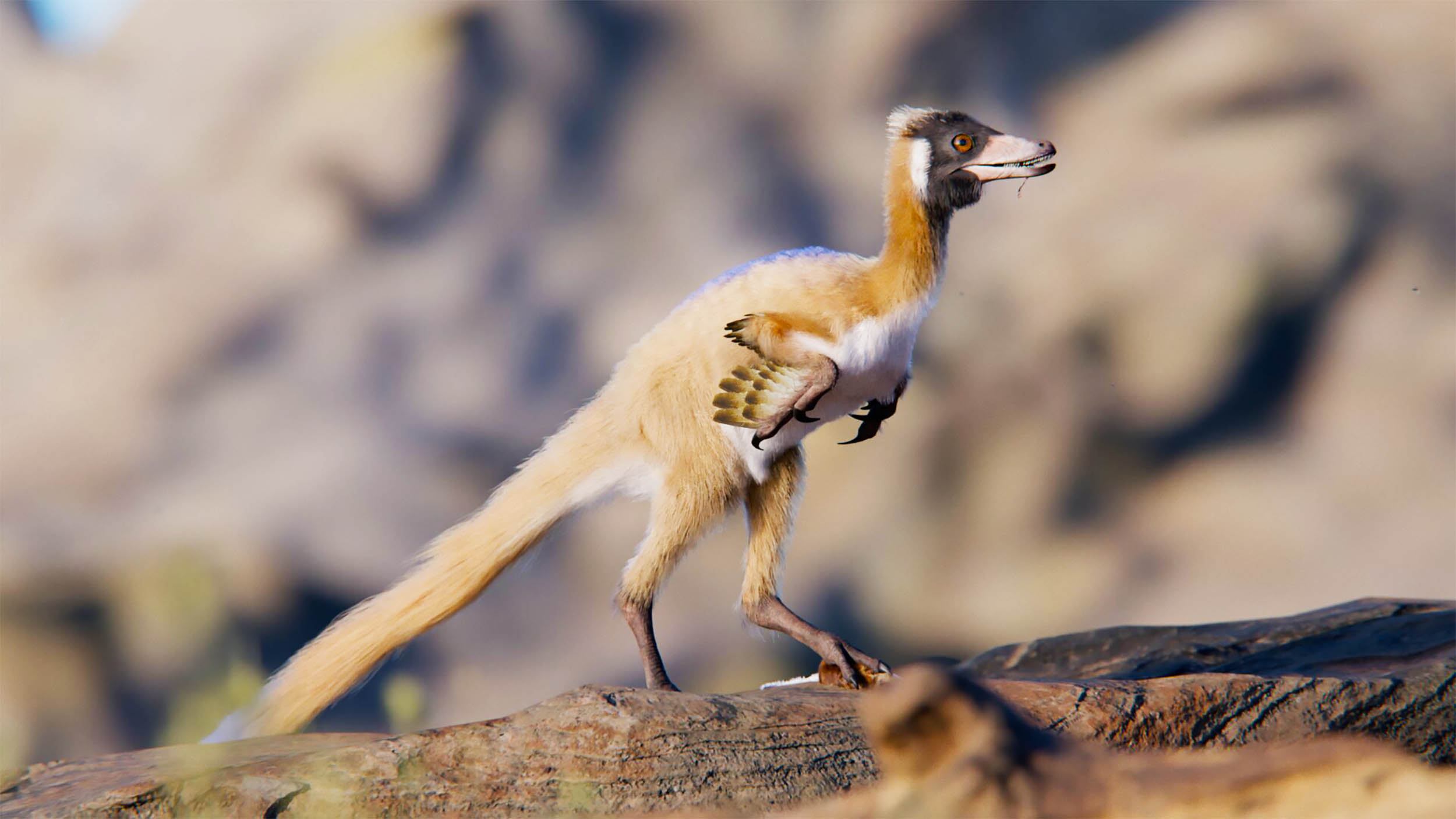 A new study of fossils from a bird-like dinosaur, called Alnashetri, provides new insight into how its lineage evolved, shrank and spread across the ancient world. Credit: Gabriel Díaz Yantén, Universidad Nacional de Río Negro. Click image to enlarge.Interpreting the Alnashetri fossils
Preparing the fossil wasn’t quick work. The bones were small and delicate, and the team spent years carefully cleaning and assembling them to avoid damage.
“Going from fragmentary skeletons that are hard to interpret, to having a near-yecomplete and articulated animal is like finding a paleontological Rosetta Stone,” said Makovicky.
“We now have a reference point that allows us to accurately identify more scrappy finds and map out evolutionary transitions in anatomy and body size.”
That “reference point” matters enormously. Once you know what a complete skeleton looks like, you can revisit old, puzzling fossils sitting in museum drawers and finally understand where they fit.
Before the big claw
If you picture an alvarezsaur, you probably imagine extremely short arms ending in a single large claw – a feature many scientists have linked to digging into insect nests, perhaps for an ant-based diet.
But Alnashetri tells a slightly different story. Unlike later alvarezsaurs, this species had longer arms and larger teeth.
That’s important because it suggests that extreme specialization came later. The group didn’t start out with the full suite of weird features they’re famous for.
In fact, the fossil shows that some alvarezsaurs became tiny before they evolved the highly specialized anatomy often associated with insect eating. So shrinking in body size may have preceded the development of their unusual forelimbs and feeding adaptations.
It’s a subtle shift in the narrative, but it changes how scientists think about the group’s evolution. Instead of small size being the end result of specialization, it may have been an earlier step along the way.
Alnashetri was not a baby
Whenever paleontologists find a very small dinosaur, one obvious question comes up: is it truly a tiny species, or just a juvenile that would have grown much larger?
To answer that, the researchers examined the bone microstructure under a microscope. The results showed that Alnashetri was an adult, at least four years old.
Scientists rank these dinosaurs among the smallest non-avian dinosaurs ever discovered. Even the largest alvarezsaurs are modest by dinosaur standards, roughly human-sized at most.
Alnashetri itself was even more diminutive, weighing less than two pounds. That makes it one of the smallest dinosaurs known from South America.
It’s a reminder that not all dinosaurs were giants. Many were small, quick, and probably far more common than the towering species that dominate museum halls.
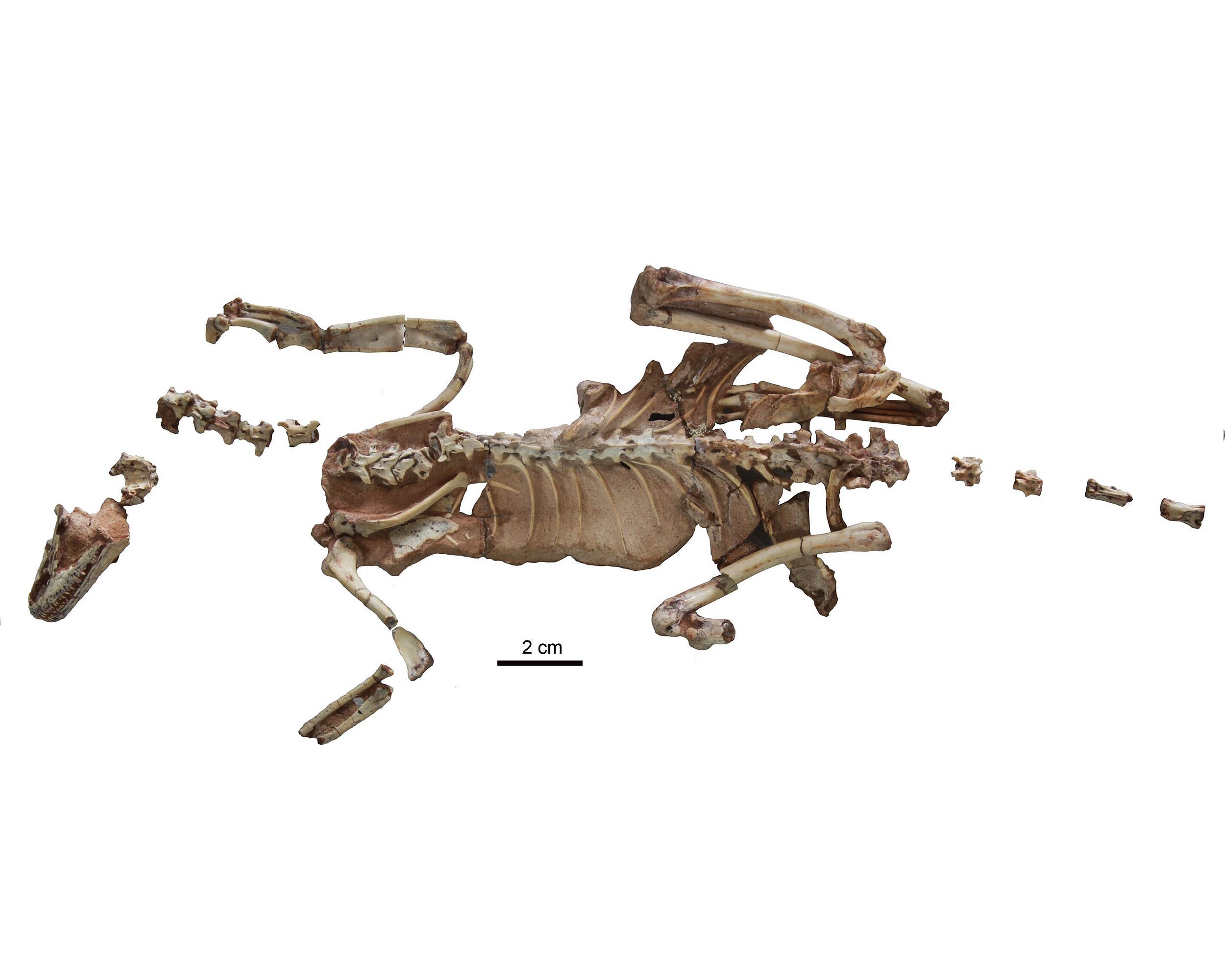 Alnashetri was rapidly covered by an advancing sand dune that preserved it almost intact for 90 million years. Credit: Peter Makovicky, University of Minnesota. Click image to enlarge.Ancient Alnashetri roots revealed
Armed with this better understanding of alvarezsaur anatomy, the team also revisited fossils from North America and Europe that had previously been difficult to classify.
With Alnashetri as a guide, they were able to identify additional alvarezsaur material in museum collections.
Scientists had actually named the species earlier from fragmentary material, but this new skeleton gave them the first real chance to see the whole animal.
Rather than imagining these small dinosaurs making unlikely ocean crossings, their distribution now makes sense in the context of continental drift.
As Pangaea broke apart, it separated populations and drove them to evolve independently on different landmasses.
Fossil site keeps delivering
The La Buitrera site in Patagonia has been yielding important finds for over two decades. In addition to Alnashetri, it has produced snakes, tiny saber-toothed mammals, and other small vertebrates.
These animals rarely get as much attention as massive dinosaurs, but they are crucial for understanding ancient ecosystems.
“After more than 20 years of work, the La Buitrera fossil area has given us a unique insight into small dinosaurs and other vertebrates like no other site in South America,” said Apesteguía.
“We have already found the next chapter of the alvarezsaurid story there, and it is in the lab being prepared right now,” said Makovicky.
For paleontology, that’s about as exciting as it gets. A once-mysterious group now has a clear anatomical anchor – and the next piece of the puzzle is already waiting under the microscope.
The study was published in the journal Nature.
—–
Like what you read? Subscribe to our newsletter for engaging articles, exclusive content, and the latest updates.
Check us out on EarthSnap, a free app brought to you by Eric Ralls and Earth.com.
—–