
Our Sun gravitationally dominates the Solar System.
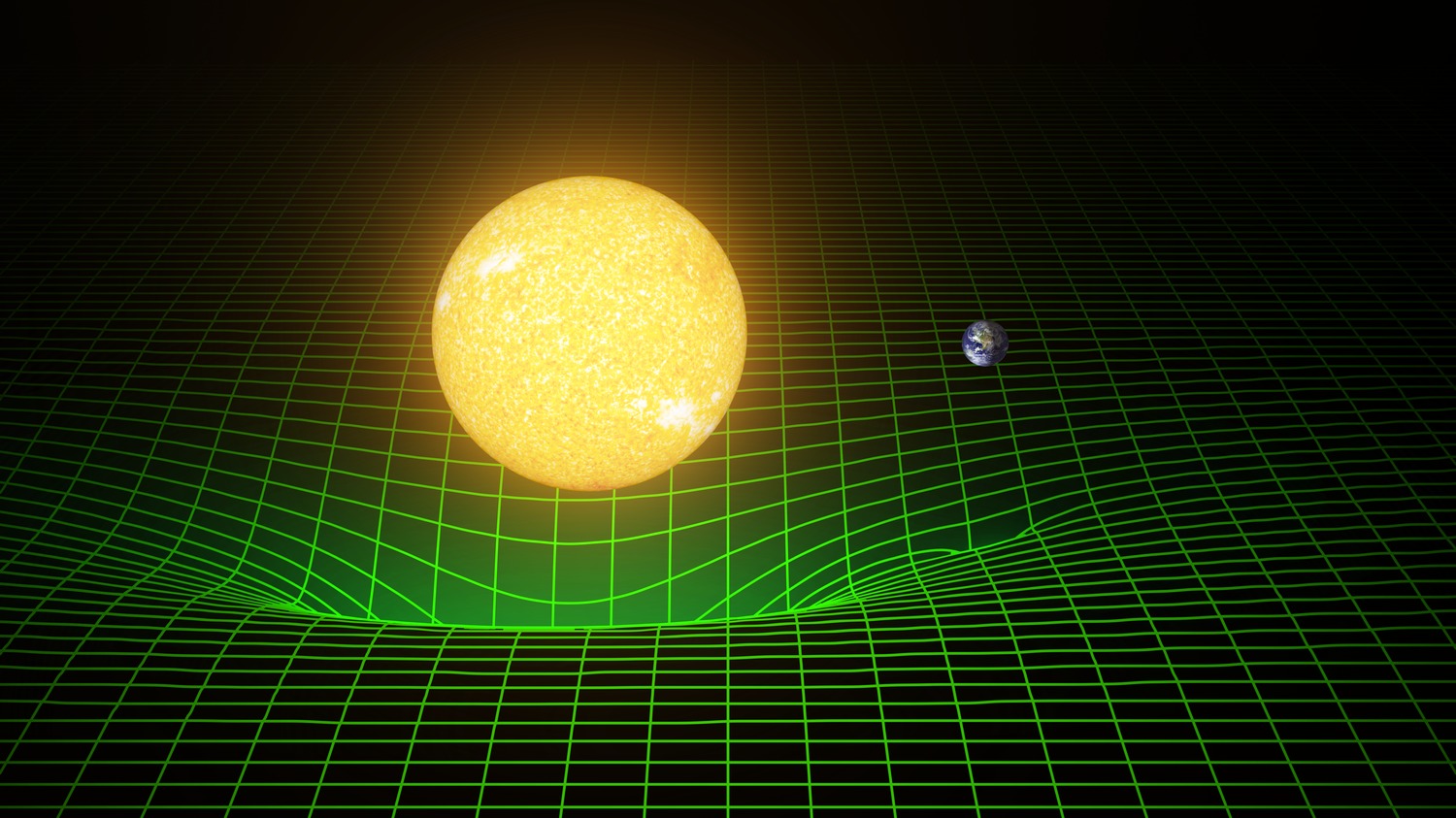
Here in our own Solar System, the Sun dominates the spacetime within it in nearly all locations. Whereas the environment close to a planet is locally dominated by that planet’s gravity, and the ensuing curvature it imprints on the surrounding spacetime, the Sun’s gravity dominates the larger Solar System environment. Whereas a spacecraft must achieve speeds of 11 km/s to escape from Earth’s gravity, speeds nearly four times as great must be achieved at the Earth-Sun distance to escape from the Solar System entirely.
Credit: T. Pyle/Caltech/MIT/LIGO Lab
Of over 17,000 payloads launched into space, only six will escape the Solar System’s gravity.
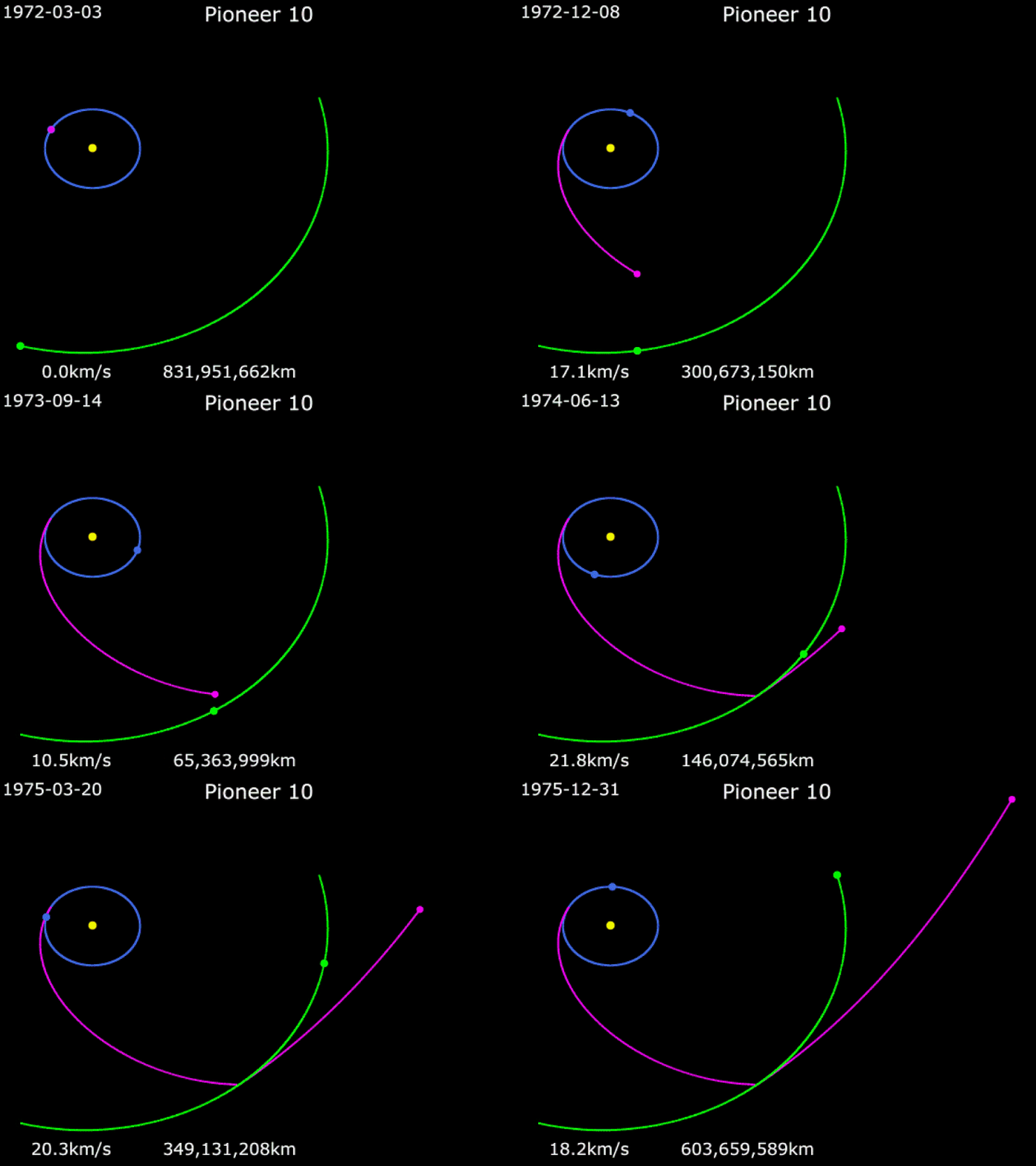
The most remarkable fact about Pioneer 10’s trajectory is that it gained nearly the maximum amount of velocity possible from a gravitational encounter with Jupiter. After becoming the first spacecraft to reach Jupiter in late 1973, it became the first spacecraft to achieve escape velocity in the Solar System. It remained our most distant spacecraft until 1998, when Voyager 1 surpassed it, and will fall to third place in 2023, when Voyager 2 overtakes it as well.
Credit: Phoenix7777/Wikimedia Commons
The first was Pioneer 10, launched in 1972.
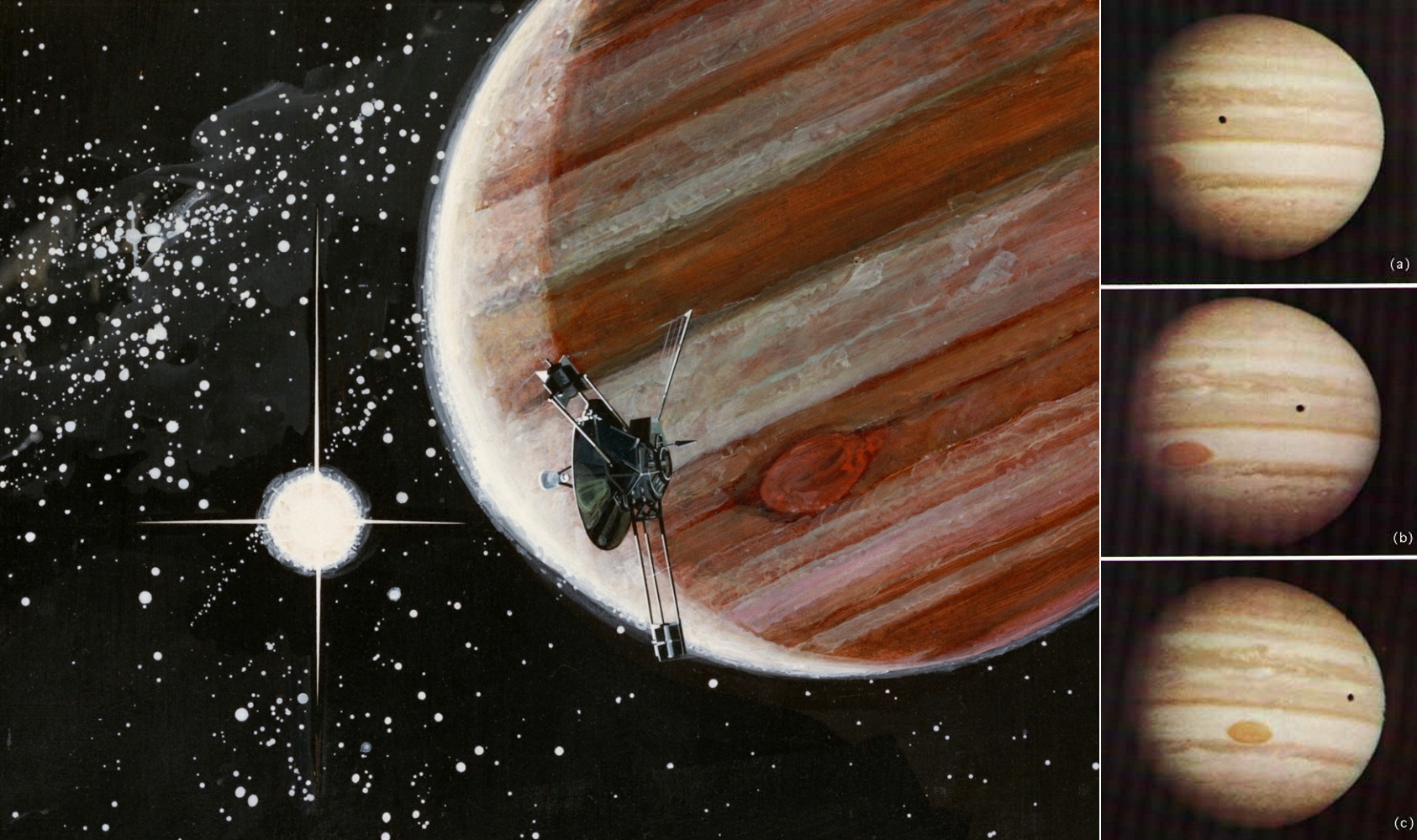
The Pioneer 10 mission was launched with a number of instruments, and one of its science goals was to become the first spacecraft to visit and take data from Jupiter. Some of the first images of Jupiter from in situ are shown at right, showcasing a total solar eclipse shadow on Jupiter’s right side.
Credits: Rick Giudice (L); NASA/Pioneer (R)
Its December 1973 encounter with Jupiter boosted it beyond escape velocity.
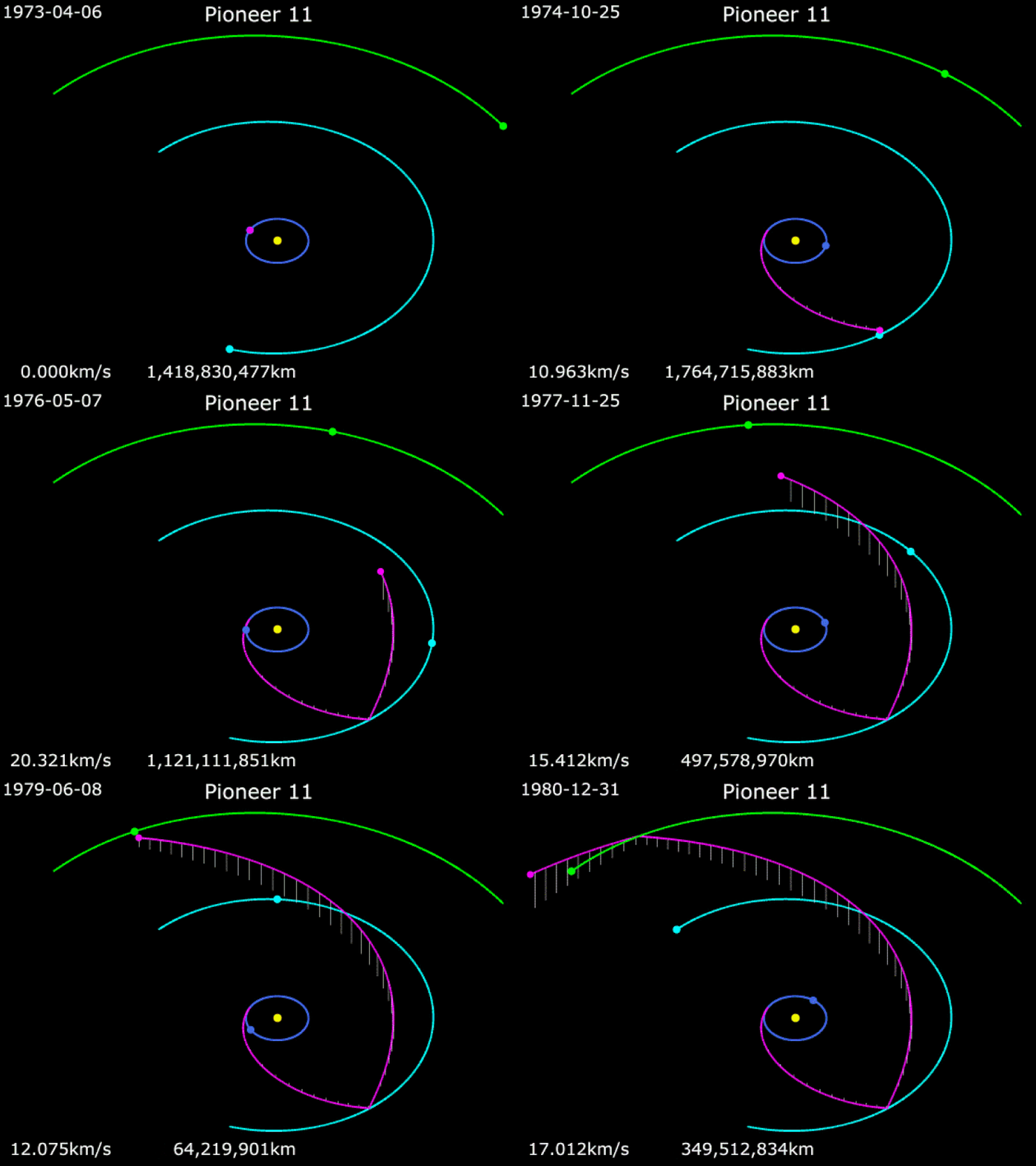
Pioneer 11, following in the footsteps of Pioneer 10, actually flew through Jupiter’s lunar system, then used Jupiter’s gravity as an assist maneuver to take it to Saturn. While exploring the Saturnian system, a planetary science first, it discovered and then nearly collided with Saturn’s moon Epimetheus, missing it by an estimated ~4000 km. Newtonian gravity, alone, was capable of calculating these maneuvers.
Credit: Phoenix7777/Wikimedia Commons
Pioneer 11, launched in 1973, became humanity’s second escaping spacecraft.
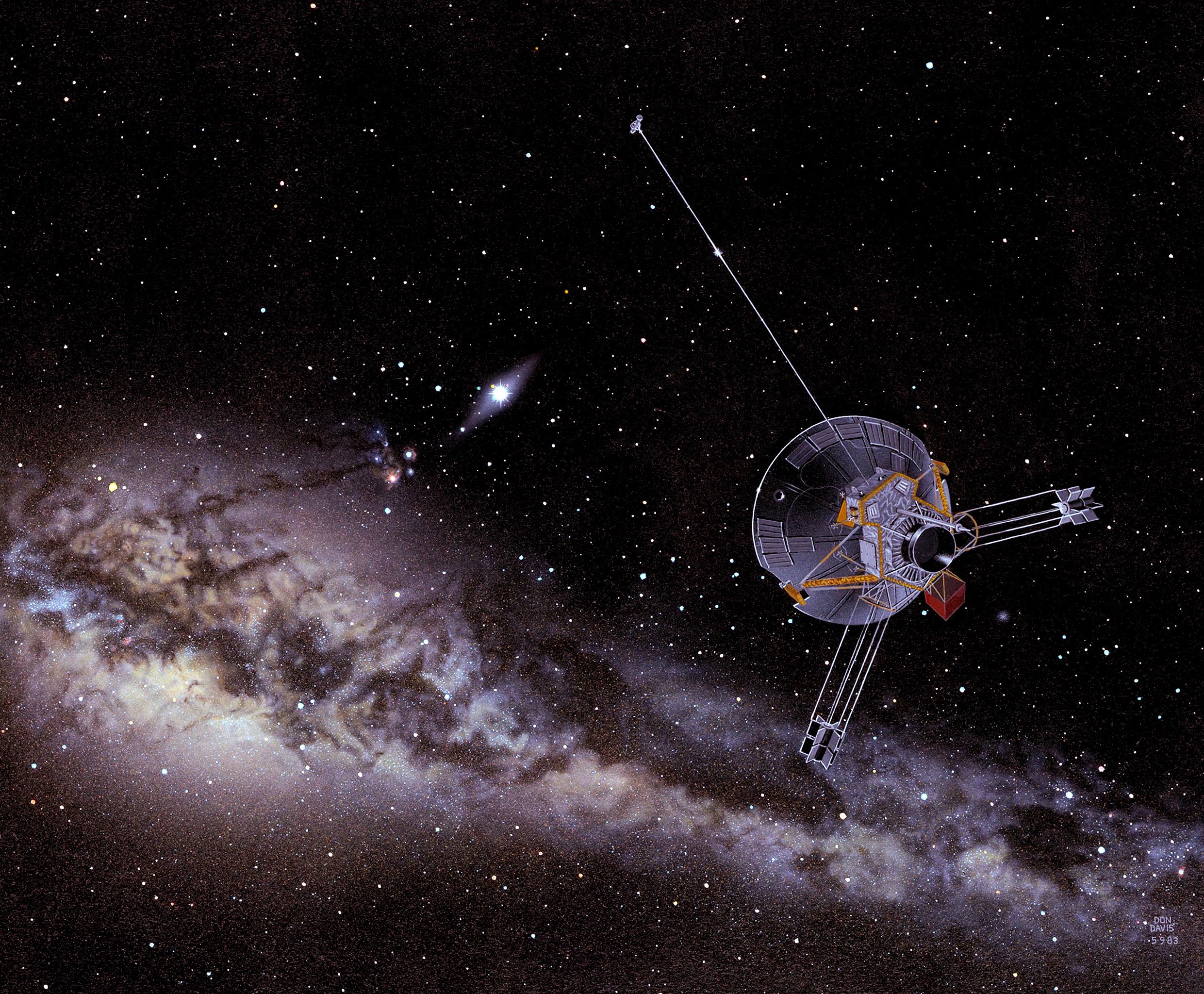
This illustration shows a Pioneer spacecraft on its way out of the Solar System, looking back at our Sun. The galactic plane is also visible. Although the Pioneer spacecraft are both now defunct, they will continue along their trajectory, influenced only by gravitation from hereon out. We have not been able to communicate with either one in decades.
Credit: NASA/Don Davis
Ejected after encounters with Jupiter (1974) and Saturn (1979), it cannot surpass Pioneer 10.
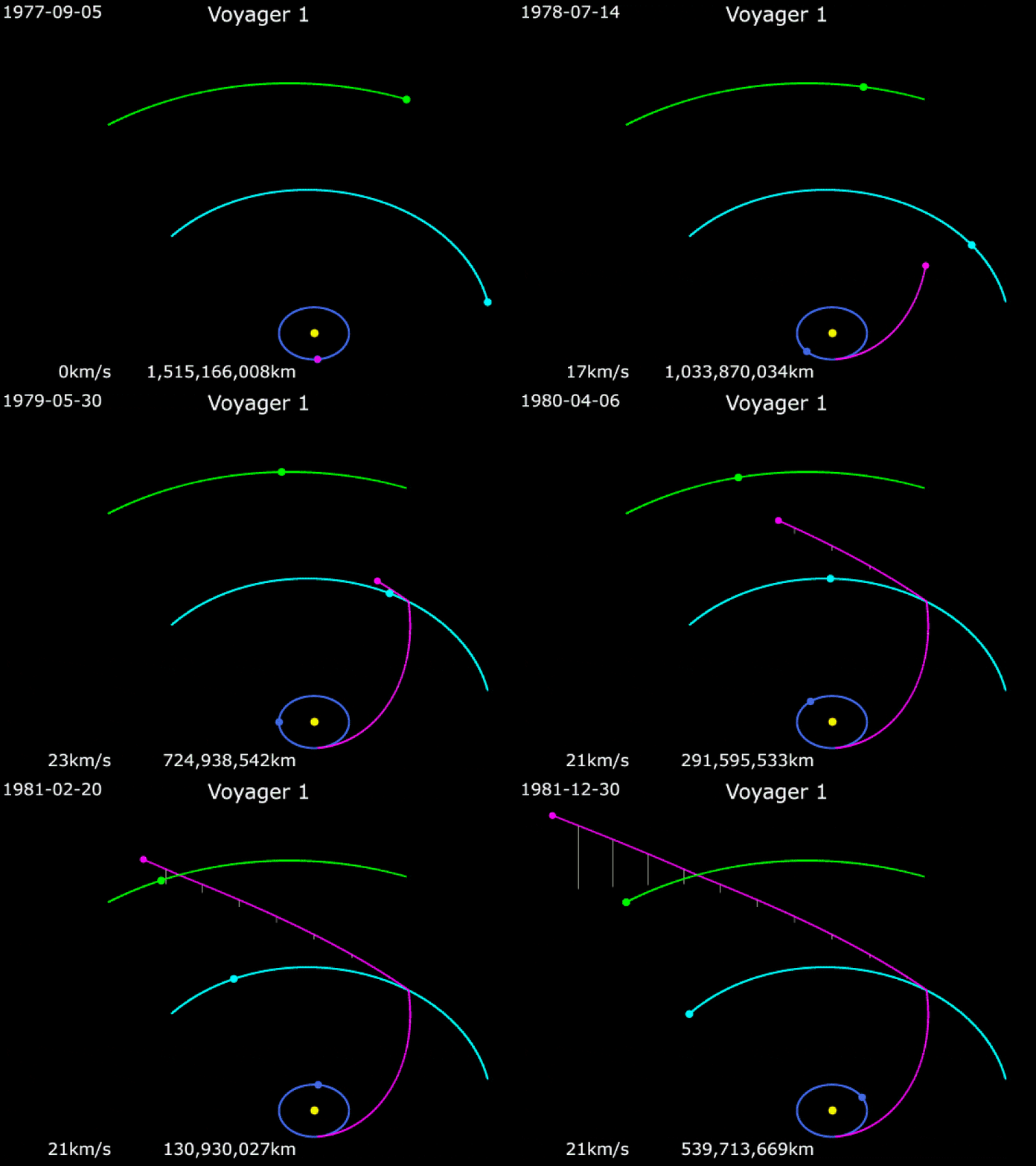
This animation shows the trajectory of Voyager 1, launched in 1977, as it received a gravity assist from Jupiter during its flyby and then another one from Saturn when it encountered that planet. Those two gravitational interactions boosted Voyager 1 to the highest escape speed of any human-made object ever, and after overtaking Pioneer 10 in 1998, it has remained our most distant spacecraft ever since.
Credit: Phoenix7777/Wikimedia Commons
Voyager 2 and Voyager 1 were launched 16 days apart in 1977.
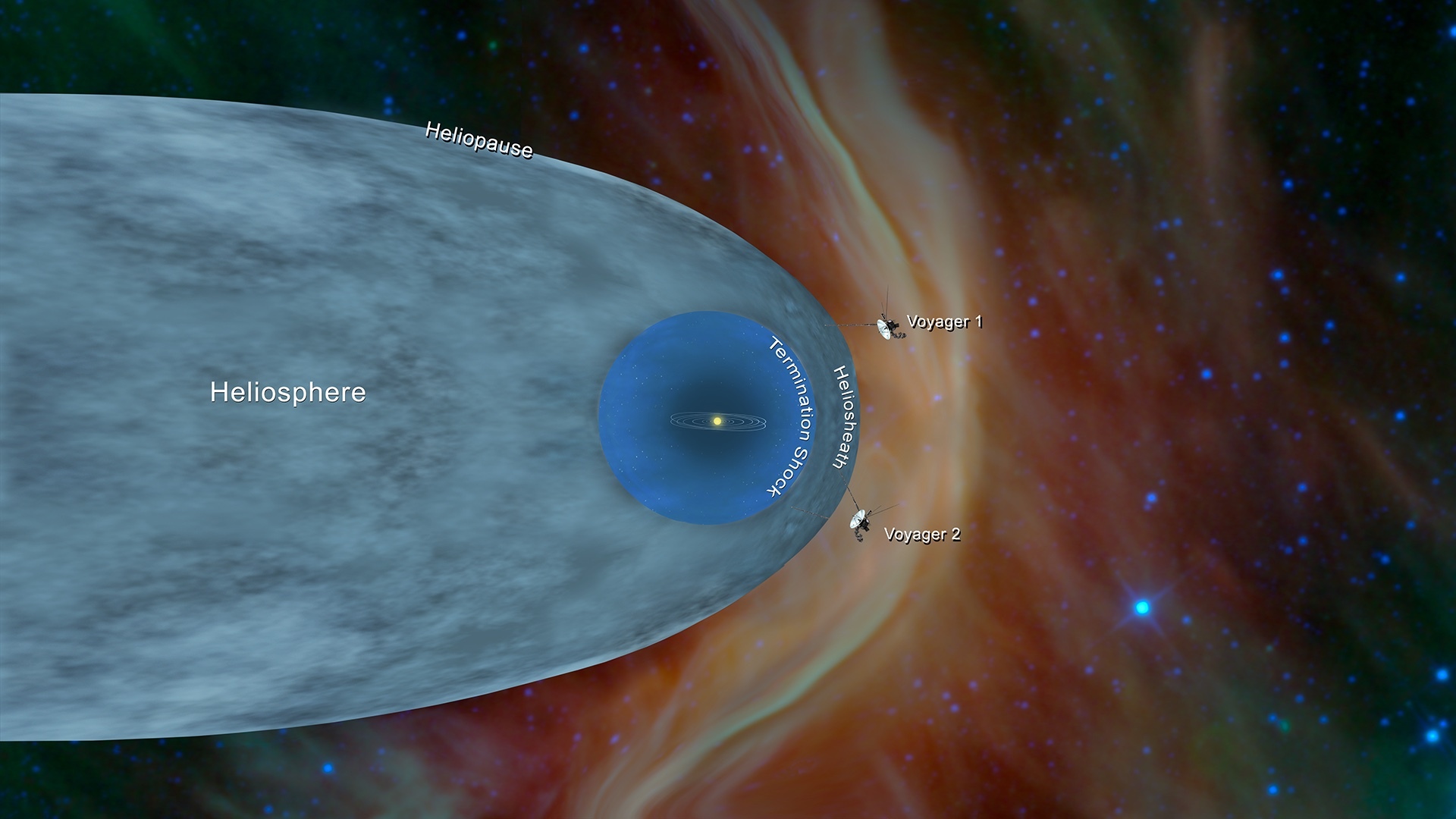
This illustration shows the position of NASA’s Voyager 1 and Voyager 2 probes, outside of the heliosphere, a protective bubble created by the Sun that extends well past the orbit of Pluto. Voyager 1 crossed the heliosphere’s boundary in 2012; Voyager 2 did the same in 2018. The asymmetric nature and extent of the bubble, particularly in the directions opposite the Voyager probes, have not been sufficiently quantified.
Credit: NASA/JPL-Caltech
After encountering Jupiter (1979) and Saturn (1980), Voyager 1 became our all-time fastest spacecraft.
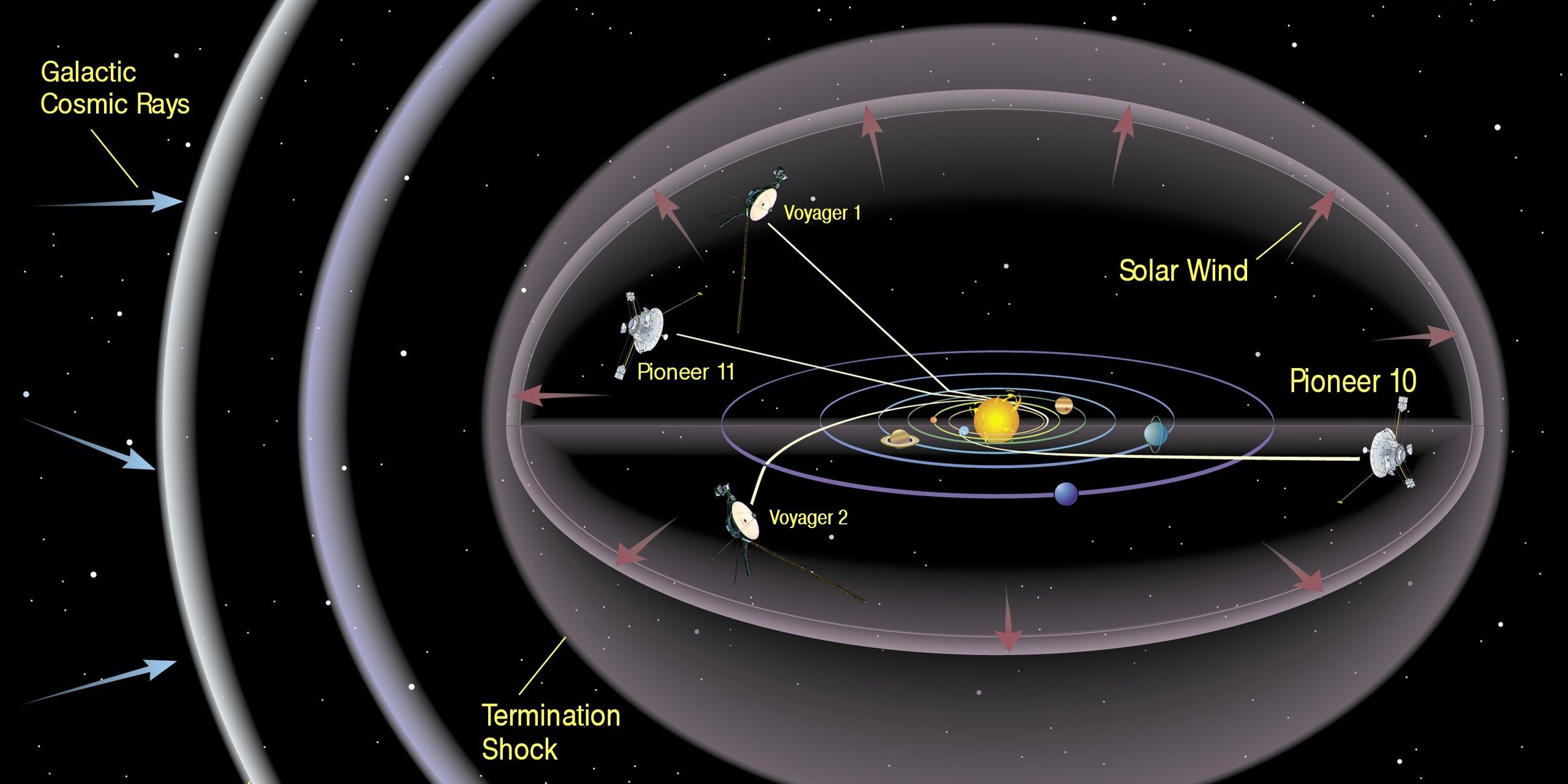
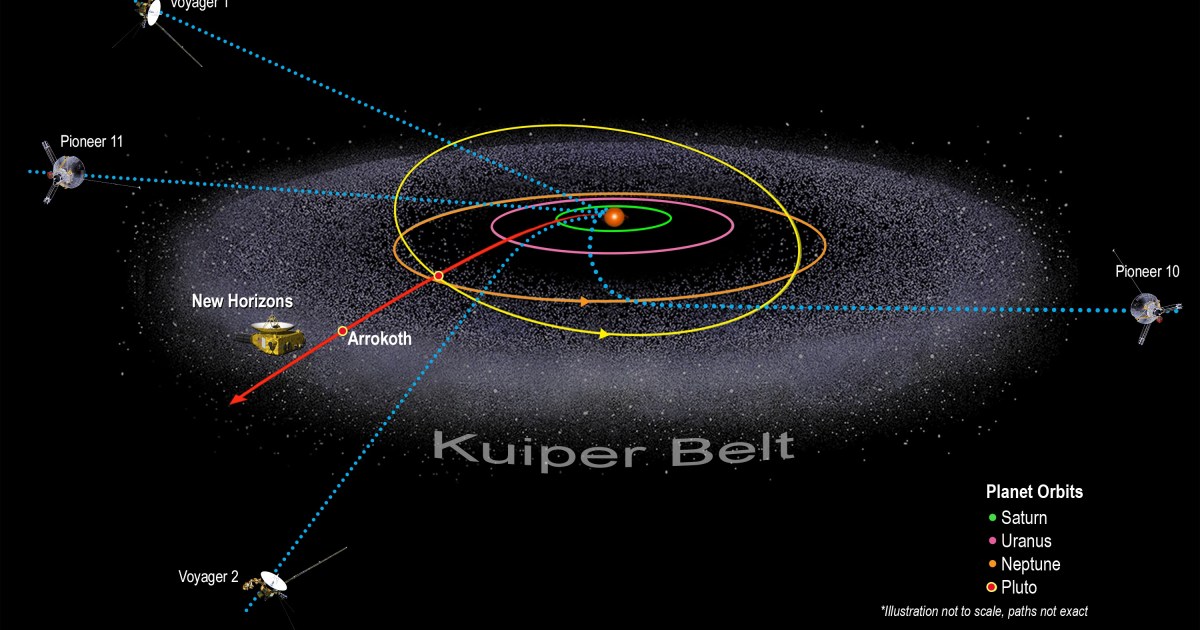
This 1997 artwork shows the planets of the Solar System and the relative trajectories of the first four spacecraft on a course to exist the Solar System: before the launch of New Horizons and before the ultimate fate of the Ulysses mission was known. In 1998, Voyager 1 overtook Pioneer 10, and in 2012, it passed the heliopause and entered interstellar space. Voyager 2 entered interstellar space in 2018 and recently surpassed Pioneer 10’s distance in 2023; therefore we strongly suspect that Pioneer 10 is in interstellar space as well, but it is no longer functional and we cannot check.
Credit: NASA
On February 17, 1998, it overtook Pioneer 10, setting humanity’s distance record.
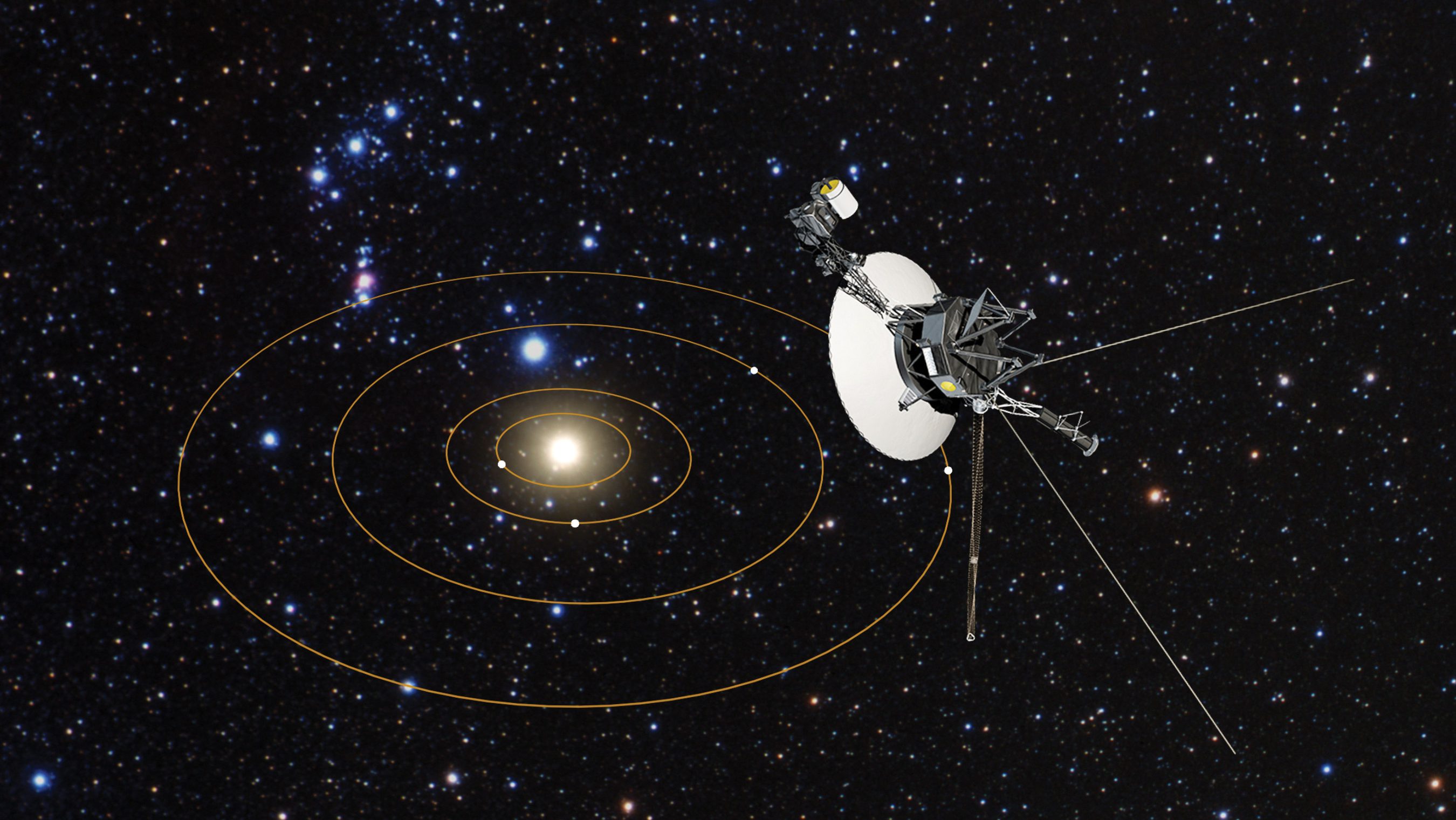
In 1977, NASA’s Voyager 1 and 2 spacecraft began their pioneering journey across the Solar System to visit the giant outer planets. Now, the Voyagers are hurtling through unexplored territory on their road trip beyond our Solar System. Along the way, they are measuring the interstellar medium, the mysterious environment between stars that is filled with the debris from long-dead stars. Voyager 1 became the most distant spacecraft from Earth in 1998, and no other spacecraft launched, to date, has a chance of catching it.
Credit: NASA, ESA, and G. Bacon
This November, 2026, it will reach 1 light-day from Earth: a first in spaceflight.
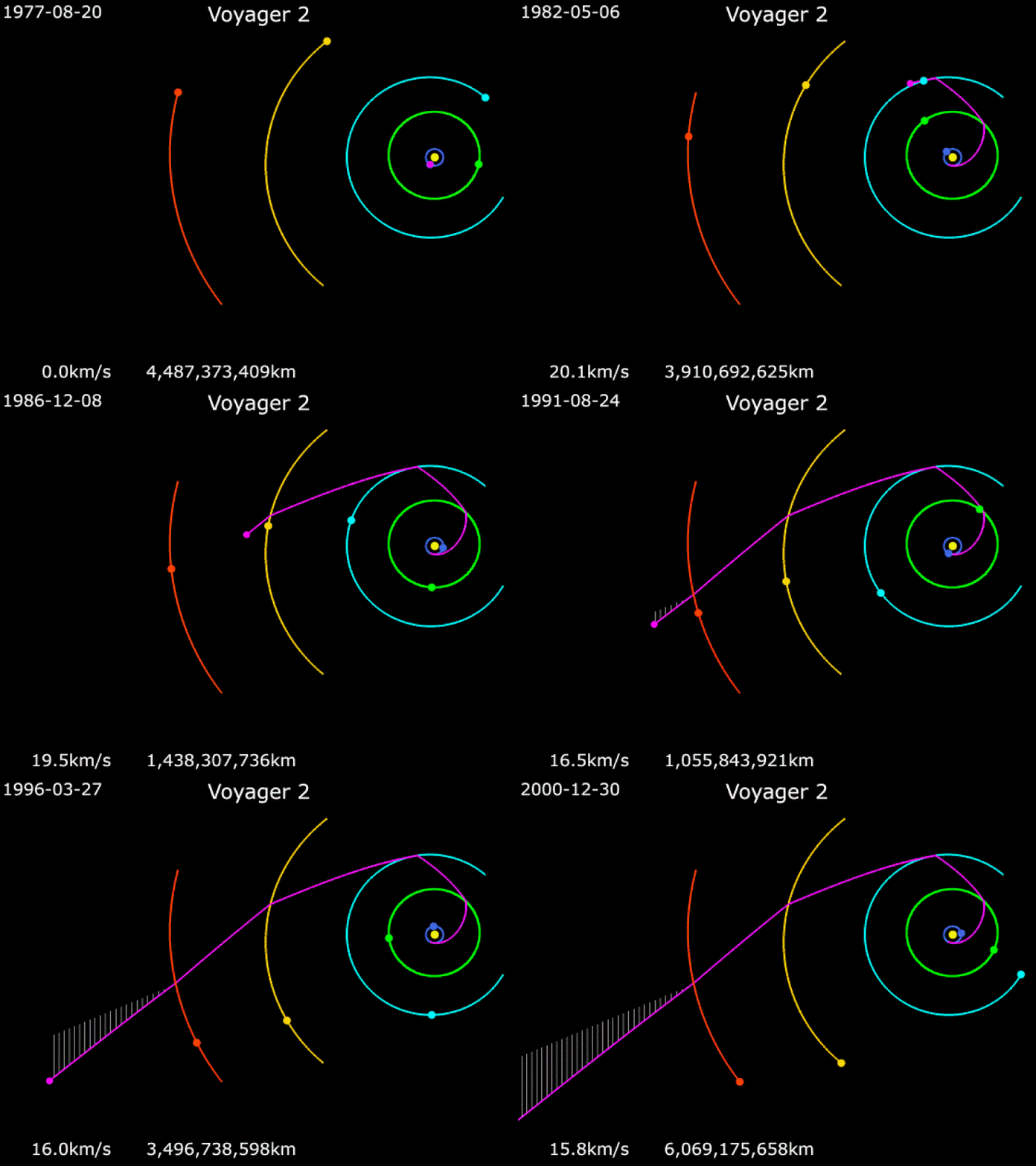
Voyager 2 famously conducted a “grand tour” of the Solar System, closely flying by each of the four gas giants and imaging their planetary, lunar, and ringed systems. In order to accomplish it, Voyager 2 was launched on an initially slower trajectory than Voyager 1. Despite being launched first, it’s less far and less fast than its twin counterpart.
Credit: Phoenix7777/Wikimedia Commons
Voyager 2 escaped differently: after rendezvousing with all four gas giants.
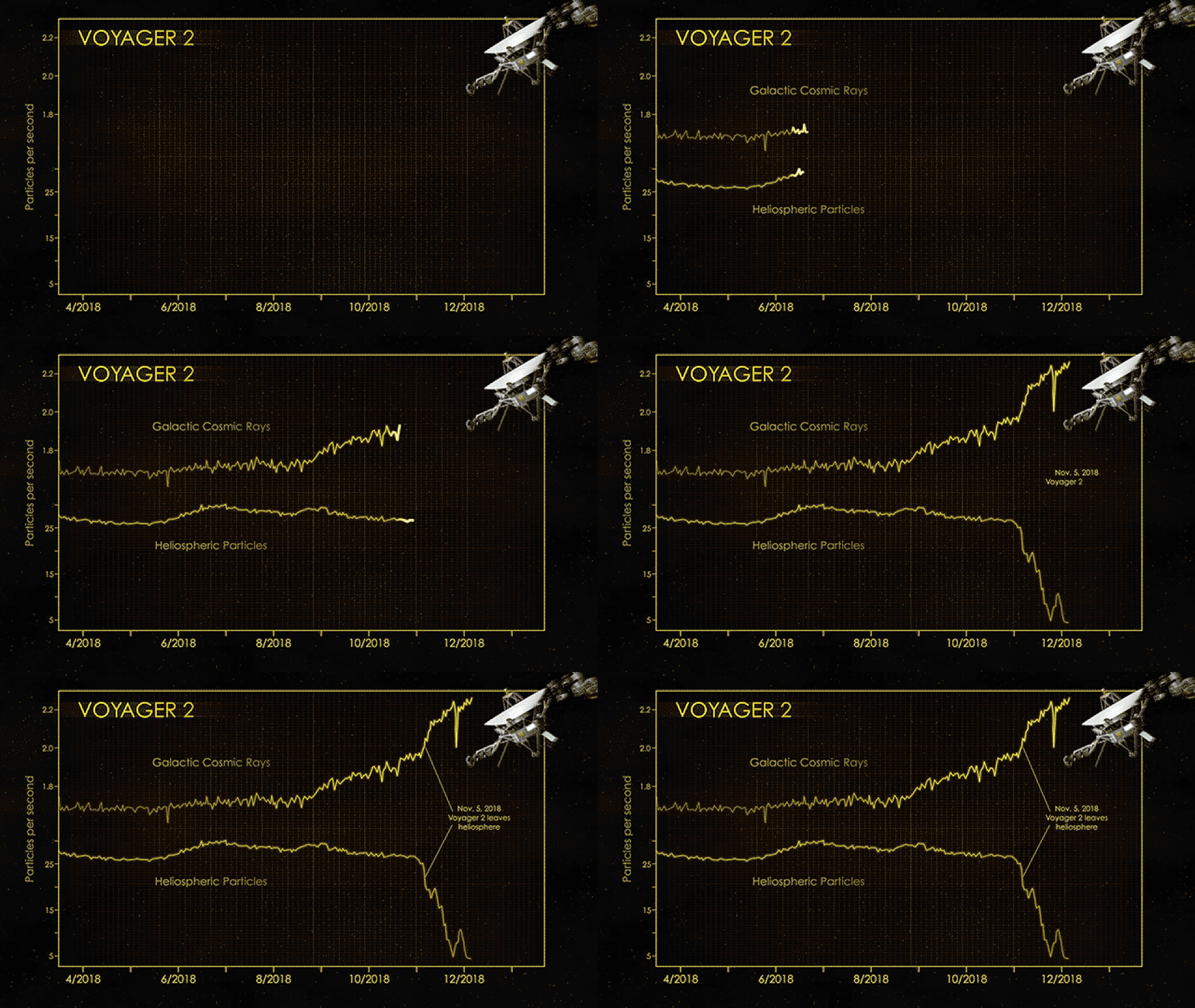
At the end of 2018, the cosmic ray subsystem aboard NASA’s Voyager 2 spacecraft provided evidence that Voyager 2 had left the heliosphere. There were steep drops in the rate of heliospheric particles that hit the instrument’s radiation detector, and significant increases in the rate of cosmic rays.
Credit: NASA/JPL-Caltech/GSFC
It remains #2 in distance and speed, behind only Voyager 1.
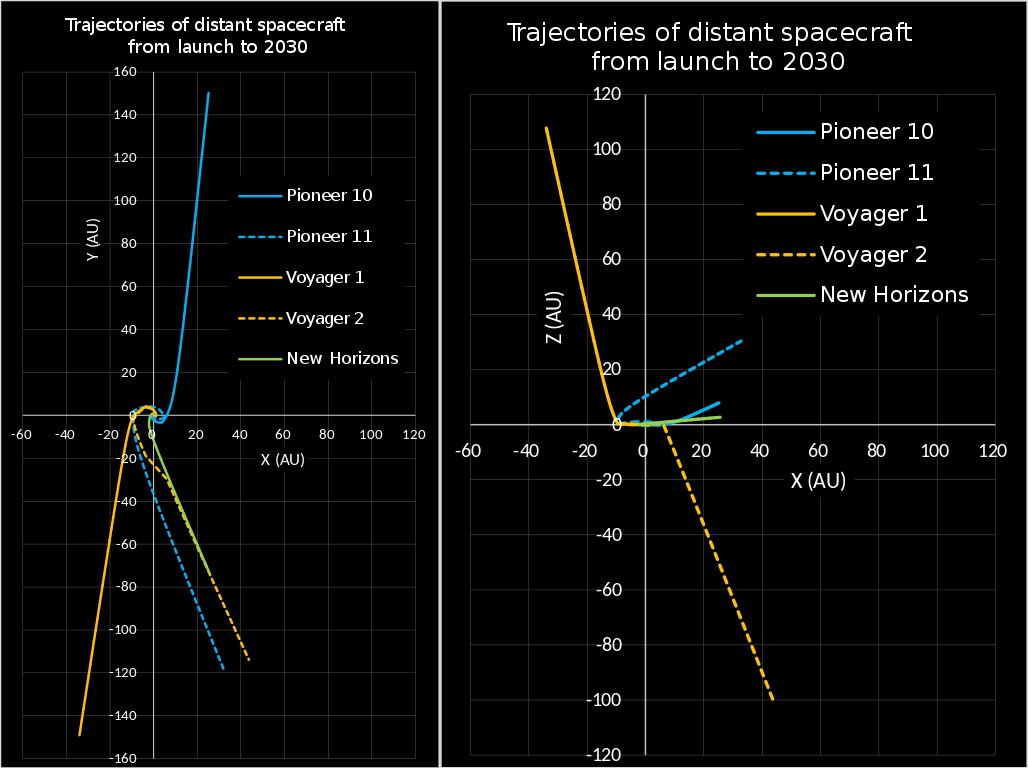
Although Pioneer 10 was the first launched spacecraft, in 1972, with a trajectory that would take it out of the Solar System, it was surpassed by Voyager 1 in 1998 and later by Voyager 2 in 2023. In the late 2100s, it will be overtaken by New Horizons as well. No other mission ever launched is slated to overtake Voyager 1, which is currently both the farthest and fastest-moving human-created spacecraft.
Credits: Phoenix7777/Wikimedia Commons; data from HORIZONS system, JPL, NASA
The Sun-observing Ulysses, launched in 1990, wasn’t intended to escape.
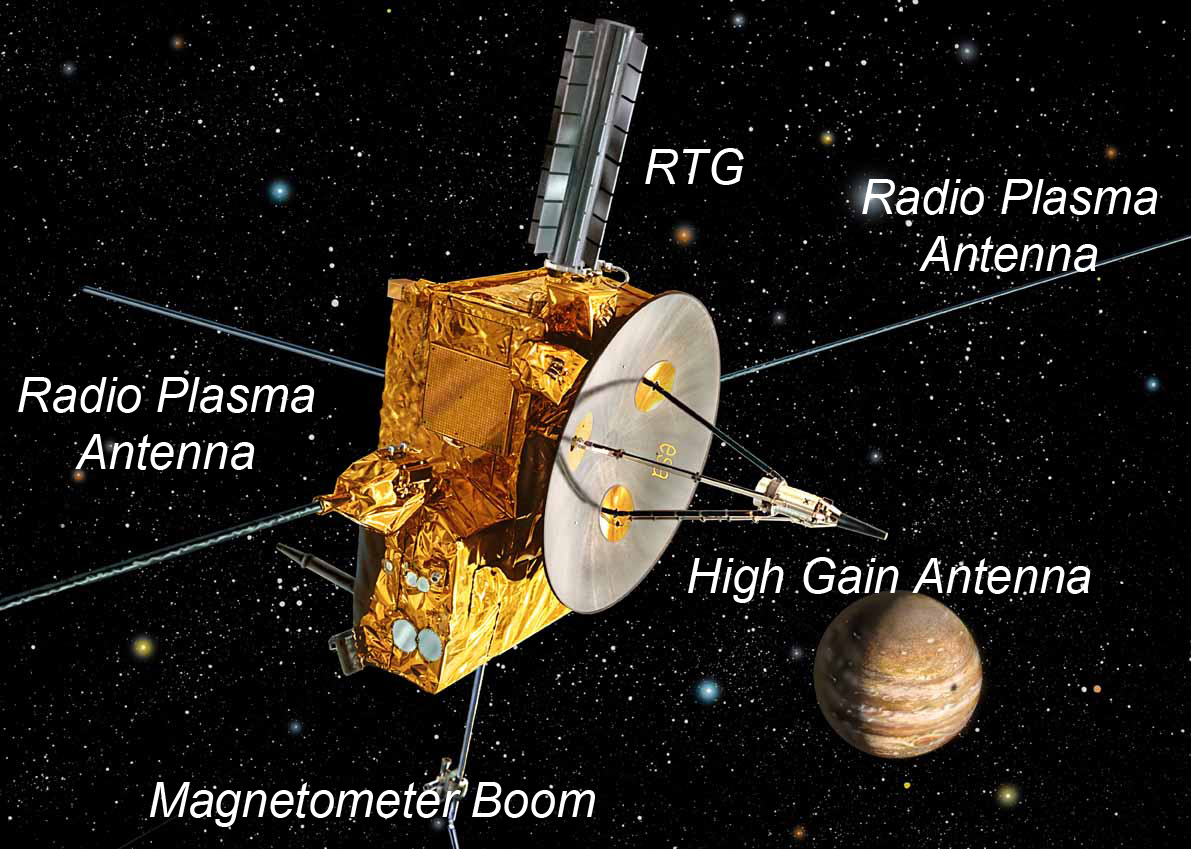
The Ulysses spacecraft, launched in 1990, was designed to orbit the Sun and study it at all latitudes, from a variety of near-and-far distances. Its highly inclined orbit will lead to several close passes with Mars and Jupiter in the coming decades, culminating in a 2098 gravitational encounter with Jupiter, expected to impart a gravitational kick sufficient to send Ulysses out of the Solar System.
Credit: NASA/ESA; edits by PlanetUser/Wikimedia commons
Its Jupiter-crossing orbit leads to gravitational interactions, precipitating a future ejection in 2098.
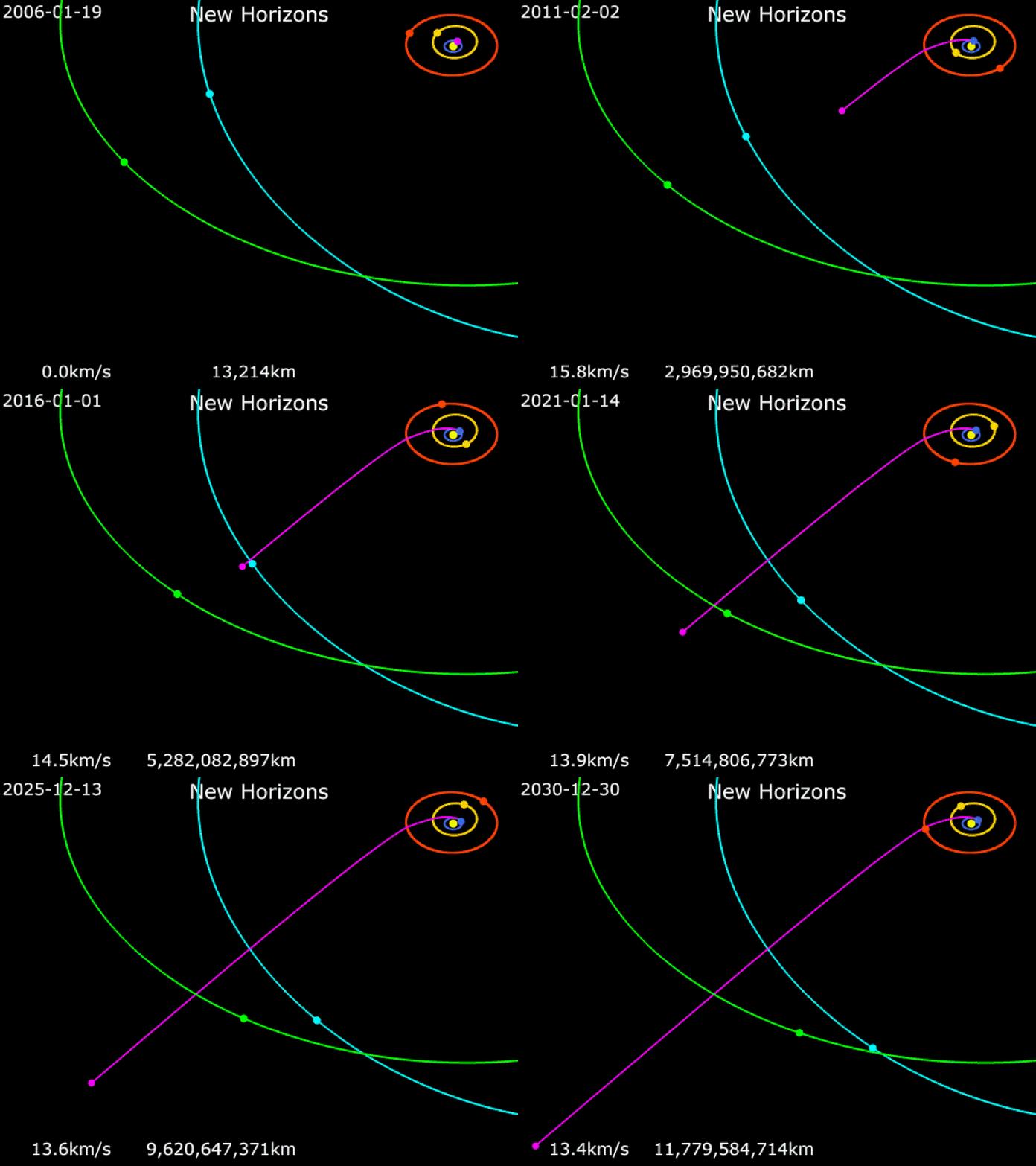
The New Horizons spacecraft, launched in 2006 with the fastest launch speed of any spacecraft, was slightly boosted by Jupiter, but the largest effect of that gravitational interaction was to redirect it onto a trajectory that would lead to a close fly-by encounter with Pluto. The lack of any major additional gravity assist maneuvers means that its speed will never allow it to catch up to either Voyager 1 or 2, and that a future spacecraft will be needed to achieve that milestone.
Credit: Phoenix7777/Wikimedia Commons
Lastly, in 2006, New Horizons was launched: with the highest-ever initial velocity.
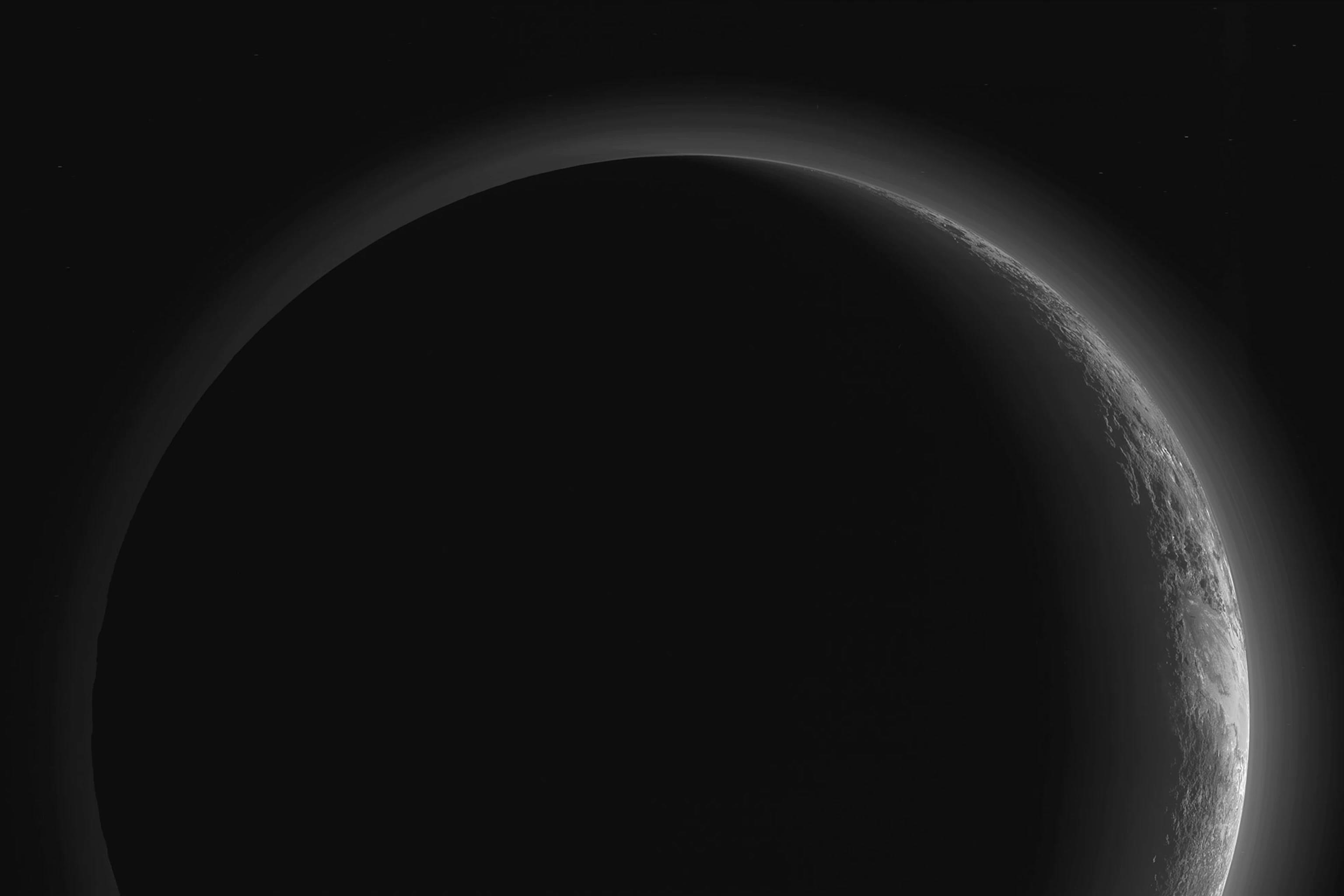
Just 15 minutes after passing by Pluto on July 14, 2015, the New Horizons spacecraft snapped this image looking back at the faint crescent of Pluto illuminated by the Sun. The icy features, including multiple layers of atmospheric hazes, are breathtaking. As Pluto rotates on its axis and ventures closer-and-farther from the Sun, certain volatiles can vaporize and condense, leading to various forms of precipitation, such as nitrogen and methane.
Credit: NASA/JHUAPL/SwRI
Despite boosts from Jupiter (2007) and Pluto (2015), it won’t overtake either Voyager; only both Pioneers.
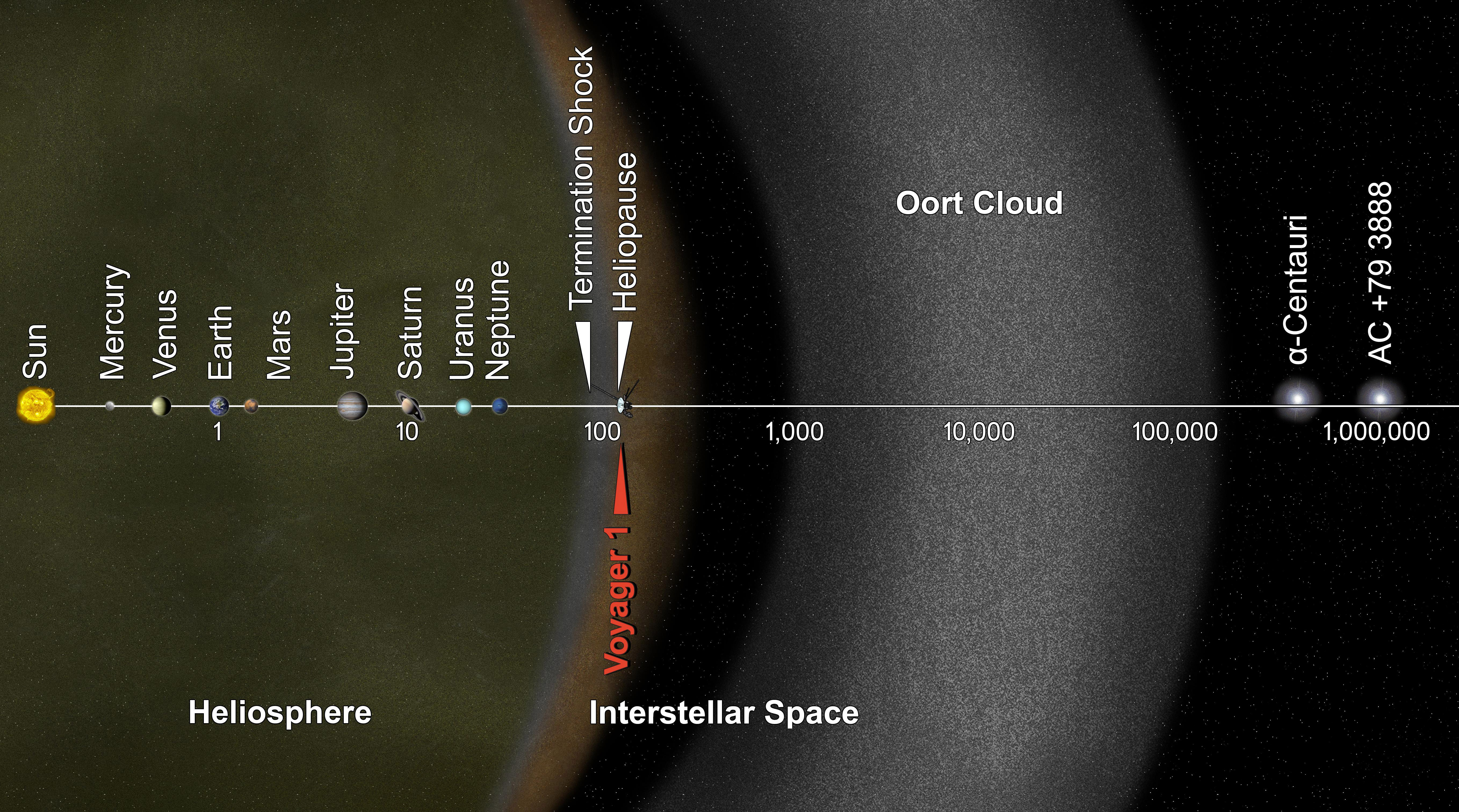
A logarithmic chart of distances, showing the planets, the Voyager spacecraft, the Oort Cloud, and our nearest star: Proxima Centauri. Launched a full 49 years ago, Voyager 1 is the most distant and, overall, the fastest-receding spacecraft ever launched from Earth. It will achieve a distance from Earth of 1 light-day in November of 2026, and any spacecraft seeking to overtake it must catch up to its head start after being launched way back in 1977.
Credit: NASA/JPL-Caltech
New developmental technology is likely required to surpass Voyager 1.
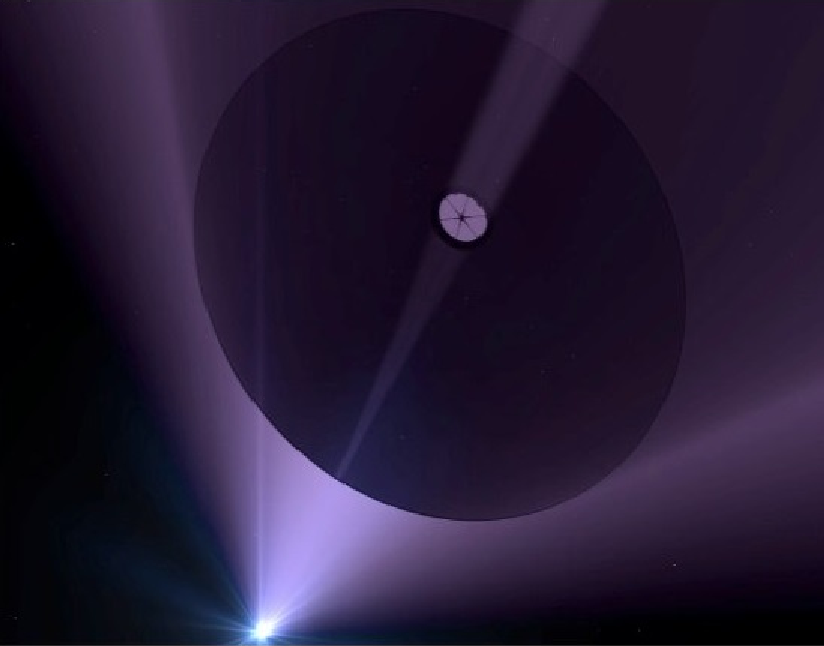
The idea of using a tremendous array of lasers to accelerate a spacecraft is novel, but could potentially come to fruition in the coming decades thanks to recent advances in laser technologies and cost reductions. However, obstacles like advances in reflectivity and a hitherto undiscovered method for keeping the payload intact at such speeds would need to be developed to make a true interstellar mission a success.
Credit: Adrian Mann, UC Santa Barbara
Mostly Mute Monday tells an astronomical story in images, visuals, and no more than 200 words.