

In northeast Georgia, a hospital closed its maternity ward. In rural New Hampshire, a community health center shuttered. And in Iowa, a Des Moines hospital system laid off dozens of employees and closed a clinic.
All these providers cited President Donald Trump’s sweeping domestic policy agenda package, which slashed more than $1 trillion in federal support for health care, as a factor in their decisions.
The legislation, known as the “One, Big, Beautiful Bill Act,” is expected to leave millions more Americans without coverage and to cut vital financial support for hospitals – a combination that could force already cash-strapped providers to pull back on services and staffing, leaving patients with fewer places and longer waits for care, particularly in emergency rooms.
At the legislation’s signing, President Donald Trump touted its tax and border security provisions, downplaying the impact of the health care cuts. The administration and GOP lawmakers often refer to the package as the “Working Families Tax Cut Act.”
But Republicans hoping to tout the legislation as a point in their favor in November are confronting an escalating political backlash to the emerging consequences of those cuts, as lawmakers who supported it take the blame.
Many hospitals, particularly those in rural areas or who treat a lot of underserved patients, have been struggling financially for years, contending with rising expenses, workforce shortages, an aging population and federal reimbursement rates that don’t cover the cost of care. Nearly 200 rural hospitals have closed or stopped providing inpatient care since 2005, according to the Sheps Center for Health Services Research.
The “big, beautiful bill” will increase that fiscal strain, experts say. Its historic cuts to Medicaid, which include adding the first-ever work requirement to the safety net program, are expected to leave 7.5 million more people uninsured over the next decade, according to the Congressional Budget Office. Other provisions push up that figure to a total of 10 million.
But when many of those folks get sick, they will still show up at hospitals, who must provide emergency care even if they won’t get reimbursed.
Compounding the problem is the expiration of the Affordable Care Act’s enhanced premium subsidies, which Republicans in Congress opted not to extend despite heavy pressure from Democrats. Some 2 million fewer people are expected to be insured this year, according to the CBO.
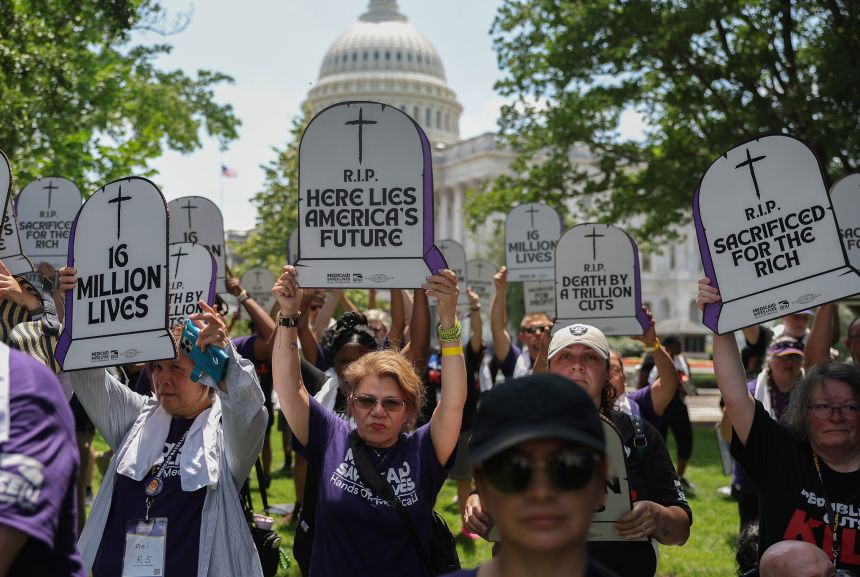
In addition, the “big, beautiful bill” curtailed states’ ability to levy taxes on health care providers, which help states fund their share of Medicaid, and to offer special payments to beef up the reimbursement rates for hospitals and other providers, among other uses. These provider taxes and state-directed payments also boost federal Medicaid funding that states receive.
“Our health care system was already fragile and now the largest cuts in health care history are going to disintegrate it further,” said Vaishu Jawahar, director of policy programs at Protect Our Care, a left-leaning advocacy group.
Douglas Holtz-Eakin, president of the conservative-leaning American Action Forum, argued that “there’s nothing that says Medicaid always has to look like the original program,” and said Republicans want less systemic dependence on it.
“Republicans have always viewed Medicaid as a targeted, low-income safety net program for health insurance for those who cannot get it on their own,” he said. “Democrats have taken the view that Medicaid is just another program, another way to get to universal coverage. Expand wherever you can, do what you have to. And so this just represents the collision of those views.”
The package also created a $50 billion Rural Health Transformation Program, which is intended to prompt states and their rural providers to enact lasting changes that will put them on a more sustainable financial path. While some providers say the program will be beneficial, others say it won’t do much to help them contend with the major funding holes the bill will create.
And the rural fund doesn’t do anything to help urban hospitals. Nearly 100 of these hospitals that are financially distressed and disproportionately provide care to Medicaid enrollees are most at risk of shutting down or limiting services because of the bill, according to a November analysis by Harvard’s TH Chan School of Public Health.
Although many of the bill’s main Medicaid provisions don’t start kicking in until the next year or two, some hospitals and other providers are beginning to take steps now to blunt the impact of the coming cuts.
St. Mary’s Sacred Heart Hospital in rural Lavonia, Georgia, closed its labor and delivery unit, as well as its obstetrics and gynecology center, last fall. Expectant mothers now must drive about 30 minutes to the nearest hospital with labor and delivery services or about an hour to St. Mary’s hospital in Athens, which still operates a maternity ward.
St. Mary’s said in a statement that it spent 18 months trying to recruit more doctors, create partnerships and pursue other funding as it contended with an aging population and a declining number of births. But the bill played a role.
“Recent Congressional cuts to Medicaid solidified this decision,” the hospital said.
Maternal care is already strained in Georgia, said Whitney Griggs, director of health policy at Georgians for a Healthy Future, an advocacy group. The state has maternal and infant mortality rates that are much higher than the national average, and only 36% of counties had a labor and delivery unit in 2022.
Losing a labor and delivery unit is a “huge loss” to the women in the area, she said
Sen. Jon Ossoff, the lone Democrat running for reelection this year in a state Trump won in 2024, has pointed to St. Mary’s decision on the campaign trial.
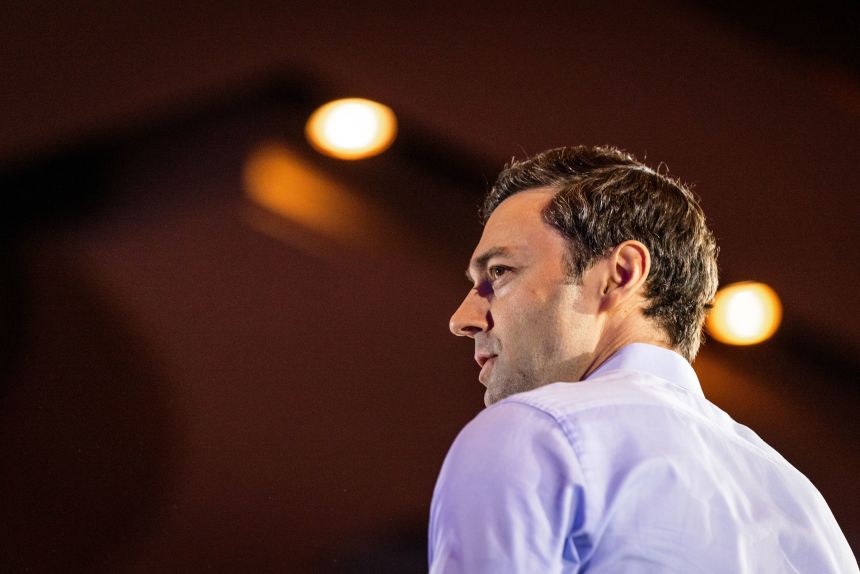
“In Lavonia, St. Mary’s Hospital, they’ve announced they will no longer provide obstetric services to delivering mothers because of decisions made by politicians,” Ossoff said in Atlanta last September.
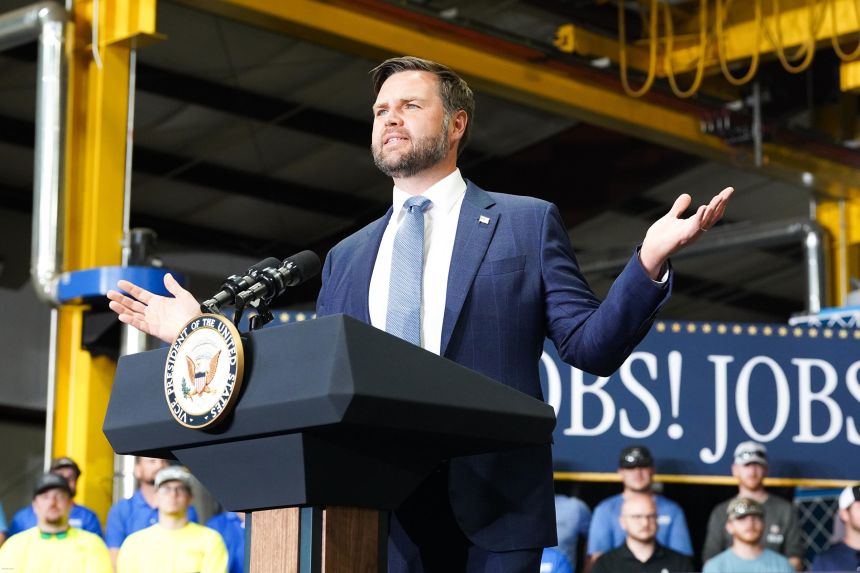
In Georgia promoting the “One Big Beautiful Bill Act” last August, Vice President JD Vance slammed Ossoff’s opposition to the legislation, saying he was “allegedly worried about people getting kicked off their health care.”
“Well, you know what? The President of the United States made a promise, a sacred promise that the only people who are going to lose access to health care are illegal aliens who shouldn’t be in this country to begin with,” Vance said.
The GOP package also contributed to MercyOne, which has 21 medical centers and multiple clinics across urban and rural Iowa, deciding to close its clinic in Ottumwa and lay off dozens of staffers.
MercyOne is part of Trinity Health, which said in a statement to CNN that “the recent and future government funding policy changes” are expected to reduce its annual revenue by $1.5 billion.
That is forcing it to make changes “to ensure long-term sustainability and future growth,” including cutting positions in its billing and collections department by 10.5% across Trinity Health.
Retired Dr. Peter Reiter, who spent four decades serving patients in Ottumwa, reacted to the closure of the MercyOne clinic there, saying that “this is not the way that’s best for patients and not the best for providers.”
“The number of people who were former patients or just acquaintances who said, I go to MercyOne. What am I supposed to do? Where do I go? How do I get a doctor? And I don’t have an answer,” he said.
Julie Lawrence, an Ottumwa resident and a patient impacted by the MercyOne closure, shared her frustration with the disruptions.
“You know, I’m in the elderly category,” she said. “I’m 68, and I would just like to stay in my hometown. So, you know, if you don’t feel good, you don’t want to have to drive half an hour. I mean, I can, but I don’t really want to.”
Like St. Mary’s in Georgia, the MercyOne closures in Iowa are playing out in competitive midterms contests, with affected locations in the battleground 3rd district.
GOP Rep. Zach Nunn is seeking reelection there after winning in 2024 by just under 4 points, and his leading Democratic challenger, Sarah Trone Garriott, has focused her criticism on his vote for the “One, Big Beautiful Bill Act” and its changes to Medicaid.
“It’s a bad time for health care here in Iowa’s 3rd congressional district, and it’s Zach Nunn’s fault,” Trone Garriott said in a social media video. “First MercyOne announced they were closing their Ottumwa clinic because of federal Medicaid cuts. Now MercyOne Des Moines is announcing layoffs this March, because again, federal Medicaid cuts.”
This month, Nunn wrote on his House blog that he met with patients and providers at Ottumwa Regional Health Center “to hear directly from those on the front lines,” touting $209 million allocated to his state through the OBBBA’s $50 billion “Rural Health Transformation Fund.”
“The message was clear and consistent: workforce shortages are stretching staff thin, operating costs continue to climb, and rural hospitals can’t keep carrying the burden alone,” he said.
And amid the backlash to his vote for the One Big Beautiful Bill Act, Nunn broke with his party last month on a vote to extend subsidies for the Affordable Care Act despite his vocal criticism of the program.
Ed Shanshala, CEO of Ammonoosuc Community Health Services in New Hampshire, had to make the painful decision to shut down its location in Franconia, which served nearly 1,600 patients in the rural White Mountains, last fall.
Ammonoosuc, which has four remaining centers that provide primary care, behavioral health and other medical services to 26 towns, is facing a $500,000 annual loss in revenue from the bill, mainly because fewer of its patients are expected to have Medicaid coverage due to the new work requirements. As a federally qualified health center, it will continue to provide care, but it won’t know how much the patients will be able to pay.
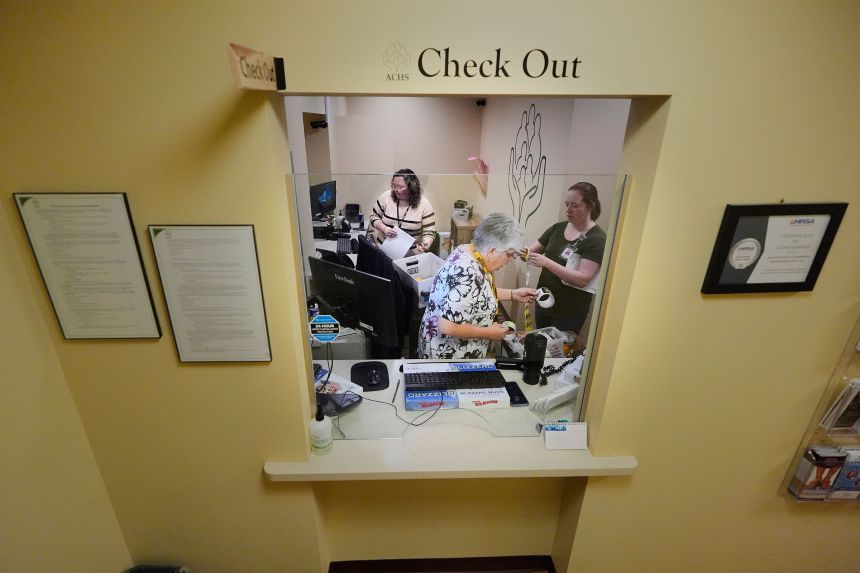
The closing of the Franconia site is only the first step to dealing with the effects of the legislation, Shanshala said. The move provides about $250,000 in one-time savings since Ammonoosuc shifted the eight staffers to other locations.
“It buys time for us to look at other revenue opportunities consistent with our mission, but it won’t come close to addressing the impact of the bill’s disinvestment in our friends, family and neighbors through Medicaid,” he said.
After states began expanding Medicaid to more low-income adults under the Affordable Care Act in 2014, the uninsured rate fell, which led to a decline in hospitals’ uncompensated care costs in those states, said Cindy Mann, a partner at Manatt Health and former Obama administration official.
“When the uninsured rate goes up, you’ll have more uncompensated care and you’ll see it pretty quickly,” she said. “If you have a patient base which is mostly Medicaid, Medicare and the uninsured — which is really a lot of the safety net hospitals — there’s nowhere to go to, there’s no cushion, there’s no cost shift that can make that up.”
In Maine, Northern Light Health’s executives knew they had to factor into their multi-year plan the increased financial pressures that the “big, beautiful bill” would bring. The health system, which operates nine hospitals, a medical group, nursing homes and several dozen primary care locations in the state, is projecting a $27 million annual drop in revenue from the package, said chief financial officer James Rohrbaugh. That’s largely because 34,000 Mainers are expected to lose Medicaid coverage later this year and next.
The looming revenue decline led Northern Light Health to make some major moves last year, including significantly cutting staff, improving its payment collection and consolidating doctors’ offices. It also closed one of its money-losing hospitals, though Rohrbaugh said that decision predated the legislation.
Now, the health system is looking for other ways to become more fiscally sound – and it hopes to use some of the $190 million that Maine is receiving from the Rural Transformation Health Program this year to help it do so. Among its plans are to increase its use of telehealth to expand its ability to care for rural residents and to hire more financial counselors to more proactively aid patients with applying for coverage – including navigating Medicaid’s new work requirements — or finding alternative payment assistance, Rohrbaugh said.
“I see that as a big opportunity,” he said of the program. “The plan for the rural transformation funds is to help figure out how to make sure health care is sustainable in rural areas.”
Going forward, more hospitals and providers will have to contend with shrinking reimbursements and higher uncompensated care costs as the provisions of the “big, beautiful bill” start to take effect.
“They will have to determine whether they can continue offering all their current services or have to shutter some or shift them to other providers,” said Lucas Swanepoel, vice president for public policy at the Catholic Health Association, which represents Catholic hospitals, long-term care facilities and other providers.
“The coming year or two will be really telling,” he said.
Jennifer Mendrzycki is the CEO of TMC Health, which based out of Tucson oversees four hospitals located throughout southern Arizona, in addition to dozens of other smaller locations covering the state’s large rural expanse.
“This is a time like we have not seen in health care before, where we’ve got competing pressures,” she said, discussing the impacts of the sweeping legislation. “We’ve always had competing pressures, but this is more acute than I have seen it in my career.”
Mendrzycki emphasized the difficulty of simultaneously contending with Medicaid cuts and reductions in provider taxes. “It’s totally untenable, and it’s – we’ve never, I don’t think, had a time like this, in at least the time that I have been in healthcare, where both of those things are coming. It’s like the perfect storm,” she said.
It’s an issue for a series of high-stakes races across all these states that could help decide control of Congress this fall.
In New Hampshire, the parties are vying for the open seat left by retiring Sen. Jeanne Shaheen in a state that Democratic presidential nominee Kamala Harris carried by less than 3 full points in 2024. And in Maine, Republican Sen. Susan Collins is seeking a sixth term in what’s expected to be one of the most competitive 2026 races, already drawing tens of millions of dollars in ad spending reservations.
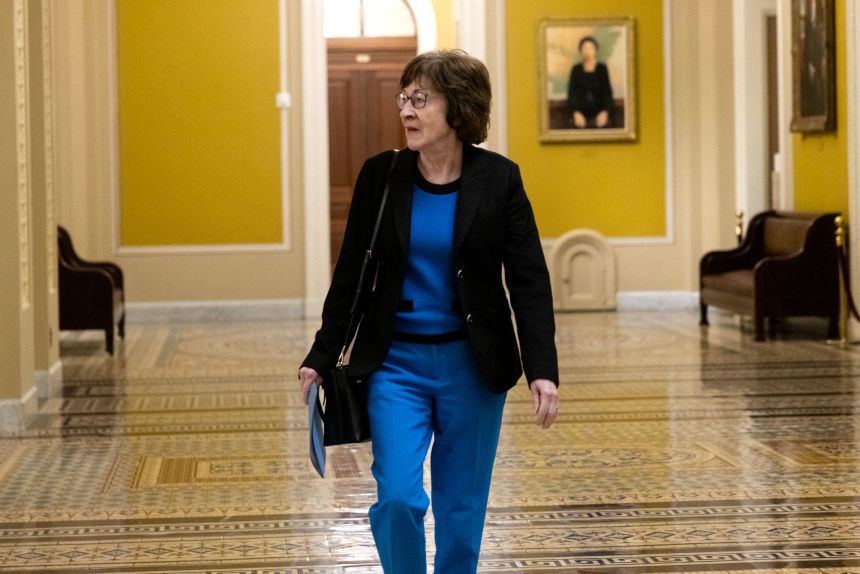
Both states have older, rural populations disproportionately exposed to the changes to Medicaid and the pressure on local providers. Holtz-Eakin said Republicans, and Collins especially, should point to the Rural Transformation Fund, though he acknowledged its limitations.
“The Rural Health Transformation Fund is there because of her,” he said, touting her legislative efforts. “So certainly she’s going to talk about that.”
“There’s an enormous amount of discretion by (Centers for Medicare & Medicaid Services Administrator Mehmet Oz) in allocating – so there’s like $10 billion you have that goes out from the total of $50 billion. And about $5 billion of that is greatly at the discretion of the CMS administrator. One would hope that that might be showing up in Maine and she could point to it and say, this is what I did for you,” he said.