
When navigating an already overwhelming housing market, a Building Energy Rating (Ber) on a property listing can be easily overlooked in favour of location, space and, crucially, affordability.
However, as most people who have lived in a low-Ber-rated home for a significant period of time can attest, it does tend to affect how comfortable your home feels day to day. As such a long, dreary winter has proven, cosiness is key in Irish homes.
As well as reducing your household’s carbon footprint, improving its energy efficiency comes with financial benefits too, in that it lowers your utility bills and increases the home’s potential resale value.
SSo for those thinking about improving their home’s energy efficiency, chartered building surveyor and SCSI member Val O’Brien has detailed the first steps you could take when upgrading the following house types.
Three-bed semidetached house (1960s)
Whether in its original form or if the property has had some works done in the interim, the main areas to concentrate on are improving the insulation standards to the external fabric and upgrading the services.
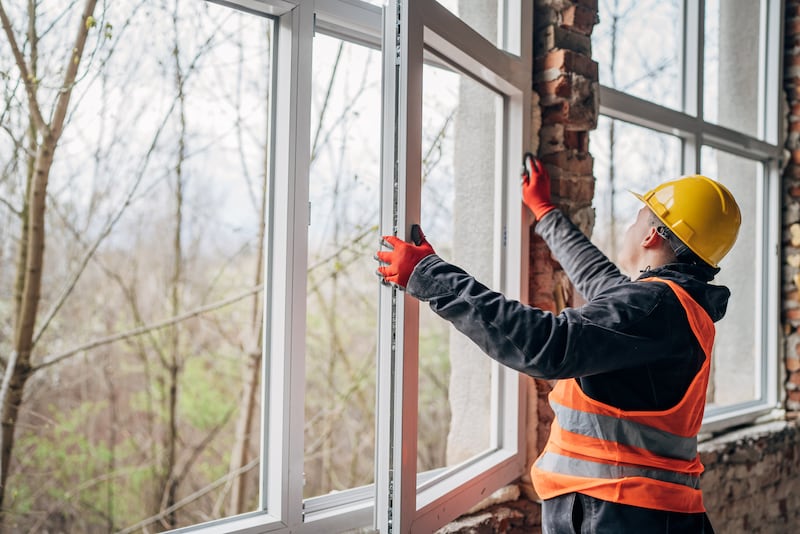
Upgrade roof insulation: Consider the condition of the roof covering as it might be an ideal time to upgrade or replace the roof covering when upgrading.Upgrade wall insulation: Options include: internal drylining, which allows for a quick heat build-up but tends not to hold the heat for as long; or external insulation, which tends to take longer to heat up but also tends to hold the heat longer.Upgrade floors: This regards those floors in contact with external elements. Very difficult to upgrade concrete floors as it involves breaking it up and stripping it out. Suspended timber floors are easier to insulate but floor finishes must be lifted to insert the insulation.Replace windows and external doors: Replace the windows with either double or triple-glazed windows. Ensure good airtightness seals are achieved at the window frame/wall junctions.Upgrade services: Review and upgrade or replace the heating system with an energy-efficient system such as a heat pump or solar panels. Also look at upgrading the ventilation standards by incorporating a whole-air mechanical ventilation system.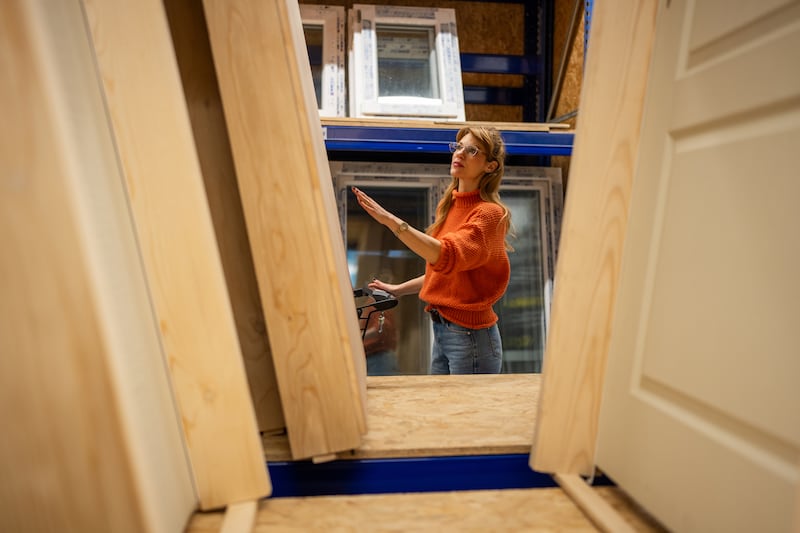 Photograph: iStock Four-bed detached house (1990s)
The main difference between a four-bed detached house built in the 1990s compared with the 1960s three-bed semi-D example is the 1960s house may not have had any insulation whatsoever, whereas the 1990s house would have had a basic level of insulation.
While theoretically, you could upgrade the level of insulation in the 1990s four-bed – ie add additional insulation to the attic and an additional layer of insulation to the walls – many people end up stripping out the existing insulation and replacing it with new material, as the newer insulation tends to be more efficient and a better quality can be achieved with a shallower depth, therefore having less impact on the house.
Terraced period property
In many cases the same steps can be applied to a terraced period property as a 1960s semi-D. There can, however, be complications in that these houses could be protected, thereby limiting the ability to undertake improvement works. Consider the following:
Sometimes only the external facades have to be preserved in architectural preservation areas and thus the option of external insulation is not appropriate and, in some cases, even the upgrading or replacement of windows may not be an option.You also need to consider the implications of the potential disturbance to the internal features. Typically, there are decorative cornices at ceiling/wall junctions and decorative joinery. These are normally quite attractive and form the main character of the house and sometimes a balanced decision needs to be taken regarding the level of upgrade.Period cottage
Upgrading the energy efficiency of a period cottage is similar to the steps described for the period terraced property. These properties tend to have characteristic features and a certain charm, and when you consider properties holistically, there has to be a balance of what the most important attributes are: ie, do you simply accept a lower insulation standard in return for the character and charm of the period cottage?
It would likely be a retrograde step to attempt to make changes to the exterior of the property as all its charm would be lost and it is very difficult to replicate the old characteristics. Typically, these older properties will have original internal features such as cornices, timber panelling etc, that you might want to retain – and you need to weigh up the benefits of losing the original characteristics in return for a better insulated home. To increase the home’s energy efficiency, you can look at a compromised approach concentrating on accessible options – such as insulating the attic, replacing the windows with heritage style windows and installing a more efficient heating system – and excluding other works that would have a material impact on the characteristic features of the property.Detached bungalow
Whether a detached bungalow has been well looked after or is in derelict condition, it remains the easiest type of house to upgrade. With an older bungalow there is little to no waste as you are removing previous fixtures and services that need to be replaced. Such properties provide the closest thing to a blank canvas and thus creates a good opportunity to make a significant improvement on the upgrade, and it is possible to achieve a very high standard.
 Boosting your home’s energy rating. Photograph: iStock Note on apartments
Apartments are perhaps one of the most difficult properties to upgrade, largely because you own a small part of a much larger complex, and are therefore restricted in terms of what you can do. Even the simple act of replacing your windows will involve having to get consent from the owners’ management company, and the chances are that you would have little choice of window type in order for the facade to marry in with the rest of the complex.
With the exception of top-floor apartments, most apartments don’t have a roof, and thus there will be less heat loss through the ceiling, although it could be argued that the heat is rising into the apartment above. However, if you were to upgrade the insulation standard to the ceiling, this could inadvertently impact on the sound insulation standard between the apartments.
Most apartments also have a relatively minimal surface area of external walls and tend to have a lot of internal/party walls, and thus there is limited gain in upgrading the insulation to the walls. The only effective way to upgrade the insulation standard in an apartment is to undertake a comprehensive and co-ordinated upgrade of an entire complex.
This content is provided for general information only. It is not intended as advice on which readers should rely. Professional or specialist advice should be obtained before persons take or refrain from any action on the basis of this content. The Irish Times and its contributors will not be liable for any loss or damage arising from reliance on any content.
[ How a Dublin couple boosted their home energy Ber rating from D2 to B1Opens in new window ]