
The unprecedented escalation of direct military strikes between the United States, Israel, and Iran has plunged the Middle East into a regional war, severely disrupting global trade routes and threatening East Africa’s fragile economic stability.
As missiles traverse the skies from Tehran to the Gulf States, the collateral damage is immediately felt in Nairobi through spiking oil prices and grounded logistics networks.
Why does this matter now? Kenya is hyper-dependent on Middle Eastern oil and the stability of the Red Sea shipping lanes; a prolonged conflict guarantees aggressive imported inflation and severe supply chain paralysis.
The Anatomy of Regional Warfare
The geopolitical landscape of the Middle East fractured catastrophically as coordinated US and Israeli military strikes targeted Iranian infrastructure, ostensibly aimed at regime destabilization. Iran’s immediate retaliation with ballistic missiles and drone swarms across multiple neighboring nations has erased the “shadow war” paradigm, replacing it with overt, multi-front combat. The United Nations has declared the situation a profound humanitarian and security crisis, with airspace closures rolling across the region. Commercial aviation has been forced into massive detours, and maritime traffic through the critical Strait of Hormuz is essentially frozen. This chokepoint handles roughly 20% of the world’s global oil supply. Goldman Sachs analysts are already projecting crude oil could rapidly breach the $100 per barrel mark if transit is not restored. The sheer scale of the kinetic action has triggered emergency sessions at the UN Security Council, but diplomatic off-ramps appear non-existent in the near term.
The Economic Shockwave Hitting Kenya
For Kenya, the Middle East is not a distant theater of war; it is the economic jugular. Kenya imports all of its petroleum products, the vast majority refined in the Gulf region. A spike to $100+ per barrel translates instantly to pain at the pump in Nairobi. The Energy and Petroleum Regulatory Authority (EPRA) will be forced to adjust prices upwards.
Transport costs for all goods, from agricultural produce in the Rift Valley to imported electronics in Mombasa, will surge.
The cost of electricity generation via thermal plants will spike, hitting the manufacturing sector hard.
Aviation fuel costs will cripple Kenya Airways operations, particularly on their highly profitable Middle East and Asian routes.
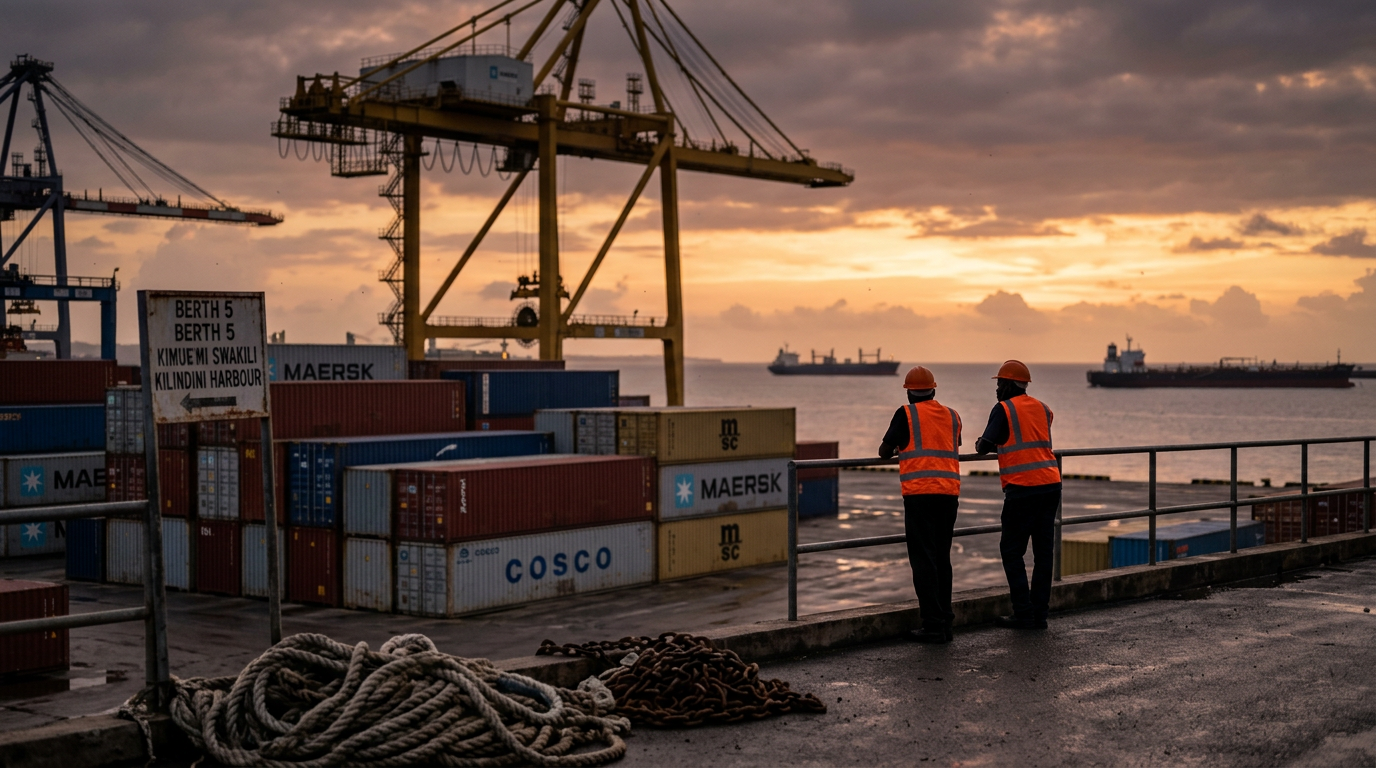
Beyond energy, the disruption of the Red Sea and Suez Canal routes forces cargo ships destined for Mombasa to reroute around the Cape of Good Hope. This adds up to 14 days to transit times and massively inflates freight and insurance premiums. Importers of raw materials, vehicles, and consumer goods face severe delays, leading to stockouts and aggressive retail price hikes.
Diaspora and Diplomatic Dilemmas
The human cost for East Africa is equally alarming. The Gulf states (Saudi Arabia, UAE, Qatar) host hundreds of thousands of Kenyan migrant workers. Remittances from this diaspora constitute a crucial pillar of Kenya’s foreign exchange reserves, amounting to billions of shillings annually. Widespread conflict threatens their safety, job security, and ability to transmit funds back home. The Kenyan Ministry of Foreign and Diaspora Affairs is reportedly on high alert, preparing contingency evacuation plans should the conflict engulf civilian centers in the Gulf. Diplomatically, Kenya walks a tightrope. As a major non-NATO ally of the US and a country that maintains complex trade relations with various Middle Eastern actors, Nairobi must navigate intense pressure to pick sides while trying to maintain non-alignment. The UN migration agency (IOM) has warned of mass displacements, and Kenya, already hosting large refugee populations, must brace for indirect regional destabilization.
Preparing for the Long Haul
The illusion of a localized conflict is shattered. Kenyan economic planners must immediately implement austerity and strategic reserves protocols. The government needs to expedite the transition to electric mobility and maximize localized renewable energy grids to divorce the economy from volatile global oil markets. Furthermore, importers must aggressively diversify their sourcing to Asian and intra-African markets to bypass the paralyzed Middle Eastern corridors. The era of just-in-time supply chains is dead; resilience through redundancy is the new mandate. The escalation proves how rapidly external shocks can decimate local economic planning.
“When Tehran and Washington trade fire, it is the common citizen in Nairobi who ultimately pays the price at the grocery store,” warned a leading geopolitical analyst at the University of Nairobi.