
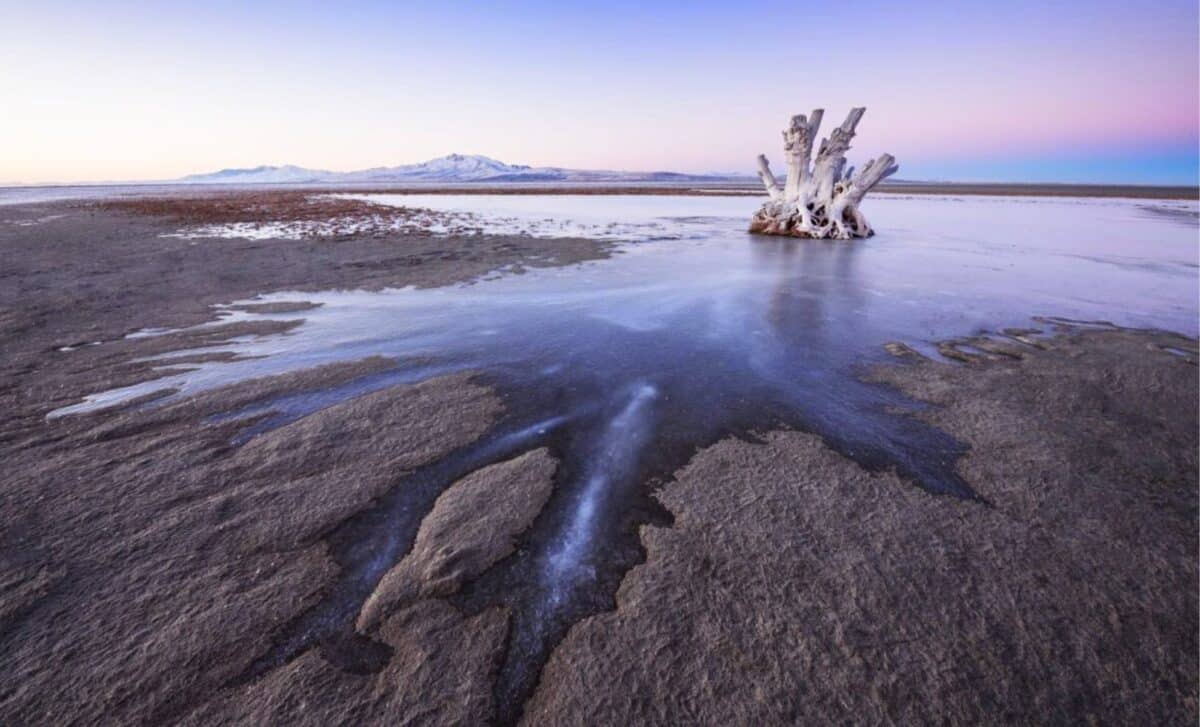
The shoreline of Great Salt Lake in Utah often appears almost empty. Wide flats of salt-covered mud stretch toward shallow water that shimmers in the desert heat. Wind pushes thin ripples across the surface, but beneath that calm exterior the lake hides one of the most unusual environments in North America.
Scientists have long described the lake as biologically simple. Extreme salinity limits the number of animals able to survive there, and most research focused on only a few well-known species. The lake’s ecological story seemed easy to summarize: a handful of organisms thriving in a place where most life cannot persist.
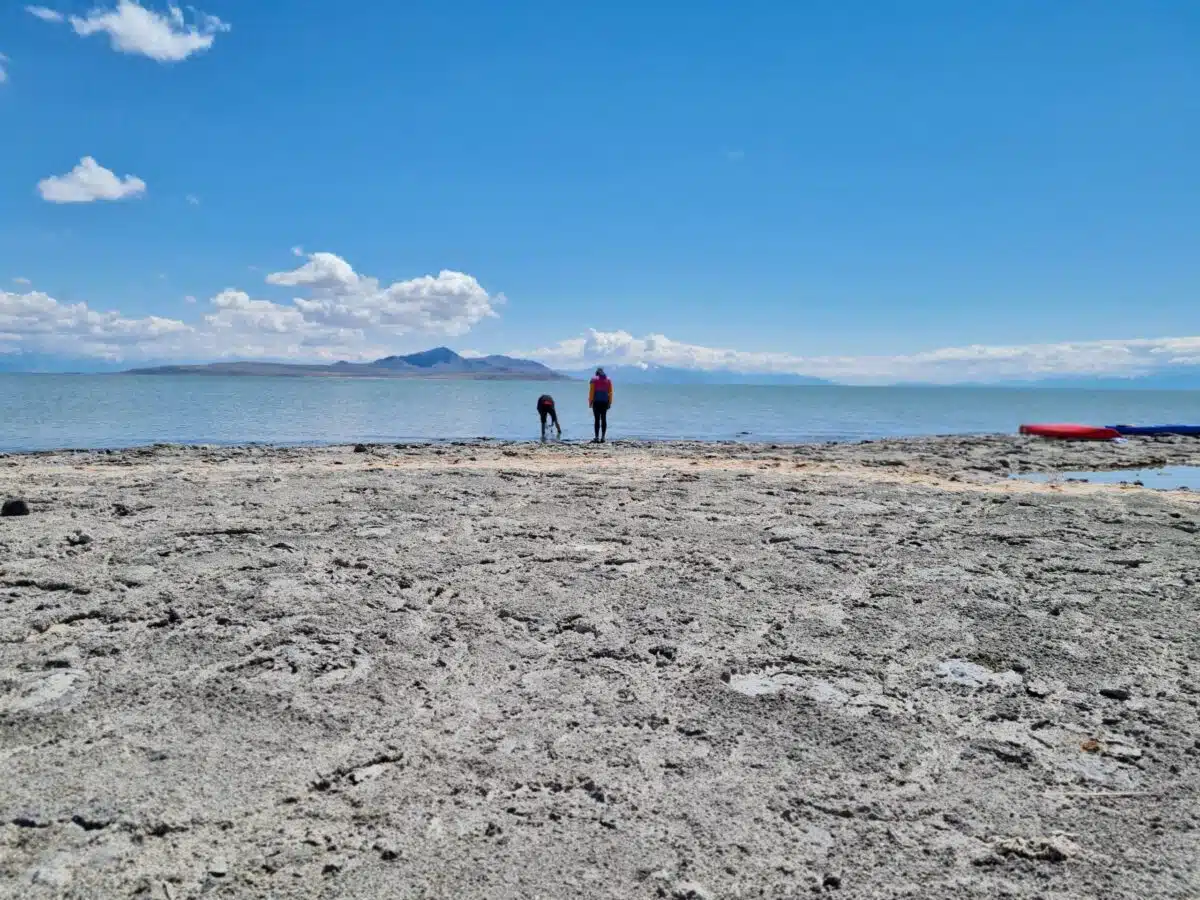 Researchers used kayaks and mountain bikes to reach sampling sites. Credit:
Two species dominate that picture. The tiny crustacean Artemia franciscana, better known as brine shrimp, fills the water in huge seasonal swarms. Along the shoreline, brine flies breed in dark mats that coat the lake’s edge. Together they support millions of migratory birds that depend on the lake as a feeding stop.
But something else had been living quietly in the mud beneath the water all along.
Researchers examining sediment from the lake recently uncovered a form of life never before documented there. Hidden between grains of mud and salt crystals were microscopic roundworms, animals belonging to the group Nematoda. The discovery reveals a new layer of life inside one of the saltiest lakes in the Western Hemisphere.
A Microscopic Community Beneath the Lakebed
The discovery came from researchers at the University of Utah, led by biologist Byron Adams, who studies microscopic animals that survive in extreme environments. The team collected sediment samples from several locations within the lake and brought them back to the laboratory for closer analysis.
Under the microscope, the samples revealed something unexpected. Moving through the sediment were slender, threadlike worms only a fraction of a millimeter long. Genetic testing confirmed that these animals were nematodes, a group of organisms found in nearly every ecosystem on Earth.
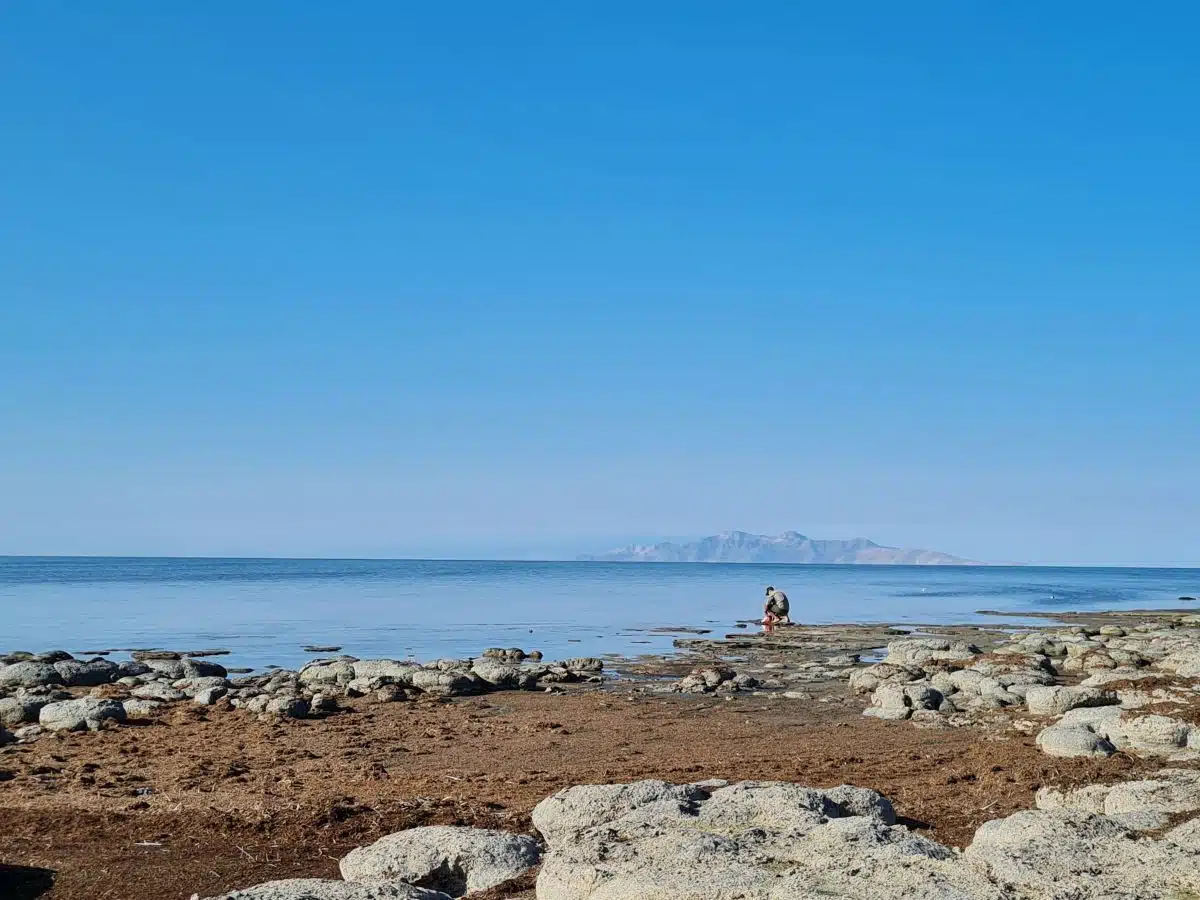 Researchers collected nematode specimens on Utah’s Great Salt Lake. Credit: Julie Jung
These organisms are among the most abundant animals on the planet. They live in soils, oceans, freshwater lakes, and even deep underground environments. Despite their global presence, scientists had never confirmed their existence in this hypersaline lake, a place often viewed as too salty for many types of animal life.
The findings were formally reported in the Journal of Nematology, where the research team described several types of roundworms living within the lake’s sediments. Their work adds an entirely new group of animals to the list of organisms known to inhabit the lake.
Surviving in Hypersaline Conditions
Life inside the lake faces unusual challenges. Parts of the waterbody contain salt concentrations several times higher than seawater. Such hypersaline conditions disrupt the balance of water inside most cells, which is why relatively few organisms manage to survive there.
Animals that live in these environments require special adaptations to maintain internal stability. Brine shrimp, for example, regulate salt levels within their bodies while filtering microscopic algae from the water. Brine flies grow as larvae in thick shoreline mats where bacteria and algae provide food.
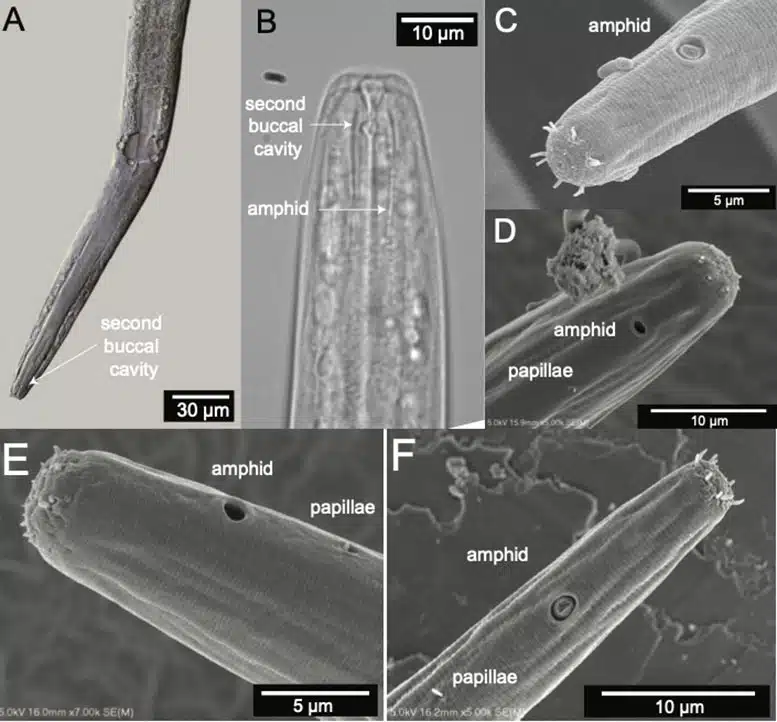 Microscopic images of Diplolaimelloides woaabi, the newly identified nematode species from Great Salt Lake. Credit: Journal of Nematology; Werner lab, University of Utah
The newly discovered worms occupy a different part of the ecosystem. Instead of swimming in open water, they live within the lakebed sediment, weaving through microscopic spaces between grains of mud. These tiny habitats often contain pockets of organic matter and dense microbial life.
Within that sediment environment, the worms likely feed on bacteria, microalgae, and decomposing material that sinks from the water above. This diet places them near the base of the lake’s hidden food web, where microbes and organic particles form the foundation of biological activity.
What the Sediment Samples Revealed
When the research team examined their samples in detail, they found that the worms were not just isolated individuals. In several sediment samples, the scientists observed notable numbers of these animals, suggesting that they are established residents of the lake rather than occasional arrivals.
The researchers also identified multiple types of roundworms in their analysis. That diversity indicates that more than one species has adapted to the lake’s harsh chemistry. Each species may occupy slightly different niches within the sediment environment.
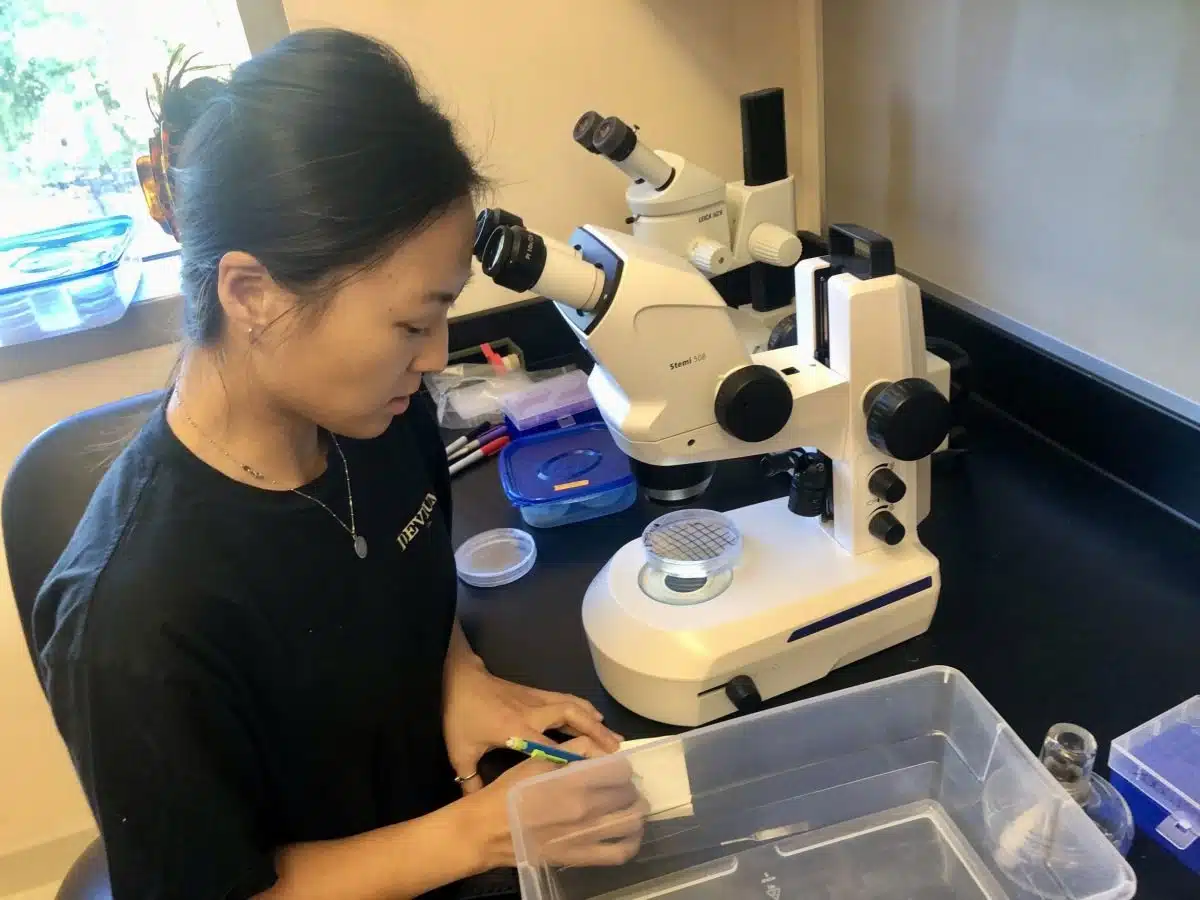 Julie Jung examines nematodes recovered from Great Salt Lake. Credit: Brian Maffly, University of Utah
These microscopic animals play an important role in many ecosystems. By feeding on microbes and breaking down organic debris, they help recycle nutrients in soil and aquatic sediments. Their movement also helps mix tiny layers of sediment, which influences how oxygen and nutrients move through the lakebed.
Finding them in this environment suggests that similar processes occur beneath its salty waters. Even though these animals are invisible to the naked eye, their activity may help maintain microbial communities that thrive in the sediment.
Expanding the Known Ecosystem
For decades, ecological descriptions of the lake centered on the visible organisms that dominate its waters and shoreline. The discovery of these worms shows that the ecosystem contains additional layers that scientists had not previously documented.
Microscopic habitats inside sediments often host complex communities that are easy to overlook. Because these organisms are small and difficult to detect, they can remain undiscovered even in environments that have been studied for many years.
The researchers from the university note that further investigation of the lake’s sediments could reveal additional microscopic species. Many extreme environments contain unique organisms that evolved specialized ways to survive intense chemical conditions.