
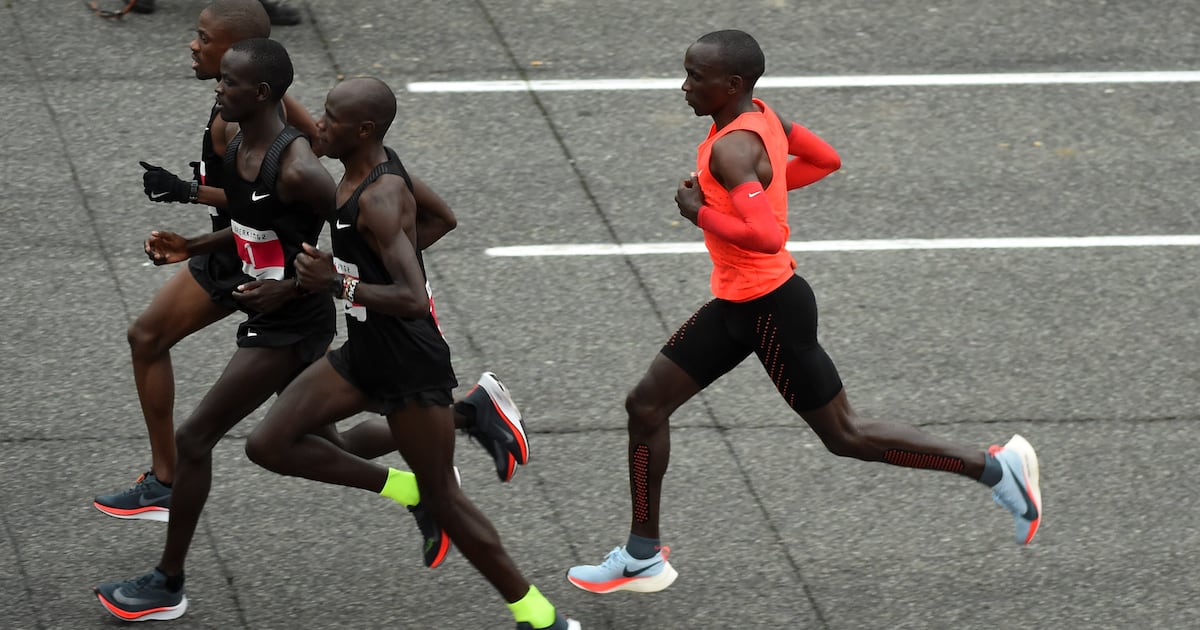
The news that Lidl will be selling their own brand of carbon-plated super shoes in their beloved middle aisle from next Monday will undoubtedly be greeted with joy by many running enthusiasts.
Beginning with the Nike Vaporfly 4%, first developed as prototypes for the 2016 Olympic marathon in Rio, it’s hard to think of another single piece of equipment which has had a more profound impact on any sport in recent years. The only enduring problem with these super shoes was their accessibility, or rather affordability – as they were also super expensive.
Enter Lidl’s Crivit Carbon Plate, simply named and even more attractively priced at just €49.99. Which is about six times less expensive than most of the top-brand super shoes on the market right now – including Nike’s top-of-the-range Alphafly 3, a pair of which will set you back a tidy €319.99, albeit with flashier, neon colours.
No one disputes the fact the technology behind these shoes has forever altered the simple human practice of putting one foot in front of the other as quickly as possible, and for as long as possible. The avalanche of evidence is there in the depth and quality of times of almost every running distance from the 5km to the marathon. And on the track and field too, once the same technology was introduced into the so-called super spikes.
Whether partly by accident or entirely by design, Nike’s original Vaporfly combined two key ingredients in the stiff, curved carbon-fibre plate, embedded in a thick and super-bouncy layer of midsole foam. Together, this creates not so much a spring as a levering effect, improving running efficiency, and, crucially, the recovery from running.
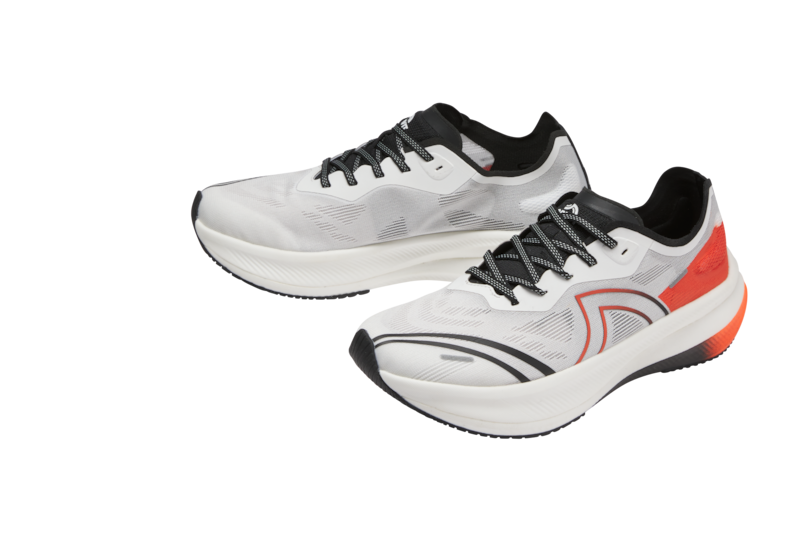 Lidll will sell the Crivit Carbon Plate shoes for €49.99 from next Monday.
It turned out the top three finishers in the men’s marathon in Rio, including gold medal winner Eliud Kipchoge from Kenya, were all road-testing the Nike Vaporfly. After that, Nike brought them into play in their Breaking-2 project, at Monza in Italy in May 2017, utilising every other possible legal aid to help Kipchoge try to run a first sub two-hour marathon, the final frontier of long-distance running.
In the end, Kipchoge clocked 2:00:25, before trying again in Vienna in 2019, wearing the new Nike Alphafly 1, and running an unofficial world record of 1:59:40.
By then some people were shouting stop. That eventually prompted World Athletics to lay down some rules in 2020, including a maximum midsole height of 40mm on the road, and 25mm on the track. They also stated “any type of shoe used must be reasonably available to all in the spirit of the universality of athletics”.
Built around the same carbon-fibre plate and midsole foam, Lidl’s super shoes arrive just in time for the new spring road-running season. They only come in two colours (black or white), but the budget price and availability represent the big appeal here.
After Kelvin Kiptum broke the official marathon world record in Chicago in October 2023, running 2:00:35 wearing a pair of the Alphafly 3, Nike put that model on sale in January 2024. They sold out in world-record time, most online and retail outlets around the world emptied of their entire stock within 60 seconds. Tragically, Kiptum died just four months after his world-record run, killed along with his coach Gervais Hakizimana in a road traffic collision near Kaptagat, in southwestern Kenya.
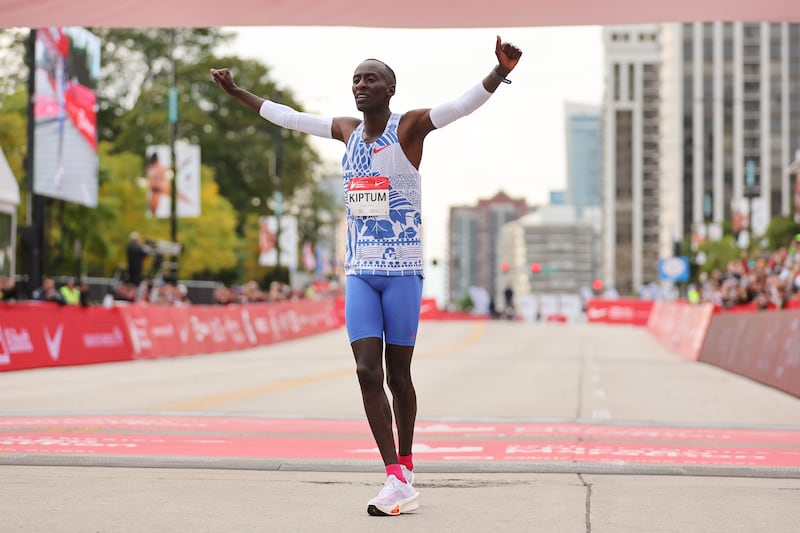 Kelvin Kiptum of Kenya celebrates after winning the 2023 Chicago marathon professional men’s division and setting a world record time of 2:00.35. Photograph: Michael Reaves/Getty Images
No runner has come within a minute of Kiptum’s time since, which suggests the impact of the shoes among elite marathon runners may have levelled out. Nike’s Alphafly 3 was also surpassed in recent road-running popularity tests by the Puma Fast-R Nitro Elite 3, which sells for an even €300, and Adidas have made up ground on the market too with their super lightweight Adizero Adios Pro Evo 1, which retail for a hefty €500.
Disclaimer time: the promotions department at Lidl sent me a pair for a test run, and even if they don’t have the same bounce and snug fit of the Alphafly, there was still ample levering on a few hill repeats up Glencullen mountain. The true test would be under race day conditions, with a result on the line.
[ Sonia O’Sullivan: How mini marathons became part of new women’s liberationOpens in new window ]
What is certain is that super shoes have irreversibly altered the depth of times in most running distances. In the Valencia 10km in January, the top 35 men all broke the 28-minute barrier, the first time that happened in any single 10km race, on the road or track. They were also nine national records, bettered or equalled, among the top 15 men.
On Wednesday, the New York City Marathon announced a record 240,000 applications for the open ballot entry into this November’s race, a 20 per cent increase on last year. That’s just a small slice of the overall race entry, and only one per cent of these applications were successful, such is the demand to take part in New York’s 26.2-mile showcase.
Last year, a record 59,226 runners finished the race. Non-New York Road Running club members could also gain entry based on qualifying standards for their age group, but only the top 10 per cent of these were accepted, and they were at least 22 minutes and 52 seconds faster than the qualifying standard for their age group. That’s all down to the quality and proliferation of the super shoes too.
Nike’s original Vaporfly 4% was not shy about how much of an advantage they potentially offered, and a decade later, few distance runners would disagree. Whether or not the Lidl super shoes can go that distance too isn’t yet clear, but please, form an orderly queue.