
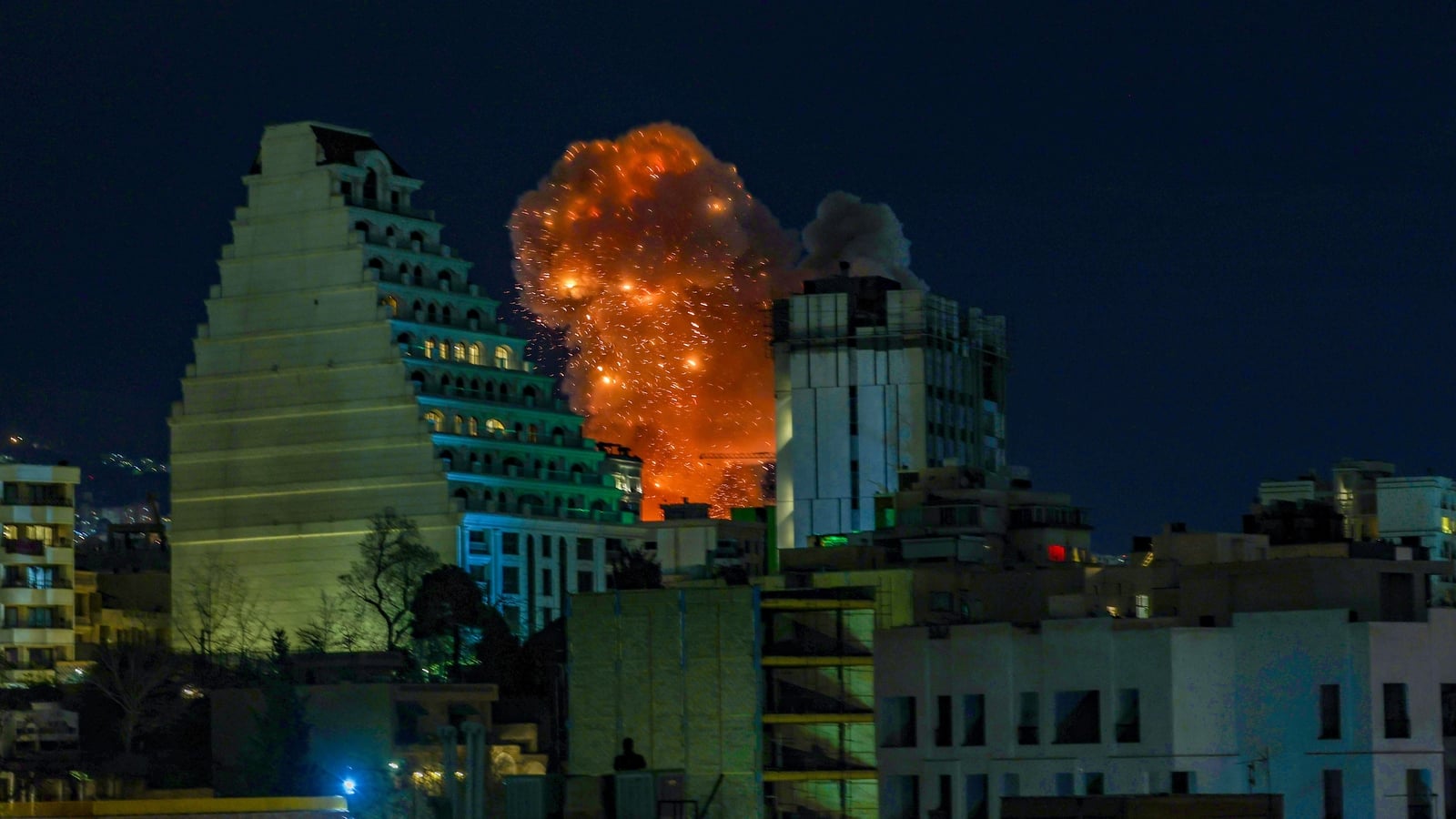
Iran’s Revolutionary Guards has said that the country’s forces could fight an intense war for six months against the United States and Israel – which said it struck Tehran’s commanders at a seaside hotel in the heart of Beirut.
As the conflict entered its second week, the regional repercussions continued with Saudi Arabia intercepting a wave of drones headed for targets, including the diplomatic quarter in capital Riyadh, and Kuwait saying an attack hit fuel tanks at its international airport.
The strike on Kuwait’s aviation fuel storage compounded fears over energy supplies, with the country’s national oil company also announcing a cut in crude production over threats to the Strait of Hormuz, where a fifth of the world’s oil and gas transit.
Iran accused the US and Israel of striking an oil depot in the Iranian capital yesterday, the first reported assault on the country’s oil infrastructure as stock markets have slumped and crude prices surged.
The Israeli military said it struck “a number of fuel storage facilities in Tehran” that were used “to operate military infrastructure”.
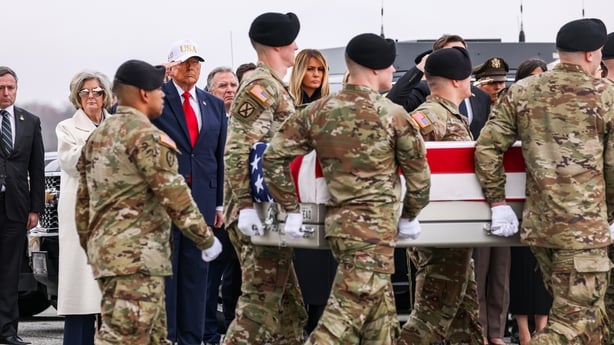
Donald Trump attended the return of six American service members killed in Kuwait last Sunday
Israel’s military also launched a new wave of strikes “across Tehran” after carrying out a precision strike targeting “key commanders” in the Quds Force – the foreign operations arm of Iran’s Revolutionary Guards – at a hotel in an area of central Beirut popular with tourists.
Israeli Prime Minister Benjamin Netanyahu has vowed to press on with the war against Iran “with all our force”, with a plan to eradicate the country’s leadership after joint US-Israeli raids killed supreme leader Ayatollah Ali Khamenei last week, sparking the regional conflict.
Despite the threat, the Revolutionary Guards said the country’s forces could wage an “intense war” for six months at the current speed of fighting.
Revolutionary Guards spokesperson Ali Mohammad Naini said Iran had so far used “first and second generation” missiles, but will use “advanced and less used long-range missiles” in the coming days.
US President Donald Trump attended the return of six American service members killed in a drone strike on a US base in Kuwait last Sunday.
Iran’s security chief Ali Larijani accused the Trump administration of seeking to replicate a scenario similar to Venezuela where it ousted leader Nicolas Maduro.
“Their perception was that it would be like Venezuela – they would strike, take control and it would be over – but now they are trapped,” he said in a pre-recorded interview broadcast on state TV on Saturday.
Iran’s hardline judiciary chief Gholamhossein Mohseni Ejei also warned Middle East neighbours which are “openly and covertly at the disposal of the enemy” that “the heavy attacks on these targets will continue”.
Tehran had vowed to go after US assets in the region, and Saudi Arabia, Qatar, the United Arab Emirates and Kuwait have all reported new attacks.
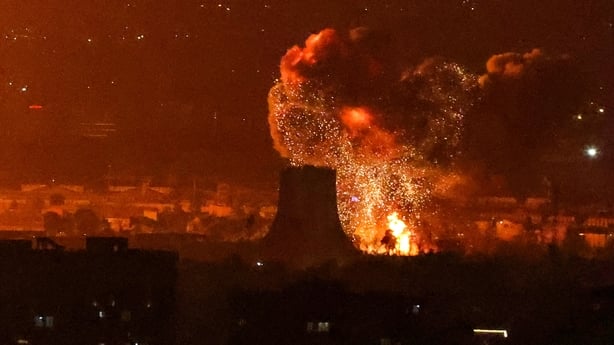
A blast erupts after strikes near Azadi Tower close to Mehrabad International Airport in Tehran
Saudi Arabia said it intercepted more than a dozen drones while Qatar said Iran fired two cruise missiles and 10 ballistic missiles at the country yesterday.
UAE forces were intercepting incoming missile and drones from Iran, the defence ministry said in a post on X.
Video footage yesterday showed one projectile crashing at Dubai airport, while AFP journalists heard blasts in Iraq’s Baghdad and Erbil yesterday evening.
Inside Iran, damage to infrastructure and residential areas is mounting as its people report growing anxiety and a heavy security presence.
“I don’t think anyone who hasn’t experienced war would understand it,” a 26-year-old teacher told AFP on condition of anonymity.
Iran’s health ministry said Friday at least 926 civilians had been killed and around 6,000 wounded – figures AFP could not independently verify.
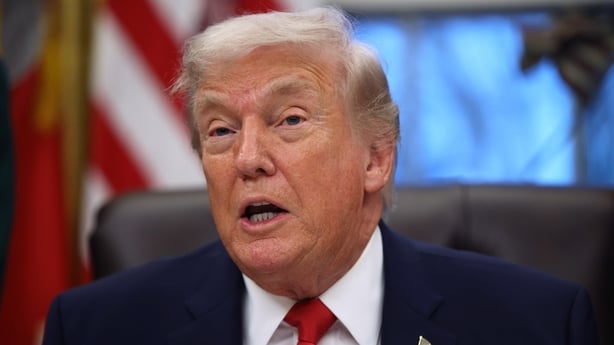
Donald Trump suggested US troops could eventually be needed to secure Iran’s enriched uranium stockpile
The Israeli Prime Minister Benjamin Netanyahu said Israel had achieved almost total control of the skies over the Iranian capital.
Mr Trump struck a similarly defiant tone, repeating the claim that Iran had been close to developing a nuclear weapon.
He also suggested US troops could eventually be needed to secure Iran’s enriched uranium stockpiles.
Separately, he blamed Iran for what the country’s authorities said was a deadly strike on an elementary school in Minab last Saturday that killed at least 150 people.
Iran has blamed Washington for the strike.
Neither the US nor Israel has claimed responsibility for the attack and AFP could not independently verify the circumstances.
Analysts warn there is still no clear path to ending a conflict that US and Israeli officials say could last a month or longer.
Mr Trump has suggested Iran’s economy could be rebuilt if a leader “acceptable” to Washington replaces the late supreme leader, which Tehran has rejected.
China and Russia have largely stayed on the sidelines despite close ties with Tehran.
China’s top diplomat Wang Yi said the war in the Middle East should “never have happened”.
“This is a war that should never have happened,” he told a press conference in Beijing, adding that “a strong fist does not mean strong reason. The world cannot return to the law of the jungle”.