
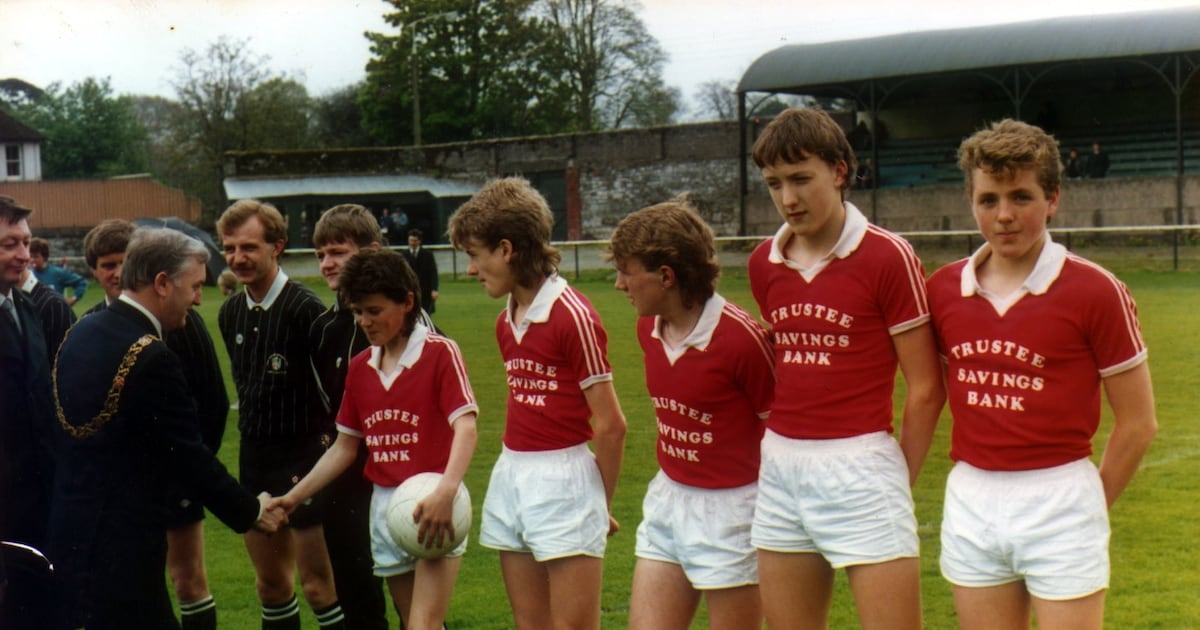
When we took our first steps as tottering foals in the Cork Schoolboys’ League in the early 1980s, we used to wait anxiously for the Evening Echo to slide through the letterbox on Tuesday afternoons. That edition carried reports of the previous weekend’s games, pithy paragraphs summarising the action, namechecking goalscorers and listing three or four others who stood out. To be mentioned in those dispatches was the very pinnacle. Recognition. Acknowledgment. Surely a portent of future stardom.
The first time I played against Roy Keane’s Rockmount, was in the under-12s, and I was wearing the blue and white of Glasheen. We were managed by Tony Connolly, charismatic wing back on the Cork hurling team that ended the great All-Ireland famine in 1966. They beat us and on the long trek back across to the southside I remember Connolly waxing lyrical about their little midfielder. The way I remember it, the following Tuesday night’s Echo described Keane as “having covered every blade of grass on the field”. A line that fit the bill just about every time I lost to Rockmount thereafter. Which was often.
A decade after that encounter, I sat down at a Macintosh Classic in the musty master’sin-journalism classroom at Dublin City University and started typing up a profile of Keane. My first serious foray into attempted sports writing. It was January 1993, and the lad in green and yellow was by then the most coveted star in the English game with Nottingham Forest. Figuring I had some sort of unique perspective on his development from doing battle with him as kids, I cobbled a pile of handwritten notes together, hit print and mailed it, and an accompanying begging letter, in an actual stamped envelope to Ger Siggins, sports editor of the Sunday Tribune.
A couple of weeks later, one of the communal phones rang in that same room and it was Siggins. No, he wasn’t going to publish the article. Life is not quite a feelgood movie. But he liked enough of it to invite me in for a chat. A few days later, he brought me across from the, ahem, well-appointed offices above a Quinnsworth on Baggot Street to the snug in Toner’s pub, ordered pints and offered me a summer work placement in his department. Two months of that turned into a pay-as-you-play arrangement and, eventually, a full-time gig. So, yes, you could say Keane got me my first proper job.
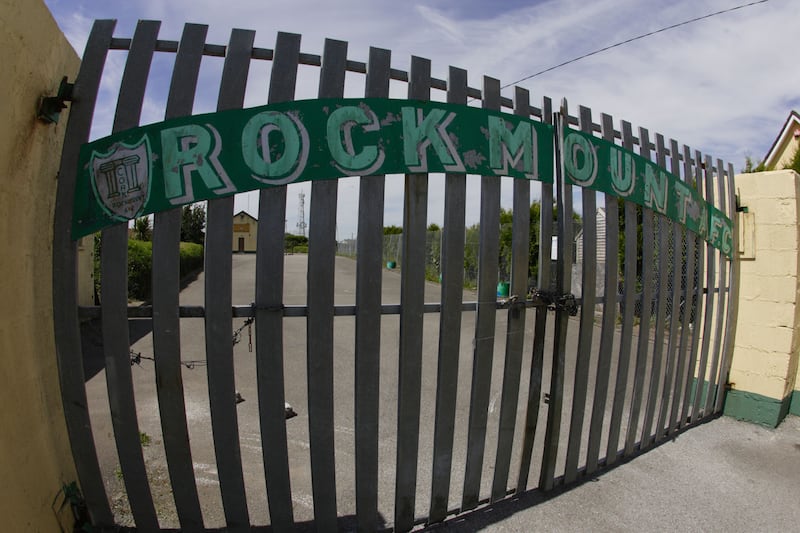 Rockmount AFC achieved a level of dominance in Cork that has never been matched. Photograph: Neil Danton/Inpho
More than 30 years down the line, I sat down to write something longer about Keane, a book about how his story and that of modern Ireland are intertwined. No Irish sportsperson has had more written and said about him. None has had more of substance to say for himself. Across nearly four tumultuous decades, from callow teen prospect to grey-bearded influencer, he has transcended sport, redefined the parameters of fame and captivated the nation. Our hopes, dreams and sometimes our despair have been wrapped up in him, his exploits and outbursts. Oscillating between national treasure and national argument, he put the manic in talismanic.
I started writing about how his turbulent personal journey so often mirrored the evolution of the country that made him in late 2024. The research began so much earlier. In the spring of 1994, Paul Kimmage was profiling Keane for a special Tribune World Cup supplement. In advance of sitting down with him in Manchester, he wanted to spend time in Cork, visiting the landmarks of his childhood. He invited me along, a domestique with crucial local knowledge, and we toured the undulating hills of the northside from the Cotton Ball to the Glen Hall to Rockmount Park. Three summers after that stint as willing sherpa, I was beating the same path with a crew from RTÉ, having secured permission to make a television documentary about his life.
“You look like a couple of proper Irish rogues,” said Michael Kennedy, Keane’s trusted solicitor, the morning myself and my old mucker Colm O’Callaghan sat down across from him in the tea room of a posh London hotel and made our pitch for what became “Have Boots, Will Travel”.
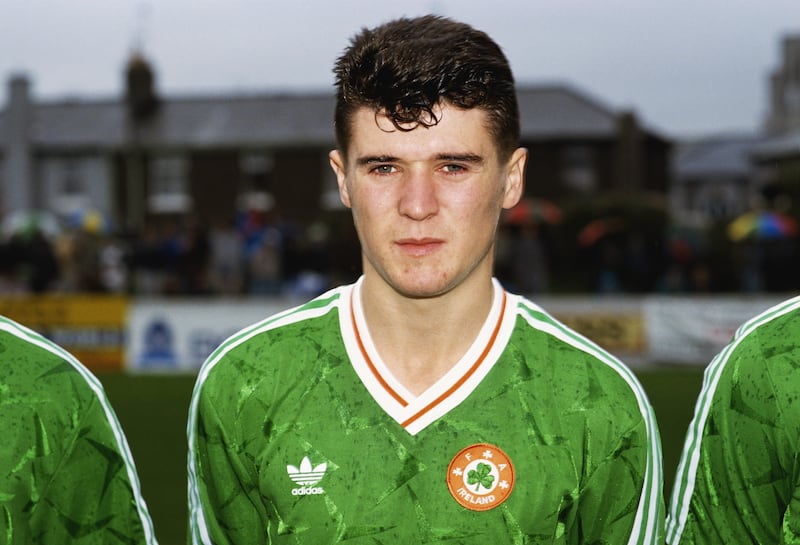 Roy Keane with the Republic of Ireland under 21s before a match against England in Cork in 1990. Photograph: Dan Smith/Allsport/Getty Images
A suite in the old Jury’s on Cork’s Western Road had been booked for a lengthy interview with Keane as the centrepiece of that project, the venue chosen for privacy and soundproofing. At the very last minute, our subject relocated the sit-down to a back room at The Templeacre Tavern. He was comfortable there, so comfortable he had a pint in hand. It was late May, the season was over, and he was relaxing with family and friends. Just before the cameras rolled, Kennedy called and cautioned the producers not to allow him to have too many drinks before the cameras rolled and to make sure the logo of Diadora, his long-time sponsor, was always visible in shot. Sound advice.
Len Downey and Paul McCarthy were among those we interviewed for that programme. Two members of Rockmount’s team of all the talents. Under the baton of Timmy Murphy and Gene O’Sullivan, Keane’s outfit dominated the Cork Schoolboys League like nobody had before or since, winning all before them in their age group and most of the silverware in the year above them. An exceptional group boasting five remarkable players.
Downey was a lanky and deadly centre-forward whose coaches sometimes hoped he might get a kick early in games to rouse him into action. Broad-chested, tall and athletic, McCarthy was a centre half good enough to make nearly 600 first-team appearances across various English divisions before his tragic death in 2017. Damien Martin was a cerebral sweeper alongside him at the back, a fair-haired Franco Baresi who made defending look easy. Then there was Alan O’Sullivan, boasting the type of floppy fringe that wouldn’t have been out of place on a member of Spandau Ballet, an old-fashioned left-winger hugging the touchline then dancing along it with wondrous feet.
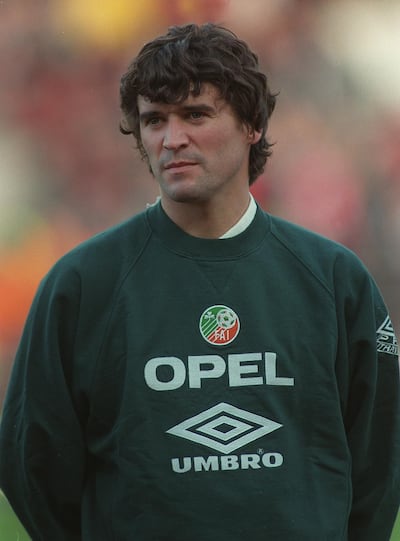 Roy Keane in 1996, thinking, or not, about all those who have travelled in his orbit. Photograph: Lorraine O’Sullivan/Inpho
All these players orbited Keane, a diminutive, mulleted dynamo patrolling midfield. Covering immense amounts of territory, he seemed to hoover up every loose ball, before passing unerringly to a team-mate or timing his run into the box to score. Relentlessly narky with opponents and very often his colleagues too, he was a budding force of nature.
I once spent a week training with them. Well, myself and 50 others from around Cork who were picked to participate in a training camp over the Easter holidays overseen by Billy Bingham, the then Northern Ireland manager. For three days, I got to play with and against Keane et al in between doing drills under the charge of the Ulsterman who had led his country to the second round of the 1982 World Cup finals. I picked up very little from Bingham but I benefited hugely from seeing the superior Rockmount boys work up close, mainly learning my far-fetched dream of being a professional footballer was always going to be just that.
Only the very few are destined to play at the highest level, some of us are lucky enough that we once made a living writing about them. And Keane, of course, became the most compelling subject of the age. The boy Roy grew up to become, well, the man.
♦ We Need to Talk About Roy – The Keaneification of Modern Ireland by Dave Hannigan has just been published by Merrion Press.