
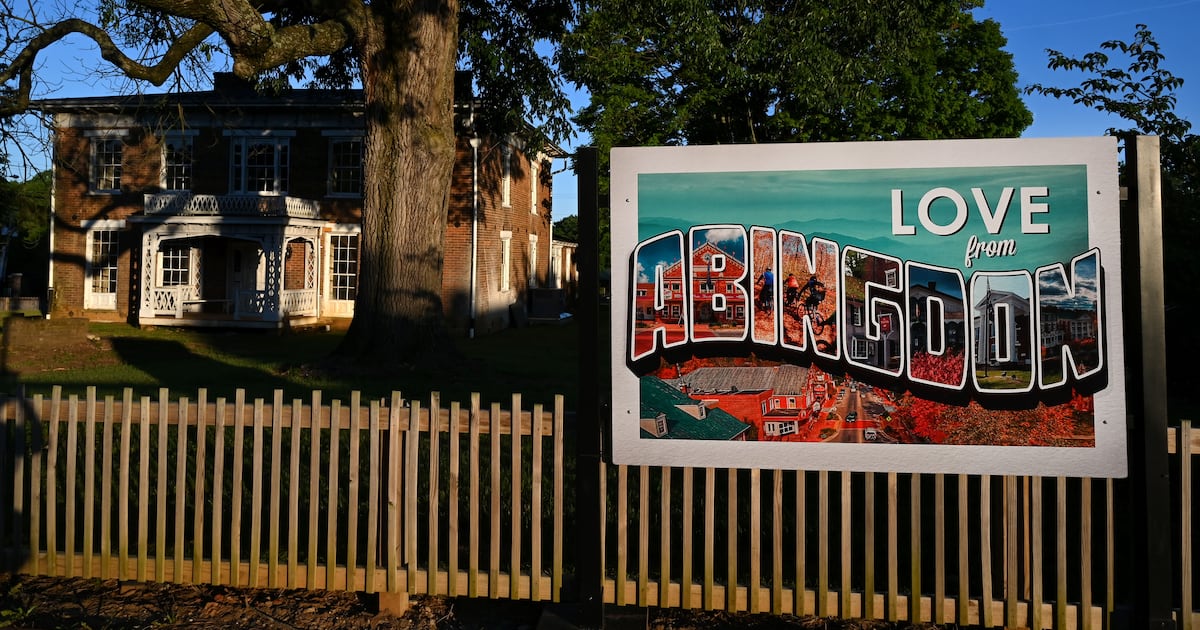
The Barter, on Abingdon’s main street, vies for the contentious position of oldest operating theatre in the United States and stands as a symbol for the town’s resourcefulness.
The name reflects the spirit of the Depression-era flexibility it acquired during the summer of 1933: admission was 35 cents, or the equivalent in vegetables or dairy products. Nearly a hundred years on, the variety of the Barter’s seasonal programme ranges from international stables to locally written and performed productions. A modern tradition involves the proceeds of at least one performance going towards the “Feeding America Southwest Virginia” programme.
It’s one of the anomalies of the United States: handsome, idyllic towns that have continued to prosper within regions decimated by the demise of staple 20th century industries. The tiny coal towns surrounding Abingdon have continued to simply languish in the 50 years since the companies began their retreat from Appalachia.

Abingdon endured through its vital historical location on the Great Valley Road and has managed to transform its federal buildings and period homes into a kind of 21st century idyll. In summertime, it has become a tourist staple. But winter is for the locals. On an Arctic Saturday morning, the town is all but deserted, and the weekly farmers’ market attracts only the hardiest customers – and stall merchants. One of those, Ed Morgan, is there to entice locals to sign up for adult education. As we chat, he tells me he’s a former mayor of the town and is immersed in the local economic and social history.
“It just amazes me the talent we have here. I was campaigning one year and called into a house. This fella told me that Abingdon was considered the prettiest little coal camp in southwest Virginia,” he laughs.
“It was a terrible loss, but it’s over for coal. People talk about bringing it back. But times have changed. And a lot of it is in our part of the world; the coal is gone. It’s not there any more. The parallel is to look at Wales. They’ve had to go through a similar process there. Southwest Virginia has lost a lot of people since the 1960s. But our town is doing well. Culture and historic buildings. There’s an ambience here that is maybe very appealing. People see it as a good place to live.”
That’s reflected in the range of stalls featuring locally produced syrups and fabrics and meat products. Dylan House sells pasture-raised pork. “Gloucestershire heritage breed,” he says. “We are farrow to finish.”
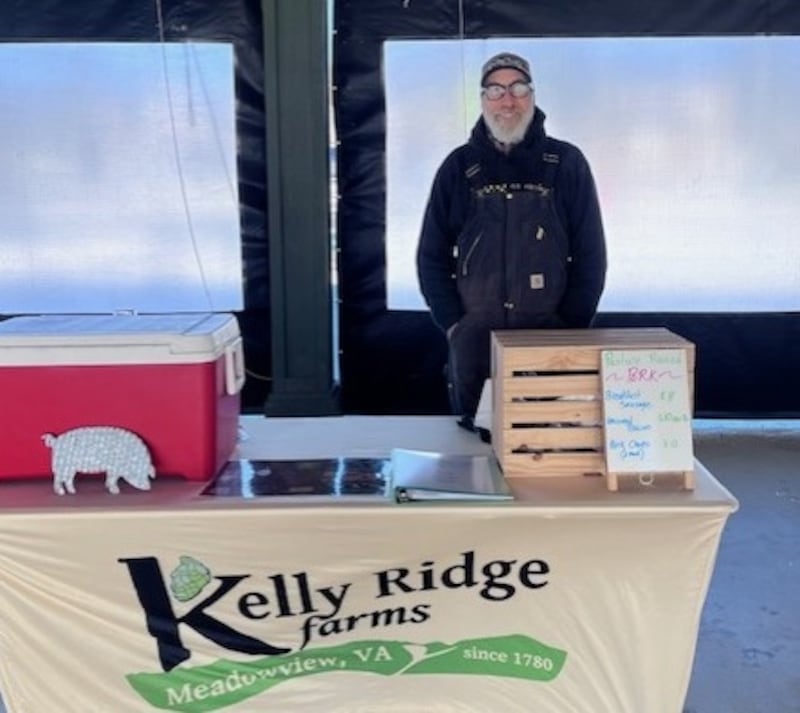 Dylan House sells pasture-raised pork. ‘Gloucestershire heritage breed,’ says Ed Morgan. Photograph: Keith Duggan
Almost 80 per cent of US meat and pork production is dominated by the “big four” of Tyson, Cargill, JBS and National Beef. Operating a custom pork production is a delicate balance between abiding by US department of agriculture rules and setting a realistic price. In the 16 years that Dylan House has been involved in the trade, he has seen a steady appreciation of the benefits of local produce, set against the post-Covid crises of supply and escalating costs.
“I have been in this space since 2008. Education has always been a big part of it. People are willing to pay more. But it’s a balance. I don’t want to price people out. I don’t think this should be a luxury item. I have a boss that owns the land and he is always asking if we can bump the price.
“What Americans realised in 2020 is that it was less about quality and more about the supply chain issues. It is so fragile. If these big beef processors close for just a couple of weeks, it all stops. But if you can go to your neighbour or the guy down the road, it doesn’t.”
I ask Morgan if he would like to see a revival of the mid-20th century model of US farm production, with local origin and local supply – a system that has made a lifestyle-oriented return in the most prosperous communities of the US.
“I would love to see that. We are lucky here in that this is a rural area. In urban areas, there’s a big disconnect, since the end of the [second] World War and the emergence of supermarkets. Because you walk into a supermarket now and there’s a tomato in December. Well, it’s the notion of a tomato. It’s round and red. But other than that …”
When Morgan is considering the difficulties of southwest Virginia, he also identifies the benefits of a 20th century society model. He namechecks a series of tiny, former coal towns that are caught in a sort of postindustrial coma.
“These communities sprung up when coal was good, and now they no longer have any reason to exist. You can’t mail a letter or buy a gallon of gas. Yet people live there. In Nickelson county, somebody built a retirement home in a complex. Well, it looked like an army barracks. And it was seven miles from town. Couldn’t work! So, I think you need to rebuild the core of communities so people can walk to the store.”
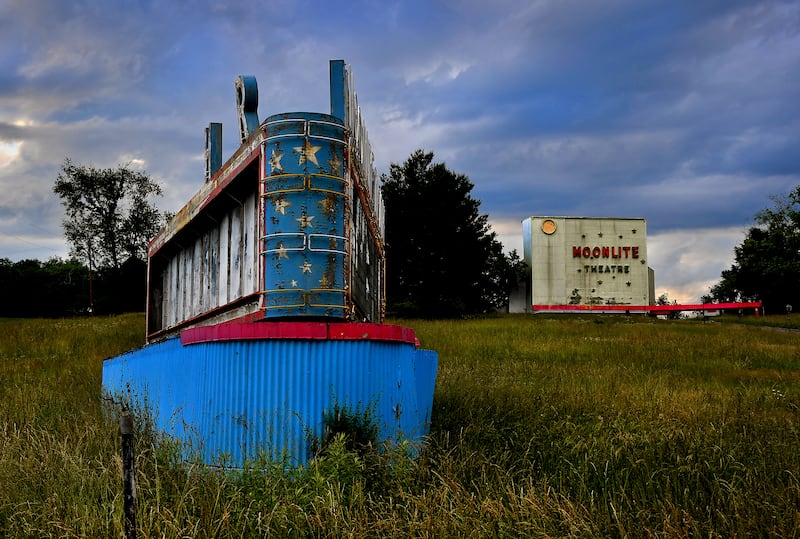 A decaying Moonlite drive-in movie theatre in Abington. Photograph: Washington Post/Getty Images
It’s difficult to overestimate the ruinous impact of the abrupt withdrawal of gigantic mining companies like Westmoreland, which exited in 1994, from the region. In addition to dominating employment for decades, they controlled local societies, running the courts, hospitals and housing for workers. It was oppressive, but it was a structure of sorts.
As Barbara Kingsolver told National Public Radio last summer, of the fallout: “It’s so easy to blame victims and it’s so much worse in the United States because we have this mythology of a classless society. That everybody can grow up to be president or whatever; [the] fact is, that’s not true. Many people work really, really hard.
“They might work three jobs and still don’t get rich because of institutional poverty. To put it as succinctly as I can, Appalachia has been treated like an internal colony of the United States. Big business has come into these mountains with extractive industries that pulled out the riches and didn’t care too much about the people they left behind.”
That vulnerability partly explains why the national opioid crisis caused such damage in this part of Virginia.
Morgan’s neighbour is Randy Ramseyer, the attorney who successfully prosecuted Purdue Pharma in the wake of the OxyContin scandal.
Morgan first became conscious of the cultural distinction of being Appalachian when he read Night Comes to the Cumberlands, the 1963 book by Harry Caudill, a Kentucky lawyer whose reports of acute poverty led to the creation of a commission of investigation during the Kennedy administration.
[ The Sackler family will still be rich after the opioid epidemic payoutOpens in new window ]
“And I began to think of myself as an Appalachian and regard it as a point of pride,” says Morgan.
“You can feel that among people who live here now. And folks like Barbara have worked hard to get things out. And her book, Demon Copperhead, touches on the opioid crisis and that really took a toll on this part of the world in so many ways. We still have challenges.”
He laughs when I tell him that Abingdon could not be much different from the communities of northern Virginia, close to Washington DC.
“And in many ways that’s okay. We live here because we like it. But you still need to have enough jobs so that your children can make a living here.”