
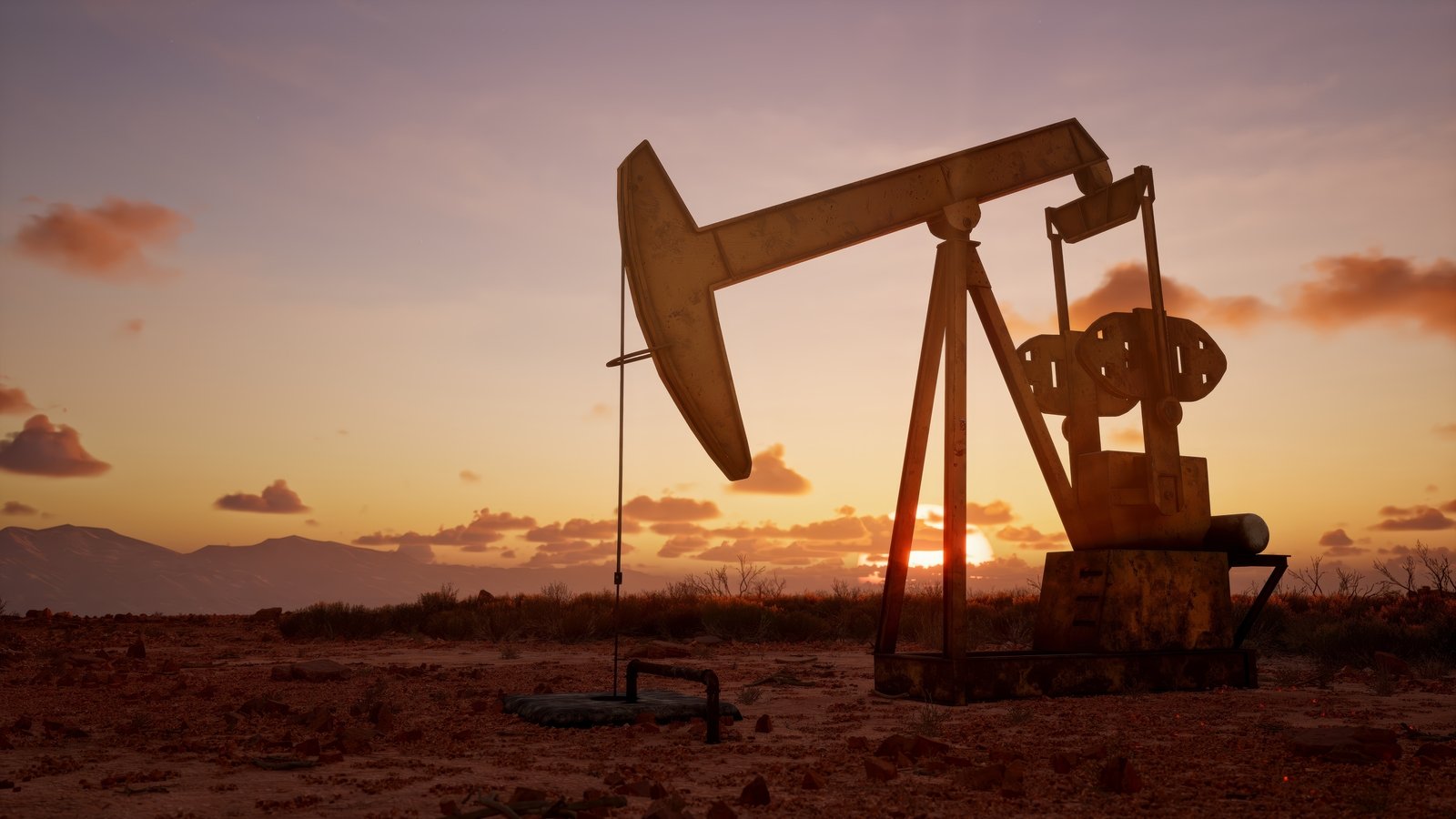
Oil prices surged more than 25% today to their highest levels since mid-2022 as some major producers cut supplies and fears of prolonged shipping disruptions gripped the market due to the expanding US-Israeli war with Iran.
Eurogroup finance ministers are due to meet in Brussels to discuss the rising energy prices.
Over the past week consumers in Ireland have seen a rapid increase in home heating oil while petrol and diesel have risen quickly leading to calls for the Government to intervene.
The prices are continuing to rise at a rate not seen since Russia’s invasion of Ukraine four years ago.
Brent crude started last week at $77 a barrel and was trading at more than $107 a barrel earlier this morning.
It is the first time in four years that the price of oil has broken the $100 barrier.
A fill of 500 litres of home heating oil rose from less than €500 to €833 in the past week.
Over the weekend, prices increased at many services stations with retailers charging €1.80 for unleaded and €1.90 or sometimes almost €2 for diesel.
Ahead of the Eurogroup meeting in Belgium, Tanáiste and Minister for Finance Simon Harris said high energy prices had been an ongoing challenge for European industry in recent years.
The European Union has been diversifying its oil and natural gas supplies ever since Russia’s invasion of Ukraine, but a number of member states still rely on crude oil and LNG from the Gulf.
High energy prices across the EU had already been identified as a drag on European competitiveness.
The current conflict in the Middle East could not have come at a more challenging time.
Energy markets are particularly nervous because the crisis is unfolding around the Strait of Hormuz, through which roughly one-fifth of the world’s oil supply normally passes.
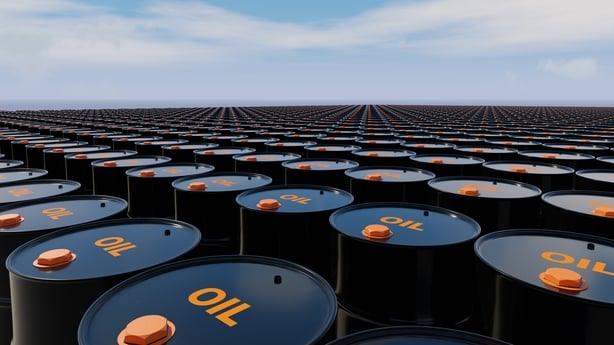
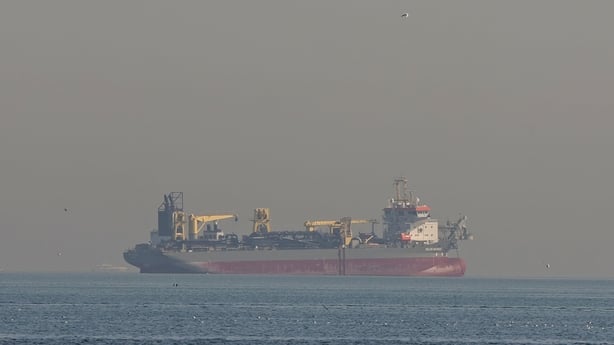
Disruptions in tanker movements and rising security risks have already slowed shipping activity, leaving Asian buyers especially vulnerable given their heavy reliance on Middle Eastern crude.
Brent crude futures were up $24.96 or 27% at $117.65 per barrel early this morning – on track for the biggest-ever jump in a single day, while US West Texas Intermediate (WTI) crude futures were up $25.72, or 28.3%, to $116.62.
WTI surged 31.4% to a session high of $119.48 a barrel earlier, while Brent rose as much as 29% to $119.50 a barrel.
Before today’s surge, Brent had already climbed 27% and WTI by 35.6% last week.
“Unless oil flows through the Strait of Hormuz resumes soon and regional tensions ease, upward pressure on prices is likely to persist,” said Vasu Menon, managing director for investment strategy at OCBC in Singapore.
Iraq and Kuwait have begun cutting oil output, adding to earlier liquefied natural gas reductions from Qatar, as the war blocked shipments from the Middle East.
Analysts expect the United Arab Emirates and Saudi Arabia will have to also cut output soon as they run out of oil storage.
Also boosting prices is the appointment of Mojtaba Khamenei to succeed his father Ali Khamenei as Iran’s supreme leader, signalling that hardliners remain firmly in charge in Tehran a week into its conflict with the US and Israel.
“With the appointment of the late leader’s son as Iran’s new leader, US President Donald Trump’s goal of regime change in Iran has become more difficult,” said Satoru Yoshida, a commodity analyst with Rakuten Securities.
“That view accelerated buying, as Iran is expected to continue its closure of the Strait of Hormuz and attacks on other oil-producing nations’ facilities, as seen last week,” he said, predicting WTI could rise to $120 and then $130 a barrel in a relatively short period.
The war could leave consumers and businesses worldwide facing weeks or months of higher fuel prices even if the week-old conflict ends quickly, as suppliers grapple with damaged facilities, disrupted logistics and elevated risks to shipping.
“The next flag will be whether it eventually gets to a point where they have to start shutting in oil wells, which not only impacts output even further, it delays a response once the conflict eases as well. That would potentially sustain those prices for much longer,” said Daniel Hynes, senior commodity strategist at ANZ.
Iraqi oil production from its main southern oilfields has fallen by 70% to just 1.3 million barrels per day as the country is unable to export oil via the Strait of Hormuz due to the Iran war, three industry sources have said.
Crude storage has reached maximum capacity, said an official with the state-run Basra Oil Company.
Kuwait Petroleum Corporation began cutting oil output on Saturday and declared force majeure on shipments, though it did not say how much production it would shut.
Iran’s attacks on oil infrastructure across the region have continued. Fujairah Media Office said fire broke out in the UAE’s Fujairah oil industry zone resulting from debris falling, with no injuries reported. Saudi Arabia’s Defence Ministry said on X it intercepted a drone heading to the Shaybah oilfield.
Israel’s military has threatened to kill any replacement for the deceased Ali Khamenei, while Trump said the war might only end once Iran’s military and rulers had been wiped out.
Meanwhile, as oil prices surged, US Senate Democratic Leader Chuck Schumer called on Trump to release oil from the Strategic Petroleum Reserve.
“President Trump should release oil from the SPR now to stabilise markets, bring prices down, and stop the price shock that American families are already feeling thanks to his reckless war,” Schumer said in a statement.