
FALLS CHURCH, Va. –
Every day, care teams at military hospitals and clinics work to keep patients safe. Clear communication and teamwork help stop mistakes. Patient safety is everyone’s job across the Military Health System.
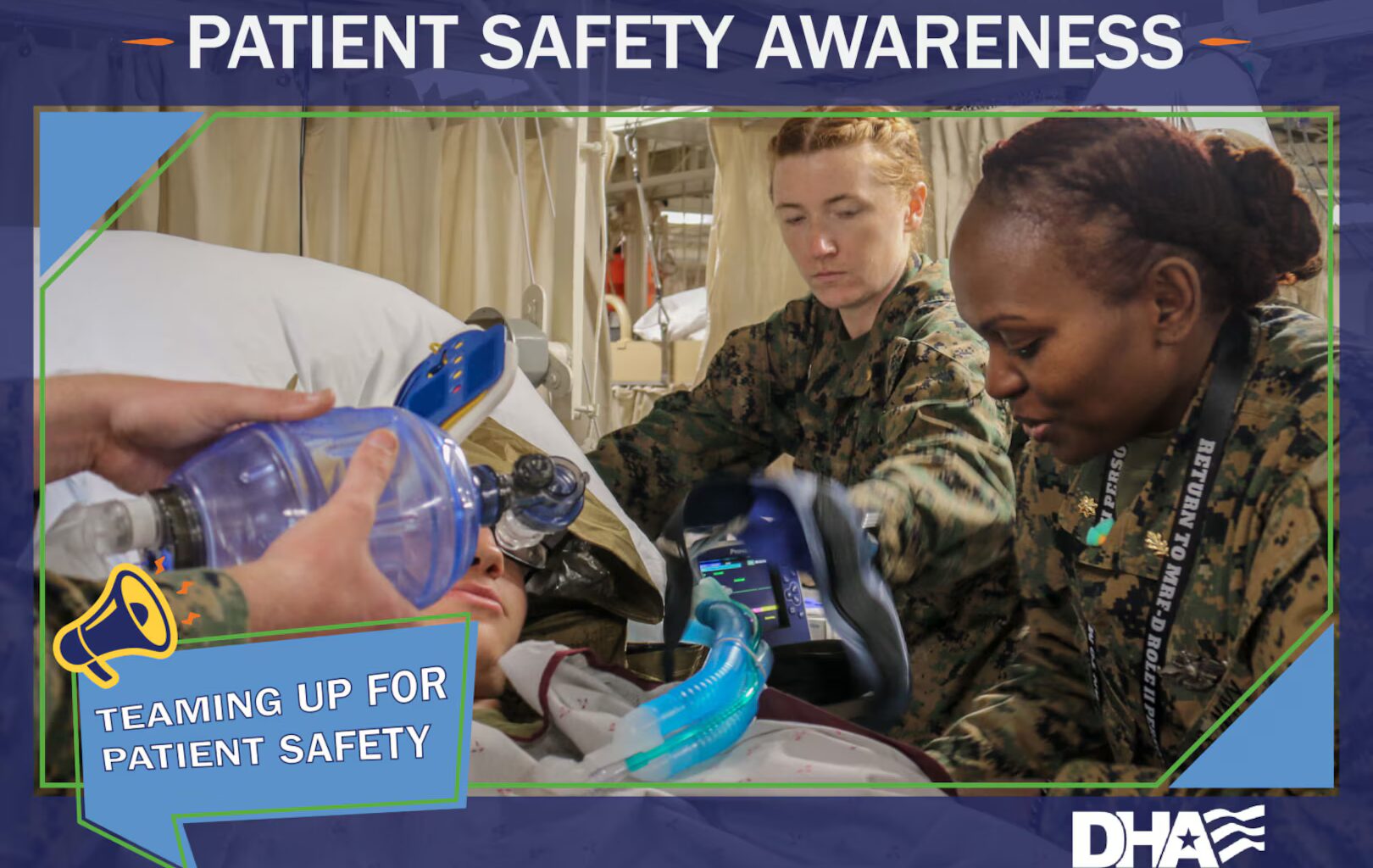
Patient Safety Awareness Week takes place March 8–14. This year’s theme is “Teaming Up for Patient Safety.” The theme shows how teamwork helps keep patients safe and improves care.
“Patient Safety Awareness Week reminds us that safety depends on everyone,” said Dr. Johnathan Compton, Acting Chief of Patient Safety for the Defense Health Agency. “When teams work together, they provide safe care. Not only does this ensure premier care for all beneficiaries, it also helps protect the health of the force and supports readiness.”
When service members get safe care, they heal faster and return to duty sooner. Safe care also helps medical teams stay ready to provide care at home and around the world.
Military hospitals and clinics work on safety all year. Teams learn from experience and share what works. Staff members are encouraged to speak up when they see risks or concerns. Structured approaches, practical tools, and a shared language strengthen teamwork and communication. These behaviors support high reliability, help prevent harm, and improve patient care.
The MHS continues to earn strong scores in national safety reviews. These reviews look at how well hospitals protect patients from injuries, infections, and medical errors. Leaders say the results show a strong focus on safety.
Recently, 18 military hospitals earned “A” grades from the Leapfrog Group. Overall, 90% of participating Defense Health Agency hospitals earned top grades. The national average is 32%.
The 18 military hospitals that received an “A” grade for Fall 2025 are:
Alexander T. Augusta Military Medical Center, Fort Belvoir, Virginia
Blanchfield Army Community Hospital, Fort Campbell, Kentucky
Brooke Army Medical Center, Fort Sam Houston, Texas
Carl R. Darnall Army Medical Center, Fort Hood, Texas
David Grant USAF Medical Center, Travis Air Force Base, California
Eisenhower Army Medical Center, Fort Gordon, Georgia
Evans Army Community Hospital, Fort Carson, Colorado
Madigan Army Medical Center, Joint Base Lewis-McChord, Washington
Mike O’Callaghan Military Medical Center, Nellis Air Force Base, Nevada
Naval Hospital Jacksonville, Jacksonville, Florida
Naval Medical Center Camp Lejeune, Camp Lejeune, North Carolina
Naval Medical Center Portsmouth, Portsmouth, Virginia
Naval Medical Center San Diego, San Diego, California
Walter Reed National Military Medical Center, Bethesda, Maryland
William Beaumont Army Medical Center, Fort Bliss, Texas
Womack Army Medical Center, Fort Bragg, North Carolina
U.S. Naval Hospital Guam, Agana Heights, Guam
U.S. Naval Hospital Okinawa, Okinawa, Japan
DHA has several programs to keep you safe. These programs include:
Ready Reliable Care Safety Communication Bundle: This bundle supports how teams communicate, coordinate, and work together to keep patients safe. The RRC SCB includes six structured practices that help teams stay aligned, share information clearly, and address concerns early. Many of these practices are grounded in proven teamwork and communication strategies. Together, they:
Strengthen collaboration
Reinforce a culture of safety
Support consistent, reliable care
TeamSTEPPS® 3.0: TeamSTEPPS® is an evidence-based teamwork and communication framework deployed across the MHS. TeamSTEPPS® provides health care teams with tools and a shared language. These resources:
Strengthen coordination
Encourage team members to speak up
Improve information exchange during patient care
TeamSTEPPS® principles and tools inform many of the communication practices used in the RRC SCB. These strategies help care teams:
Build shared understanding
Reduce communication breakdowns
Support safe, reliable care for every patient
Joint Patient Safety Reporting: DHA wants to know about all patient safety events. The JPSR system is a reporting program used to identify, track, and learn from patient safety events. This system allows staff to report concerns, near misses, and events that could affect patient care. JPSR reports help patient safety teams monitor trends, analyze risks, and implement improvements across military hospitals and clinics. This proactive approach:
Supports prompt resolution
Strengthens safety practices
Helps reduce the risk of preventable harm
These programs and others work together to create safer care for you at military hospitals and clinics.
There are several ways to learn about your military hospital’s safety. Visit Health.mil’s Quality, Patient Safety, and Access Information page to see:
Safety measures
Care quality
Appointment access data
Patient satisfaction
You can compare up to three hospitals at once on this page.
You can also check out reports from the Joint Commission. The Joint Commission is an independent organization that accredits U.S. hospitals and clinics. The Joint Commission visits every U.S. hospital every three years. During these visits, experts check safety measures. These can range from hand washing to medication storage.
The Annual Evaluation of the TRICARE Program can help you learn more about patient safety statistics and improvement efforts. As detailed in the Fiscal Year 2024 report, this yearly evaluation covers:
Care quality
Patient safety records
Patient satisfaction
Wait times
Health care costs
Do you have Medicare and TRICARE For Life coverage? You can check the safety ratings of your Medicare providers. You can use the Medicare Care Compare Tool to compare Medicare providers and facilities by:
Overall star ratings
Patient experiences
Complications and safety events
To learn more about how DHA ensures the safe delivery of care, check out Patient Safety.
Would you like the latest TRICARE news sent to you by email? Visit TRICARE Subscriptions to get benefit updates, news, and more.